A US$125,000 snow machine is the latest toy for rich land barons

After 75 years, the market for Tucker Sno-Cat is hitting its peak
Way back in the snow-choked mountains, miles from any road, curb appeal is still a thing.
Consider the Tucker Sno-Cat. It sits on four treads, seemingly designed for a tank, that nevertheless appear to float atop fluffy snow that’s swimming pools-deep. The cab is painted an industrial orange that contrasts cartoonishly against the cottony landscape. A Tucker, like all great vehicles, is a cross between a serious machine – purpose-built for a job – and a child’s toy. It’s difficult to look at one and not feel an urge to climb inside, crank up the heater, and drive somewhere or, rather, nowhere in particular.
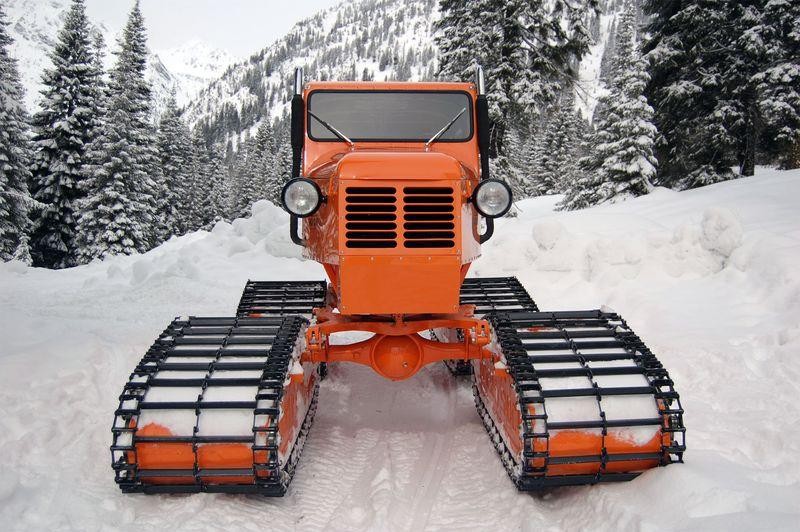
Mark Abma, a professional skier who lives in British Columbia, knows that feeling well. For years he experienced it every time he’d swing by his buddy’s welding shop and glance at the old Tucker rusting away in the back lot. Abma travels most of the year and is one of very few people paid to ride around in helicopters hunting fresh powder, yet he committed much of last winter to resurrecting the long sleeping snowcat. “I’d been asking for 10 years what it would take to get it running,” he says. “We finally decided to make a go of it.”
With the help of several unpaid volunteers, Abma spent five months – almost 800 man-hours – refurbishing the 48-year-old machine. Now, when he isn’t flying into some remote spine of snow in Alaska, Abma cranks up his Tucker, drives up a snow-packed ravine, and spends his days hiking up and skiing back to the ’cat. He has a tent bolted to the roof, so he can spend the night, and eight tow ropes rigged up, so his buddies can be dragged behind like a surreal troupe of winter waterskiers – though the 1969 snowcat tops out at 8km/h.
“It’s kind of a mobile base camp,” he says. “It’s definitely not about trying to get anywhere fast.”
Abma, it turns out, is not alone in his ardour. Demand for Tucker Sno-Cats – both new and used – is peaking, thanks to affluent landowners, classic collectors, and gearheads with a love of snow. In the world of transportation, this is one of the most fascinating niche markets at the moment.
Making the Sno-Cat
Tucker is celebrating its 75th year cranking out snow machines from its headquarters in Medford, Oregon. It’s best known for outfitting the first overland crossing of the Antarctic in 1957. Four of its machines made the trip under the command of Vivian Fuchs, navigating through brutal cold and several dicey situations.