Want to spend US$13 million on a luxury retreat and two private islands near New York?

- Tiny Columbia Island and the self-sufficient, four-bedroom 5,600-square-foot house, plus ‘next-door’ Pea Island – 30 minutes from Manhattan – have been put up for sale
It is hard to give the exact dimensions of Columbia Island, a small piece of bedrock off the coast of New Rochelle, in the state of New York, because the tide changes its dimensions so dramatically.
In a 1966 article reporting that the “radio-TV couple” Peter Lind Hayes and Mary Healy had donated the island to the private Catholic College of New Rochelle, The New York Times said that it “varies in size from about an acre [0.4 hectare] to 175 square feet [16 square metres]”.
You get on the island ... it’s just gorgeous – the sky, the tide, the birds, everything. And that sort of blinded me and my thoughts. I just went: ‘Wow, what a Zen experience this could be’
However, that is not quite right, given that even at that time the island was the site of a roughly 5,000-square-foot bunker that had been the base of a 400-foot (120-metre)-tall broadcast tower.
For much of the 20th century, the island had been owned by New Rochelle’s Huguenot Yacht Club. In the 1940s the club, which also owned the next-door, four-acre Pea Island, sold its smaller holding to CBS, the American television and radio network, which promptly built the aforementioned tower.
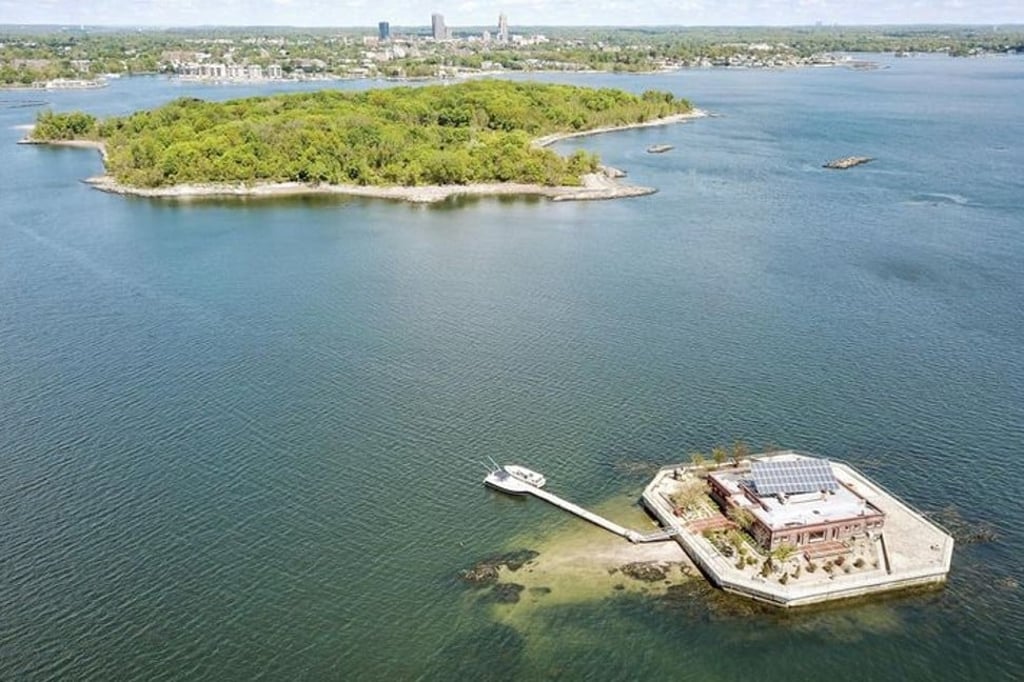
“They built an elaborate and dense transmission space,” Al Sutton, Columbia Island’s present owner, says. “They had a full crew and several families doing work there every day.”
Yet when a small aircraft collided with the tower in the early 1960s, destroying both the tower and the plane itself, CBS sold the island for about US$35,000 to Hayes, who then, citing the US$8,600 annual tax bill, donated it to the college.
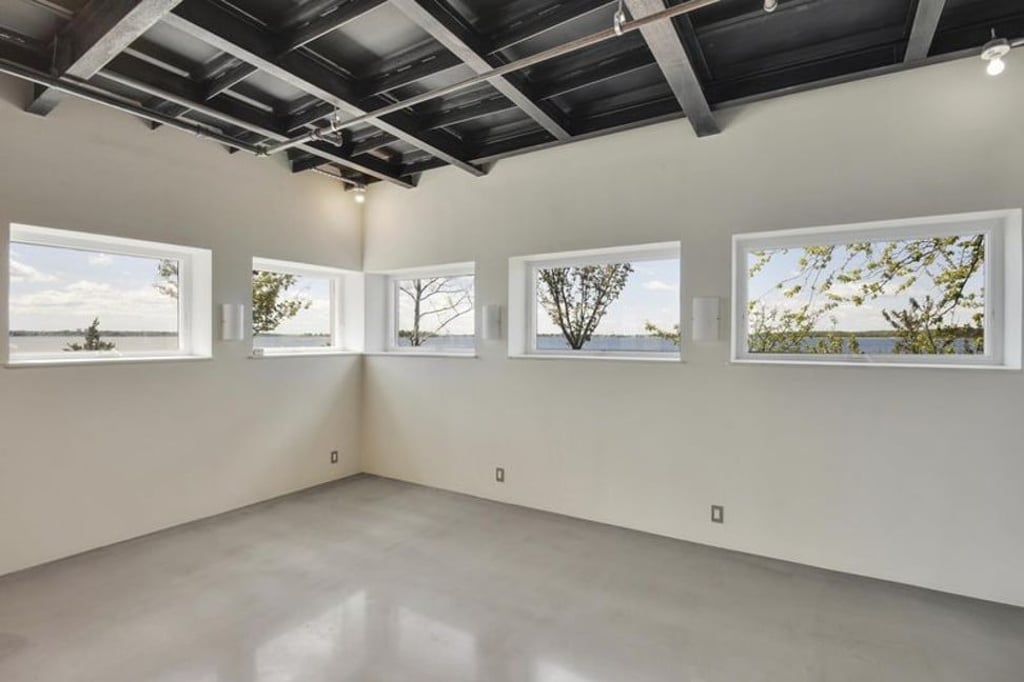
Despite the college’s intent to use the island as a “centre for the study of marine biology”, according to the 1966 article, the island fell into disrepair.
The college eventually gave the island to the superintendent in charge of maintaining it.
“They couldn’t pay him to do it, so they just gave it to him,” Sutton says.