Can China’s new Beijing Daxing International Airport help it overtake the US in aviation?

Just in time for the People’s Republic of China’s 70th birthday, the new starfish-shaped airport in Beijing hopes to welcome more than 100 million passengers a year, rivalling US airports
Just five years ago, the land upon where Daxing International Airport sits was a dusty area of farmland to the south of Beijing, largely neglected by visitors to the city. That’s no longer the case, and China hopes its emergence will topple the US and become the world’s biggest aviation market.
Xi has identified aviation as a key strategic industry. The president attended an official opening ceremony for the new airport, designed by the late architect Zaha Hadid, on September 25, 2019. According to the International Air Transport Association, within two decades annual passenger traffic in China’s skies will reach 1.6 billion, more than the country’s population today. China has set a goal of having 450 commercial airports by 2035, almost double the number at the end of 2018. It has also developed a jet to compete with Boeing Co. and Airbus SE.
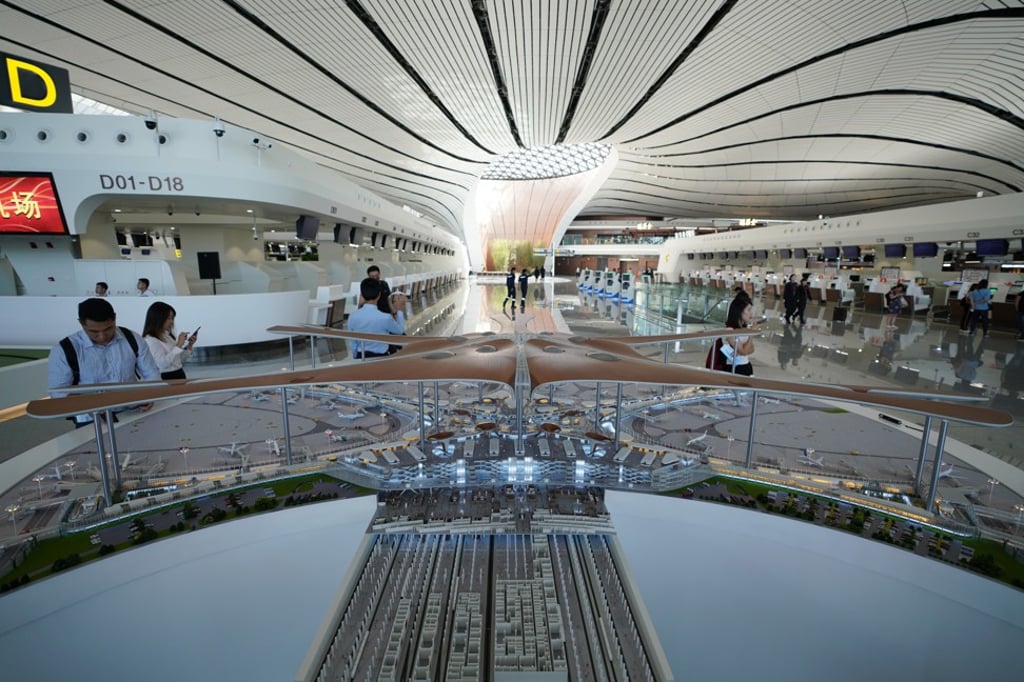
The vast new airport should increase Beijing’s passenger capacity by 60 per cent and help unclog the capital’s other international airport – the second busiest in the world behind Atlanta – to the north, which often has long delays despite a huge new terminal opening ahead of the 2008 Summer Olympics. Bottlenecks at Beijing Capital International Airport likely capped annual passenger traffic growth at an average of 4 per cent from 2013 to 2018, Bloomberg Intelligence equity analyst Denise Wong said.
Forced hand
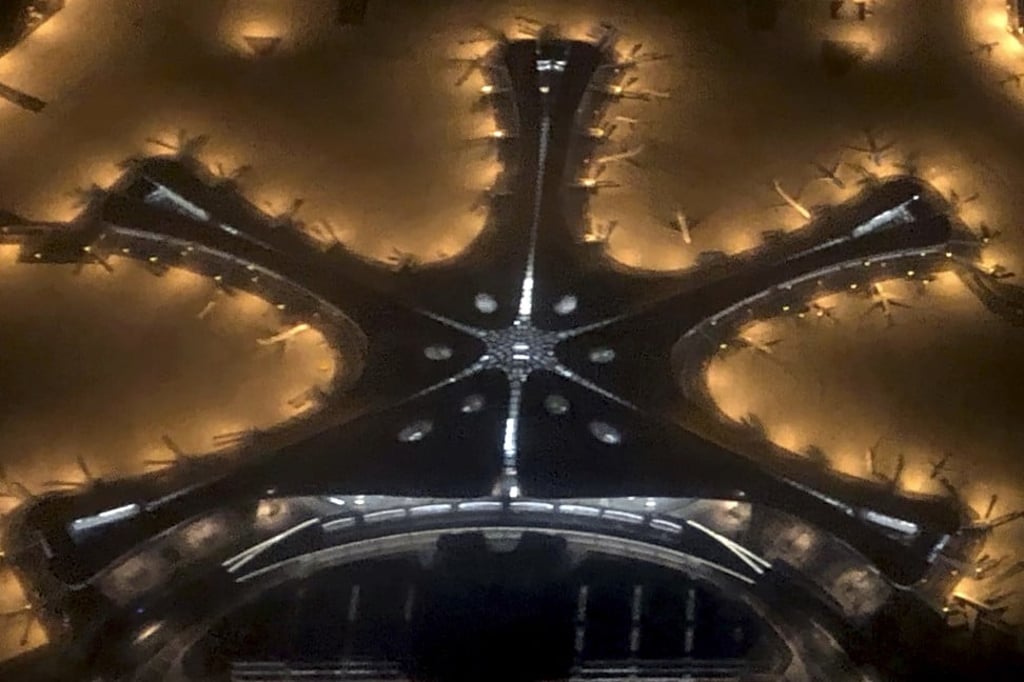
China has little option but to spend big and fast to have a shot at keeping up with demand. In its latest annual report on the commercial aviation market, Boeing said it expects airline passenger traffic in China to grow 6 per cent a year. McKinsey & Company says the extra slots at Daxing – which will initially have four runways and eventually seven, including one for military use – could open new direct connections to places such as San Diego. Beijing now joins major cities including London, New York and Tokyo with more than one international airport.
“It can get 10 if not hundreds of new destinations connected to Beijing over the years,” said Steve Saxon, a McKinsey partner in Shanghai. “This is the power of having large connecting hubs.”
Daxing also upends the government’s traditional one-international-route-per-airline model that left long-haul services from Beijing in the hands of Air China. The new site will become a launch pad to Europe, Asia and beyond for the other two of China’s “big three” carriers: China Eastern Airlines and China Southern Airlines. They’ll both get their first-ever direct flights to cities including Paris and Moscow.