Olympics 2020: How does Tokyo’s National Stadium compare with the most iconic stadiums ever?

Montreal’s Big O in 1976 and Berlin 1936, when African-American sprinter Jesse Owens’ four gold medals shattered the myth of Aryan superiority in front of Nazi leader Adolf Hitler, are among the leading candidates
The Olympics are always a good excuse to spend lots of money on infrastructure, and in particularly to put up some big shiny new stadiums to make your nation look good amid the international glare.
There have been numerous questions about how much long-term benefit they, and the Olympics, really bring to their home cities – most of the facilities built in Rio de Janeiro to host the 2016 games already lie empty and rusting. But, with many of them created by architectural legends, when they’re well designed and managed they can become much-loved landmarks. Here are eight of our favourites.
Olympiastadion, Berlin, 1936
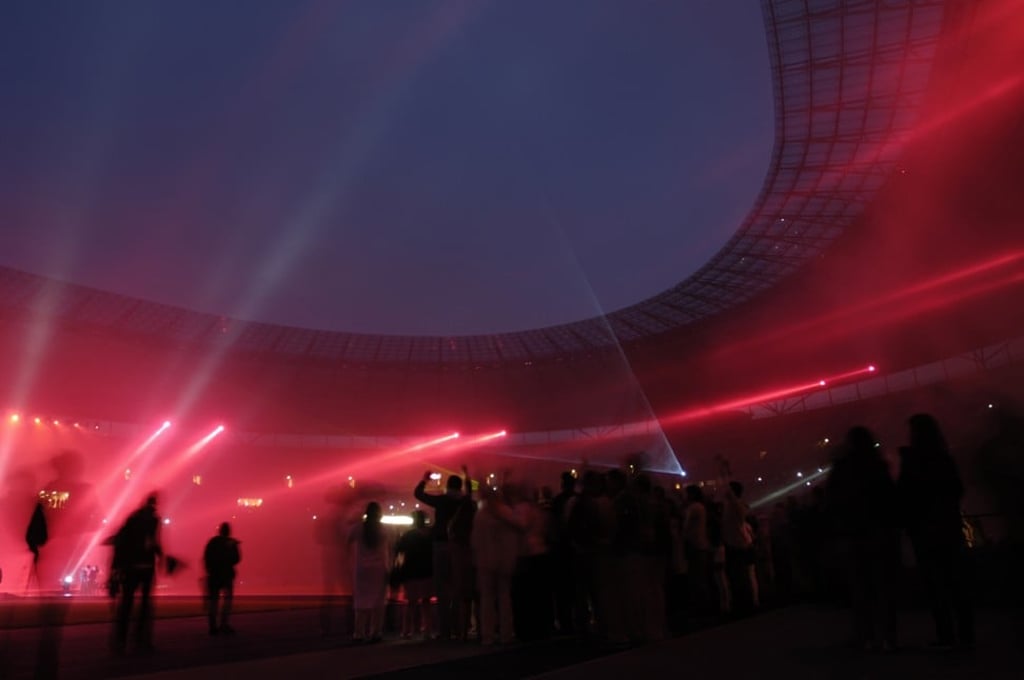
Berlin’s Olympiastadion has a dark history, but its architecture has since evolved. Created by the Nazis as part of their Olympic propaganda effort, it was the backdrop for African-American athlete Jesse Owens’ Hitler-infuriating quartet of gold medals. Known simply as the Olympic Stadium in English, the venue was originally designed by Werner March, who two decades later also designed the Cairo International Stadium in Egypt – but was taken over by Albert Speer, Hitler’s favourite architect, eventually costing 43 million Reichsmark.
Originally holding 110,000 people, a capacity that was later reduced to 74,475, the giant oval features a rigid, monumental, neoclassical colonnade of unmistakable authoritarian origins around its exterior, with two towers jutting above it at one end with the Olympic rings hanging between them. The design was softened by the transparent steel and Plexiglas roof added for the 1974 Fifa World Cup soccer matches the stadium hosted – it was also the venue for the 2006 tournament final – while another renovation in 2004 extended the roof and introduced a more pleasing curvilinear interior.
Yoyogi National Gymnasium, Tokyo, 1964
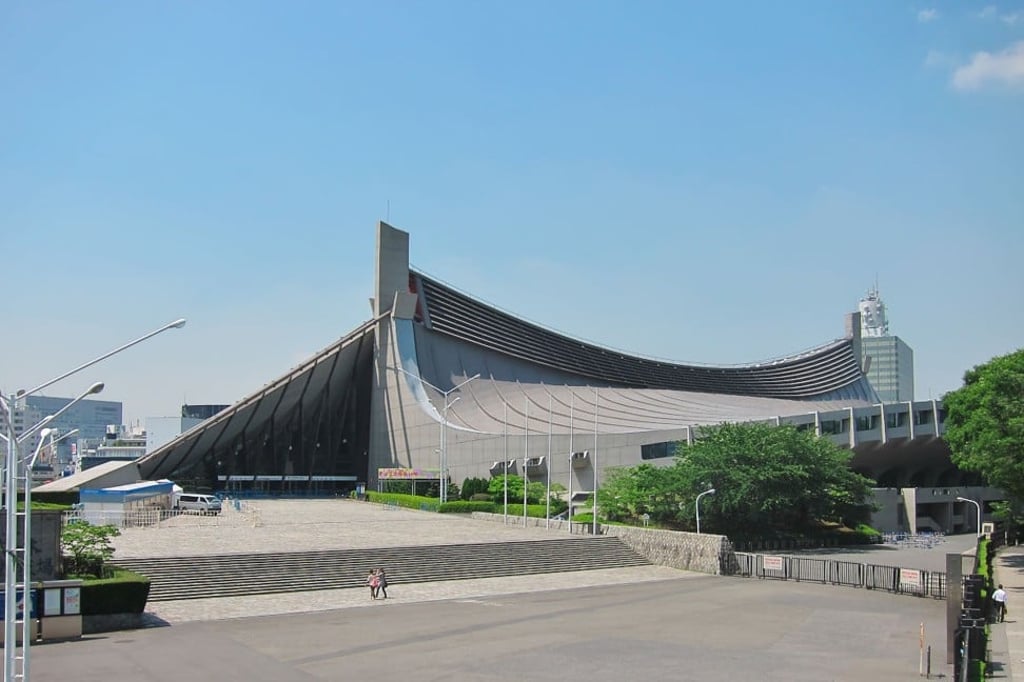
Built for Tokyo’s previous hosting of the Olympics, in 1964, when it housed the swimming, diving and basketball, the Yoyogi National Gymnasium is also being used in 2020, for handball, Paralympic rugby and badminton. It’s one of the best known creations of architectural titan Kenzō Tange, 1987 winner of the Pritzker Prize, architecture’s Nobel, who was famous for designs that seamlessly melded Japanese tradition with modernism – a skill that was never more in evidence than here.
With an appearance like a giant snail’s shell, the gravity-defying building appears to launch itself out of the ground and then curve ever upwards at an improbable series of angles towards the central supporting cables, from which the roof seems to hang. Built to hold 10,500 people, it now has a capacity of more than 13,000, and is undergoing an upgrade ahead of the 2020 games.