Architect Kengo Kuma’s new Tokyo stadium for the 2020 Olympics and 5 other stunning buildings he has designed

He is a masterful user of bamboo and his designs often blend with nature, but one of his buildings is so incredible it seems to magically appear out of the earth
Beginning as a flashy postmodernist, Japanese architect Kengo Kuma – the designer of the New National Stadium for the 2020 Tokyo Olympics– became interested in traditional crafts during the 1990s.
These days he favours a light, airy approach with solid walls frequently replaced by lightweight lattices, often of bamboo, and buildings that often seem to melt into their surroundings.
Here are six of his most celebrated creations.
New National Stadium for the 2020 Tokyo Olympics
Tokyo’s New National Stadium is a wooden lattice structure of a gentle, deliberately unimposing design that blends into its wooded surroundings – in diametrical opposition to the design it replaced, the late Zaha Hadid’s gigantic alien ski mask. A master of light and space, Kuma is known for designing contextually sensitive buildings made from natural materials.
The Great Bamboo Wall, near Beijing (2002)
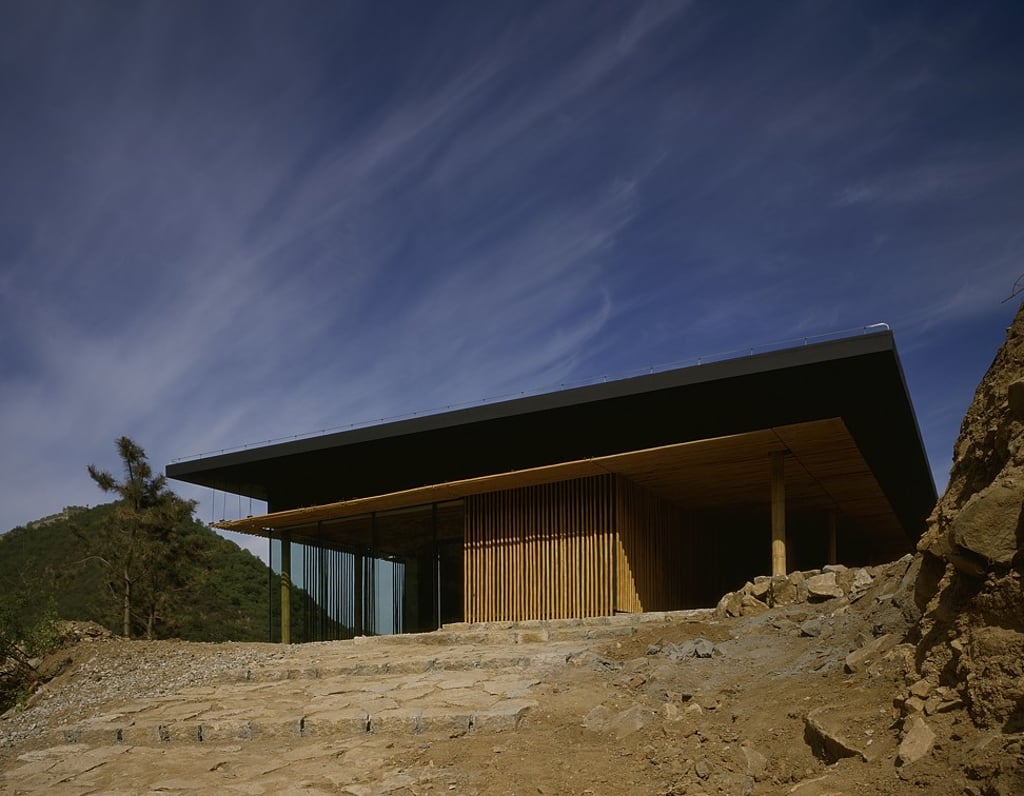
This was the project where Kuma really started to mark himself as a masterful user of bamboo and creator of buildings that show the utmost responsiveness to their environment. Consisting of 10 houses in a forest near the Great Wall of China, it was part of a bigger project involving 10 Asian architects.
The elegant dwellings have a meditative quality inside, with the bamboo creating endlessly beautiful combinations of dappled light, complemented by rice paper, slate and glass, but they also have a barely-there quality, as they appear to melt into the area’s undulating, scrubby landscape, designed to echo the way the Great Wall itself blends into the topography.
Kuma has said he chose to work mainly in bamboo because it provides a link between Chinese and Japanese cultures; he also contrasted its permeable qualities with the solidity of the Great Wall, designed to separate rather than unite.