80 dishes and more: the lavish Lunar New Year’s Eve banquet fit for a Chinese emperor

Beijing’s Palace Museum exhibition reveals the daily hunt for poison and other culinary secrets surrounding the Forbidden City’s Qing dynasty imperial family
China’s annual Lunar New Year celebrations traditionally feature a selection of specially prepared – often lavish – dishes eaten together by families.
The importance of family at such times means millions of people throughout the nation will be crowding into trains, buses and cars ahead of next week’s holiday to make the annual pilgrimage home so they can be part of Tuesday’s New Year’s Eve meal, also known as the reunion dinner, to mark the occasion.
This year, Beijing’s Palace Museum – the former Chinese imperial palace, known as the Forbidden City, in use from the Ming dynasty (1368-1644) up to the end of the Qing dynasty (1644-1911) – is offering an insight into how the nation’s emperors would have celebrated the occasion in lavish style.
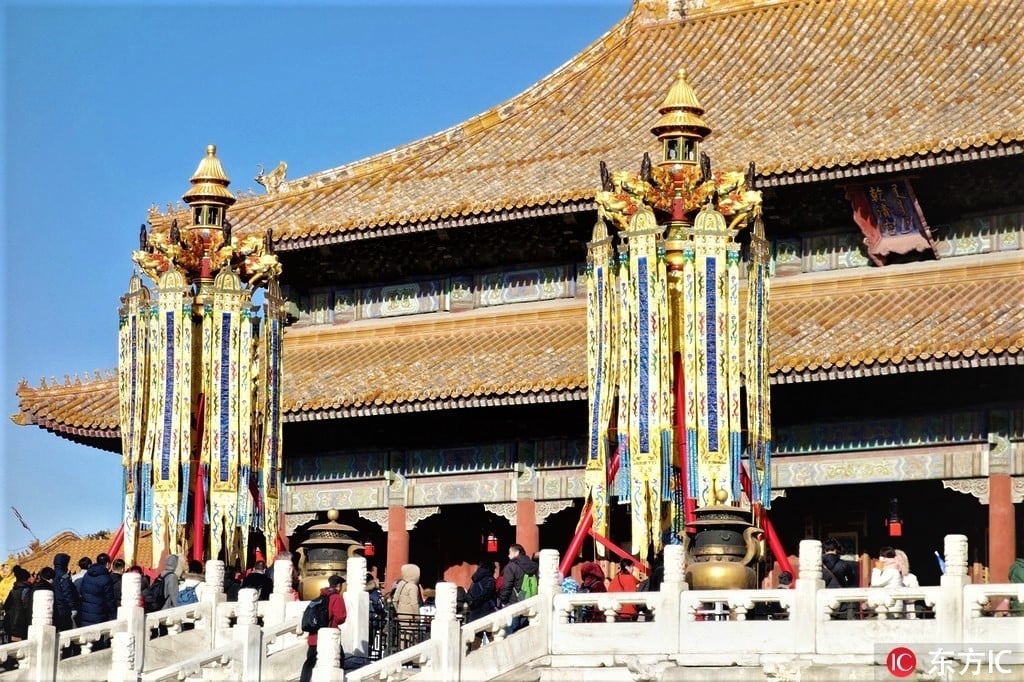
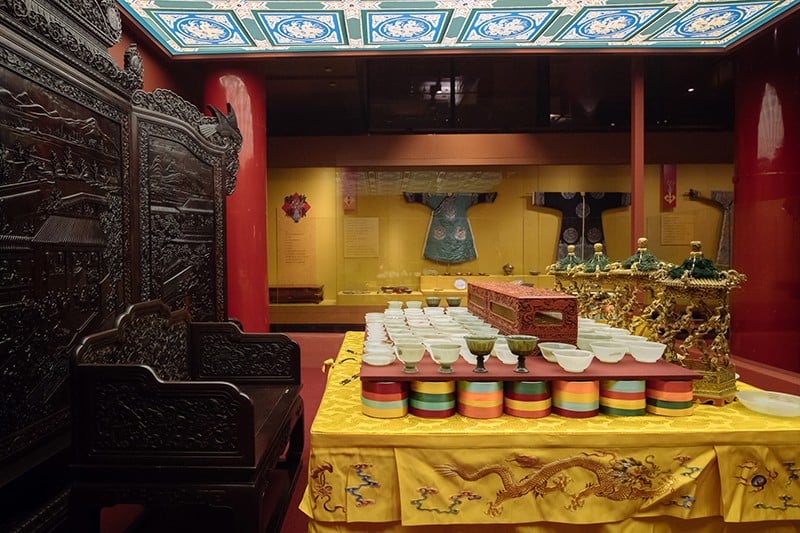
An exhibition, titled “Celebrating the Spring Festival in the Forbidden City” – staged in galleries above the Meridian Gate, or Wumen (午門) until April 7 – allows the public to see exactly what, and how much, Emperor Qianlong would have eaten at his lavish Lunar New Year’s Eve dinner in 1779, thanks to the painstaking recreation of his opulent “golden dragon banquet table” (金龍大宴桌).
This luxurious feast – featuring 80 dishes arranged in eight rows – was served to the Qing dynasty emperor and other members of the imperial family for the annual celebrations during the 44th year of his reign.
Yet a daily ritual – before the emperor could start to eat anything at mealtimes – included a test for poison, with a loyal servant given the task of eating small portions of each dish to check they were safe for royal consumption. So the emperor would have had to wait while all 80 dishes were tested.