Five world-famous spinels: the stones giving rubies a run for their money

Stories behind The Hope Spinel, The Black Prince Ruby, The Timur Ruby, Catherine the Great Spinel and the Austrian Imperial Crown Spinel
Regarded as one of the “big four” in fine jewels, the ruby needs little introduction. By comparison, the red spinel is a little known, but equally seductive red gemstone that by rights should share the limelight with the ruby.
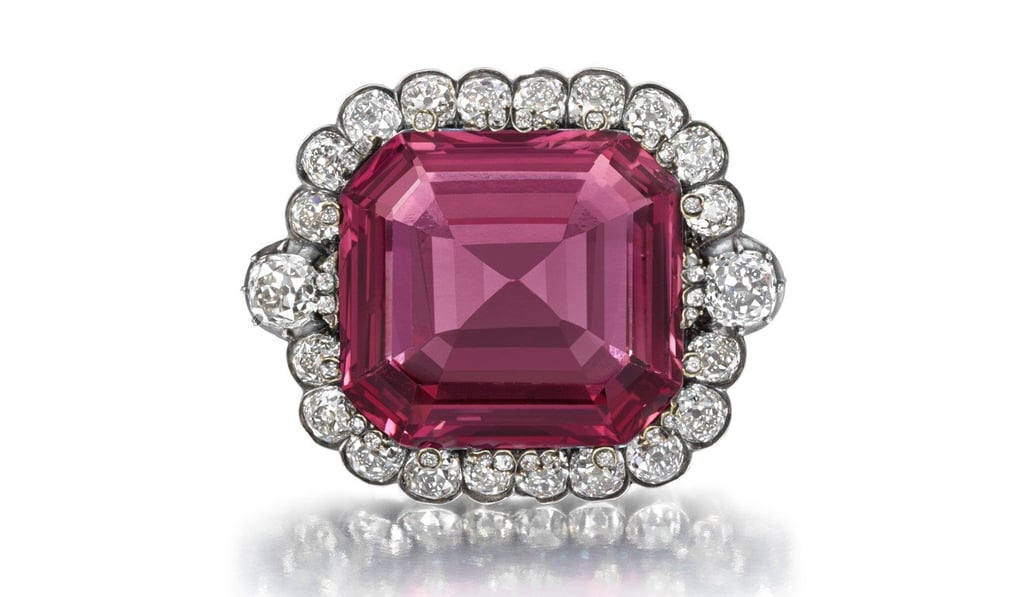
HOPE SPINEL
The 50.13ct spinel comes from one of the world’s greatest gem collections owned by Henry Philip Hope who died in 1839. Large spinels such as this one are often more transparent – freer from inclusions – than ruby, adding to their value. The Hope Spinel, “classed as an exceptional treasure of nature”, came from the famous, almost inaccessible Kuh-i-Lal mine, in Tajikistan.
THE BLACK PRINCE RUBY and THE TIMUR RUBY
They come from the same ancient mine in Tajikistan and, confusingly, both are actually spinels. The magnificent 170ct Black Prince Ruby is now the showpiece of Britain’s Imperial State crown, having been given by the Spanish to the Black Prince in 1367 and worn at the famous Battle of Agincourt in 1415. The 352.5ct Timur Ruby was presented to Queen Victoria by the East India Company.
A post shared by Rock2Gems Jewelry (@rock2gems) on Apr 28, 2016 at 7:07am PDT
CATHERINE THE GREAT SPINEL
The showpiece of the Russian Imperial crown, the 398.72ct spinel was acquired by a Russian envoy to China while conducting trade negotiations with the Emperor in 1676. The stone was originally found by Chun Li, a Chinese mercenary in the Turkic conqueror Timur’s army. It became part of the crown for Catherine the Great’s coronation in 1762.