5 common SME mistakes - and the solutions from cloud technology
- Common accounting and planning errors, such as overlooking cash flow and setting the wrong price, can lead to real business consequences
- New technology tools, such as access to real-time accounts data, invoice automation and latest payment methods will help firms achieve good financial health

The company, which offers hotel guests free-to-use Handy smartphones, rose to fame in 2012 after becoming one of the few local companies with a “unicorn” valuation – a status for start-ups valued at more than US$1 billion. At one point, its devices were used in more than 82 countries and 600,000 hotel rooms.
However, in July it announced an end to the service in most of its markets after failing to “match vision with profits”, a study by the Financial Times revealed. The reason, according to the report, was that the company lacked a well-thought-out business plan.
Tink Labs’ woes have highlighted the need for SMEs and start-ups to focus on formulating long-term business plans with a path to profitability. To do so, they should always have a clear strategy in place based on data and facts.
“Successful entrepreneurs are people who constantly focus on product development and enhance competitiveness,” says Kim Shin Cheul, who heads iDendron, the Innovation and Entrepreneurship Hub at the University of Hong Kong.

Successful entrepreneurs are people who constantly focus on product development and enhance competitiveness
It is particularly important that SMEs maintain good financial health to tide them over challenging periods.
Simple accounting and planning mistakes, such as overlooking cash flow or setting the wrong price, should be avoided as they have real business consequences.
The availability of new technology tools has enabled business owners to avoid these five common accounting and planning mistakes or oversights – and increase their chances of success.
1. Not keeping financials in check
The importance of keeping financials in check is perhaps one of the hard-learned lessons for the founders of Flud, a now-defunct start-up that built a social news reader app for mobile devices.
However, the app was forced to shut down after three years as a result of poor financial health. Analysts said that the main reason for its demise was its inability to secure new funding, and a constant struggle to attract users and monetise their engagement.
Many SMEs have the problem of having too many small invoices and receipts, but with a cloud platform they can be uploaded online with just one click … we can easily track our finances flowing through different channels
Without a healthy cash flow, entrepreneurs can run into difficulties while paying for basic expenses, such as rent and wages, which can result in lower credit ratings or even threaten the company’s existence.
A remedy for the problem is switching to cloud-based accounting tools, as they allow small business owners to have up-to-date financial record and keep liquidity in check.
Albert Au, who founded acesobee, a Hong Kong tech start-up that runs a digital health care system, says that cloud technology has enabled him to keep a close eye on revenue and expenses, and ensure his company has enough liquidity at hand to cover short-term financial obligations.
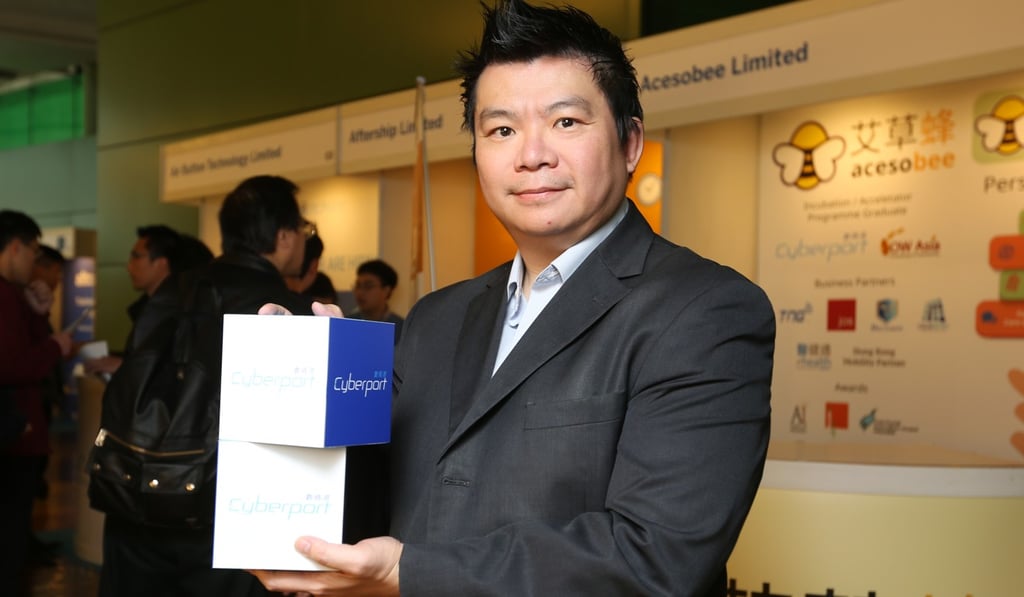
“It is really helpful that we can easily track our finances flowing through different channels,” Au says. “Many SMEs have the problem of having too many small invoices and receipts, but with a cloud platform, they can be uploaded online with just one click.”
These tools also mean Au can conveniently open up financial data to his key staff and advisers, all the while generating different records – such as balance sheets or profit-and-loss reports – automatically.
In 2018 small businesses in Hong Kong were owed more than US$1.6 billion because of late payments, with more than 10 per cent of invoices left completely unpaid that year
2. Overwhelming burden of late payments
Ensuring a healthy cash flow can be a matter of survival for SMEs as they do not usually have a large amount of assets to back their companies. But there is bad news – they are not always lucky when it comes to collecting payments from clients.
In fact, recent studies show that they have often fallen victim to late payment problems, which have significantly undermined their prospects and growth. To make matters worse, late payments have resulted in business closures that otherwise could have been prevented.

This is also an issue that has plagued small businesses in Hong Kong. Last year alone, they were owed more than HK$13 billion (US$1.6 billion), research by Xero, the cloud-based software platform, shows.
More worrying still, the same study shows that more than 10 per cent of invoices were left completely unpaid that year. The pressure of having to chase payments from different clients, and ensuring they have enough cash to pay for basic expenses such as rent and wages, has made it much harder to run businesses.
One way SMEs can better mitigate risks is by automating invoices and payment reminders so that they can be issued and followed-up promptly, reducing the stress on business owners.
3. Overlooking government funding schemes
For Au, obtaining much-needed funding was the crucial moment that allowed him to sustain and expand his health care start-up.
His company, acesobee, was granted funding as part of the Cyberport Incubation Programme at Hong Kong’s Cyberport, a low-density business park for information and communications technology start-ups. The funding also includes a lump-sum payment and subsidies for hiring researchers with university degrees.
Funding [from Hong Kong’s Cyberport Incubation Programme] has really helped acesobee because it has become more affordable for us to hire talent for our product’s development
“The funding has really helped us because it has become more affordable for us to hire talent for our product’s development,” he says.
As the business outlook becomes more pessimistic, funding schemes such as this have become increasingly important in helping SMEs enhance their competitiveness. While looking for the right grants can be vital to one’s success, it can also be very time-consuming.
A good way to keep track of funding schemes is by going online – checking government websites, connecting with small business associations or seeking professional advice from accountants. Having a complete set of financial records also benefits SMEs in tailoring their applications, as they can show how they can manage their finances responsibly.
Kim says there is currently a suite of funding schemes available to help Hong Kong businesses, especially start-ups, enhance competitiveness.

In addition to the funding schemes offered by Cyberport and another business park, Hong Kong Science Park, the government also has provided subsidies for companies to upgrade their business processes.
The scheme, which is applicable to small businesses with “substantial business operations” in the city, can be used to cover projects such as technology consultancy and the purchase of software solutions.
Alex So, managing partner of the accountancy and advisory firm, Fastlane Group, believes the programme provides a valuable opportunity for SMEs to upgrade their internal financial and accounting systems and improve productivity.
He says the scheme is often highly competitive and advises SMEs to identify the tangible benefits, especially the milestones and goals of the projects in which they wish to invest, so as to make a compelling case to the vetting committee.
4. Setting the wrong price
Setting the wrong price for their products or services can often be devastating for SMEs, as it can directly undermine competitiveness and revenue growth.
In the most serious case, one start-up was forced to shut down after it failed to develop a pricing strategy that would have allowed it to retain customers and become profitable.
The Happy Home Company, offering a personalised home management software that assisted property owners, raised a seed funding and launched a mobile app in 2015. The start-up assisted users in home maintenance and repair, including finding the right service provider and developing long-term improvement plans.
The problem was that the company constantly struggled to develop a pricing system that could retain users and maximise profits, forcing it to fold after a year.

Based on its analysis, a 1 per cent increase in price can generally translate into almost 9 per cent increase in operating profits, provided that the sales volume remains intact. Finding and setting the optimal price can ensure entrepreneurs do not lose out on profit growth.
For Kim, this boils down to the question of how well entrepreneurs have conducted due diligence.
“The value proposition depends on your customers,” he says, explaining that there is no one-size-fits-all pricing, as the same product could have different values depending on how they fit with customer needs.
The availability of cloud technology has enabled SMEs to gain new insights into finding the right pricing model.
The McKinsey report says that one useful method is to study big data, which can reveal patterns, trends and associations in areas relating to human behaviour and interactions, such as standard margins, production costs and volume discounts.
With advances in cloud computing, SMEs can undertake these analyses at a more affordable price and make better pricing decisions.
5. Not keeping up with payment trends
SMEs will risk losing out on competitiveness if they do not keep up with the latest payment trends.
These trends, driven by the digital economy and the rising demographic influence of millennials, are changing rapidly.
Customer preferences are also different across markets: while Hong Kong predominantly makes payments using credit cards and reusable stored-value Octopus cards, mainland China has embraced mobile payment services such as Alipay – part of Alibaba Group, the Chinese multinational e-commerce, retail, internet and technology conglomerate that owns the South China Morning Post – and WeChat Pay.

Ensuring that target customers have access to their preferred mode of payment is essential for driving business revenues.
For businesses, the real challenge is to ensure they do not miss out on these opportunities while keeping all the payment methods in check.
To kill two birds with one stone, SMEs can turn to software providers that offer an integrated system for managing payments received across platforms, be it Alipay, credit cards, or telegraphic transfers. This enables them to benefit from a shift away from outdated payment methods, while speeding up payment cycles and improving liquidity.
Additional reporting by Luke O’Neill.