China Conference: Southeast Asia 2025 spotlights economic and technological opportunities
Digital collaboration between Asean nations and China boosts opportunities for growth

Amid a resurgence of rising tariffs and competition for power, geopolitical and global economic uncertainty is on the rise. However, the China Conference: Southeast Asia 2025 sent a message of reassurance, with speakers including Malaysia’s Prime Minister Anwar Ibrahim and David Liao, co-CEO of Asia and Middle East for HSBC, stressing the need to expand cooperation to stimulate regional growth.
In recognition of Malaysia’s role as this year’s Asean chair, SCMP’s China Conference, supported by HSBC as the presenting sponsor, brought together the region’s leading politicians, business leaders and public figures in Kuala Lumpur on February 17.
Anwar set the scene, emphasising the need of the 10-member Association of Southeast Asian Nations bloc to strengthen ties with China, the Middle East and other emerging economies to mitigate potential economic shocks.
“We must act with urgency, unity and ambition to secure a prosperous future for all,” Anwar said. “This is not a time for incrementalism or short-term thinking. Let us build a future based on trust, innovation and shared aspirations.”
The conference focused on the sectors driving the region’s growth, opportunities for technological collaboration, and Hong Kong’s role in connecting mainland China and the world.
A panel discussion titled “Deglobalisation vs Outbound Investments: the Presence of Chinese Companies in Asean” examined the expansion of Chinese companies into Asean and how strengthening Asean-China trade fosters mutual economic opportunities.
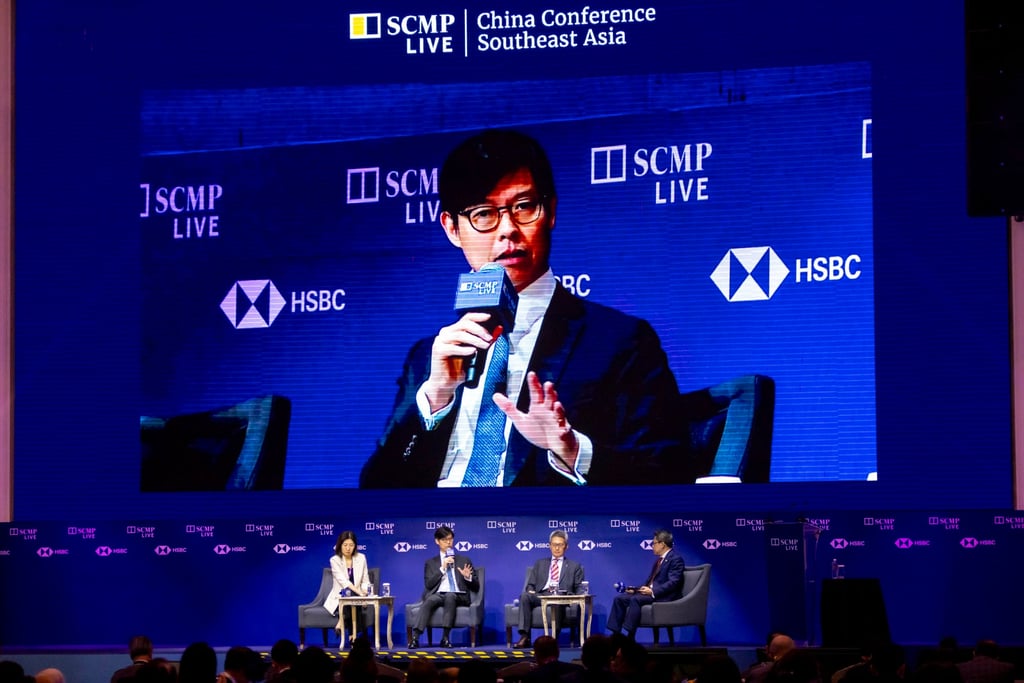
Mainland China’s outbound direct investment (ODI) was roughly US$160 billion in 2024 – less than 1 per cent of the nation’s economy. If Chinese ODI increased to match the high-income developing country average of 1.5 per cent, that implies an additional US$150 billion per annum. Unlocking the additional capital would have a significant impact on regional stock markets, fixed-income, financial products, property and greenfield investments.
“China will be a long-term structural exporter of capital, services and technology,” Liao said. “That trend is evident in the ever-increasing interconnectivity and the potential; the real need is there.”
He added that as China increasingly shifts funding to the development of its hi-tech sectors, it will provide opportunities for Asean to benefit, with China’s achievements in digital innovation and infrastructure having a positive impact on the region.
The level of investment Asean is receiving from mainland China, Liao noted, has tripled in the past 15 years. Banks that bridge the region are key facilitators of rising investment.
HSBC’s presence in Malaysia dates back more than 140 years, and the bank has long supported economic growth and transformation in the region, including Hong Kong and mainland China, where it is about to celebrate its 160th anniversary.
“Apart from investing in businesses, the other thematic is that China has the world’s largest untapped savings pool, which can be put to work in the international market,” Liao said. “There are an estimated US$9 trillion of ‘dry powder’ demand deposits waiting to be unleashed. China is going through a transformative stage, and there is a lot more to play for.”
Regional and international connectivity is a competitive advantage for Asean countries, and HSBC plays a key role in connecting member economies, and accelerating trade growth and economic development.
Malaysia has capitalised on its advantages to enhance its appeal as a key destination for investment in the digital economy. As chair of Asean, the country is spearheading the digital economy framework agreement (DEFA) negotiations this year, which is expected to generate US$2 trillion of economic value in the region by 2030. When the agreement is finalised, businesses of all sizes are set to benefit from increasing regional harmonisation in the digital economy. Banks such as HSBC, with both deep market trust and broad regional networks, will be key in unlocking Asean’s innovative potential.
The bank’s commitment to Asean was apparent during a conference session featuring Christina Cheah, managing director of HSBC Bank Malaysia, and Ronnie Lim, CEO of OMS Group, a Malaysia-based telecoms infrastructure and subsea cable installation company. The discussion centred on how investments in infrastructure act as a conduit for FDI, and how well-managed, large-scale projects promote economic growth and sustainability.
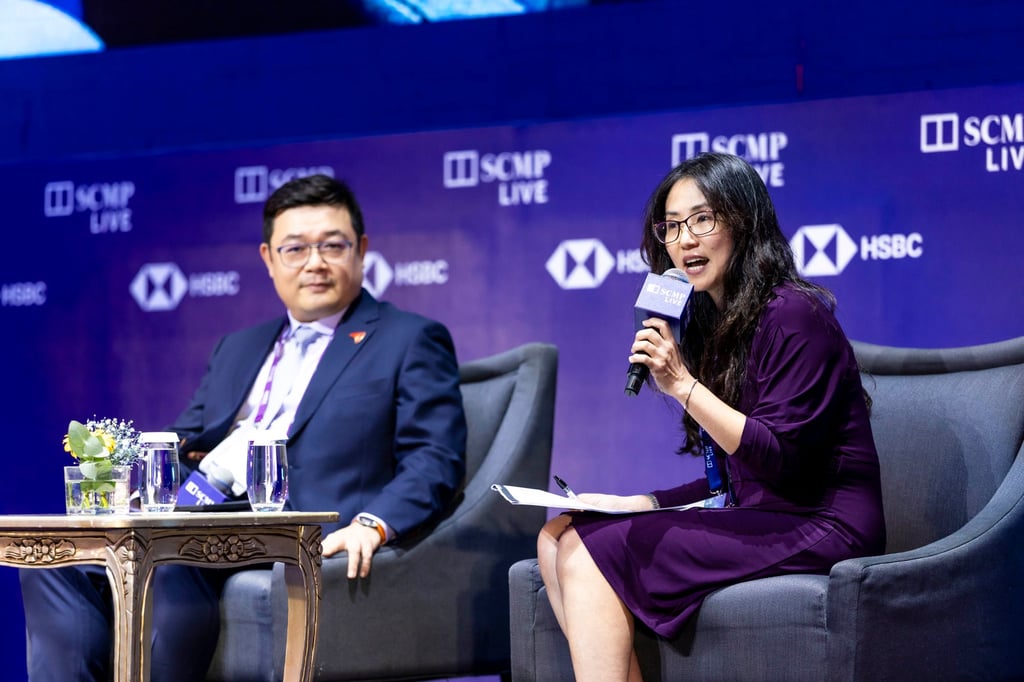
The discussion highlighted how a 2016 declaration by member nations had provided the impetus for a master plan to build an Asean community that is more competitive, resilient and connected.
The Asean region’s economic trajectory is inextricably intertwined with the wider adoption of digital infrastructure and connectivity. In that respect, the cross-border harmonisation of regulations will help to push things forward, as will more public-private partnerships to secure essential investment in new projects and drive value creation.
Tengku Zafrul Aziz, Malaysia’s minister for investment, trade and industry, delivered the closing speech at the conference, emphasising how Asean, with a market of almost 700 million people, can collaborate with China in sectors including the sharia-compliant finance industry, semiconductors, tourism and the supply chain.
“Asean matters, and the world realises that it matters,” he said. “The year 2025 will be a game-changer for Asean, and there is every reason to be confident that the economic deliverables we have identified, if properly executed, will be transformative for the region.”
Disclaimer from HSBC:
This article is prepared by HSBC and is for the exclusive use of the person to whom it is provided. It is intended for reference and illustrative purposes only. It does not constitute an offer or solicitation for, or advice or recommendation that you to purchase from or otherwise enter into any transaction with HSBC or any member of the HSBC Group (as defined below).
The views and opinions expressed in this article are those of the individuals and/or the organisations represented by the individuals and, except where an individual is specifically identified as a representative of HSBC, do not state or reflect the views or opinions of HSBC. These views and opinions are subject to change without notice and without any obligation on HSBC to give notice of such change, and should not be construed as any recommendation or advice.
HSBC makes no representation or warranty (express or implied) of any nature nor is any responsibility of any kind accepted with respect to the completeness or accuracy or reliability of any information, projection, representation or warranty (expressed or implied) in, or omission from, this article. No liability is accepted whatsoever for any direct, indirect or consequential loss (whether arising in contract, tort or otherwise) arising from the use of or reliance on this article or any information contained in this article by the recipient or any third party.