‘Real-world’ competition tests students’ financial literacy and teamwork
Undergraduates from around the world show analytical and problem-solving skills in Global Finals of HSBC/HKU Business Case Challenge

A few pages of business information, a blank sheet of paper and a room of senior executives waiting for answers – that is where the Global Finals of the annual HSBC/HKU Business Case Challenge begins.
The latest event held in Hong Kong, supported by The Hongkong Bank Foundation – the charity arm of HSBC – and now in its 19th year, featured 24 four-member teams of university undergraduates from 20 countries across Asia-Pacific, Europe and the Middle East tackling business problems in real time.
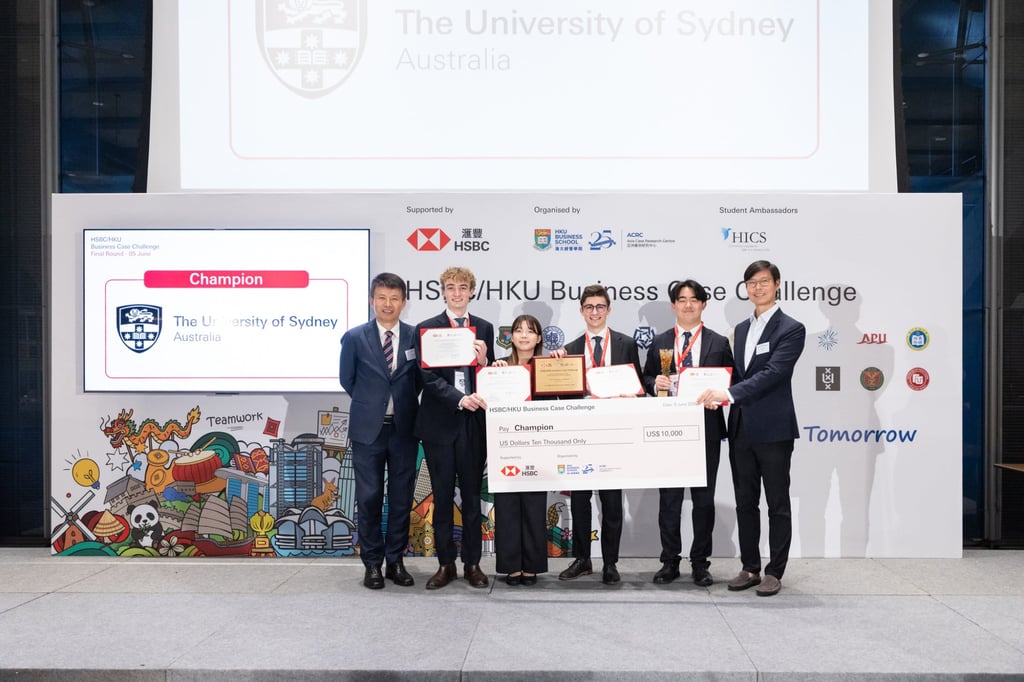
Last month’s Global Finals of the HSBC/HKU Business Case Challenge 2026 – drawn from an international field of more than 12,000 students after competing in local rounds across the region – saw Australia’s University of Sydney crowned champions after five days of intensive analysis, debate and live presentations before a panel of business executives. The event was hosted at the University of Hong Kong (HKU) Business School and at the HSBC Main Building in Central.
“At the HKU Business School, we believe in bridging classroom learning with the realities of business and decision-making, and in working closely with industry partners to give our students experience that goes beyond theory,” Professor Hongbin Cai, dean of HKU Business School, said.
“Our long-standing partnership with HSBC reflects that commitment and this year’s highly topical cases, including financial innovations and brand scaling, challenge students to connect theory with practice, blending the perspectives of marketers, investors, entrepreneurs and stewards of capital.”
Teams had to organise incomplete information into clear, data-driven recommendations, build financial logic and present hand-drawn suggestions while demonstrating strategic thinking and problem-solving before a judging panel in conditions resembling professional life.
The stripped-back format is all part of the test; students must put smartphones and computers aside and rely only on pen and paper, their own analysis and the strength of their teamwork.
“They have to work out the financial analysis themselves, draw charts for the presentation and clearly explain their ideas,” William Chiu, director of global philanthropy and secretary of the advisory committee of the foundation, said. “We are testing a lot of skills – teamwork, financial literacy, common sense, presentation and adaptability.”
This practical focus helps explain why the initiative has continued for nearly two decades. Chiu said the foundation was not simply repeating the same competition each year, but looking for ways to keep business education realistic, international and connected to what students would face after graduation.
“We are not going to copy the same programme 19 times,” he said. “Every year, we think about what we can do to improve the learning experience.”
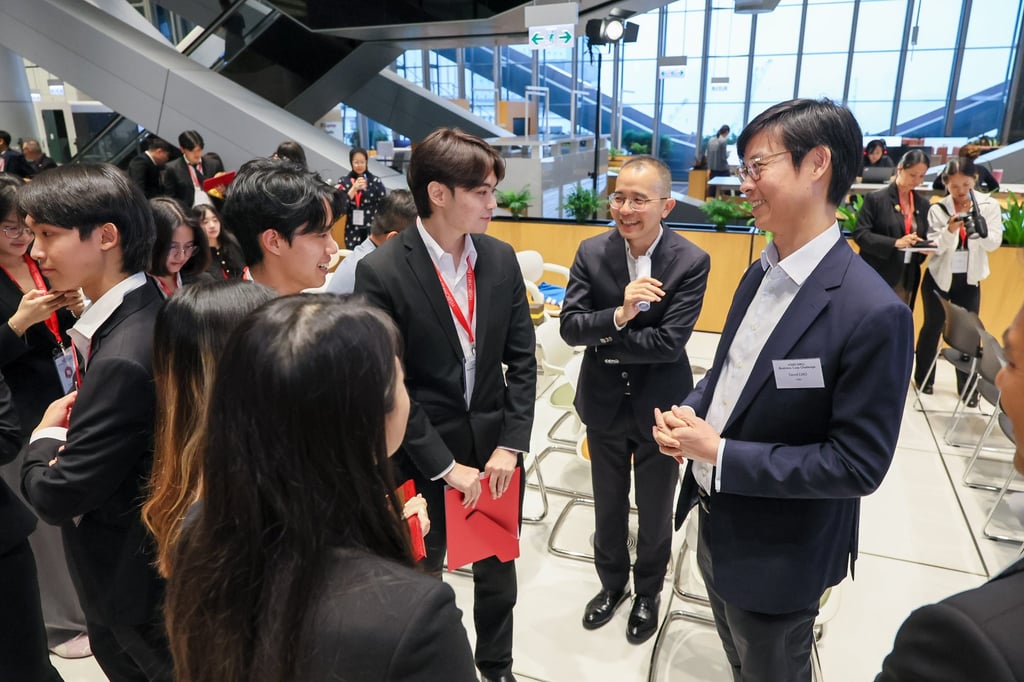
This year’s Global Finals introduced the Boardroom Challenge, a new round designed to make the experience more interactive. Instead of only presenting to judges, students had to engage more directly with senior executives and respond in the moment.
For Praew Praewinkant and other members of the University of Sydney’s winning team, the new format meant considering how others might interpret the same information. “You always have to take into account that they might have a completely different outlook on the case,” she said.
The need to consider the problem from a different perspective also shaped the earlier Hong Kong Round, which was won by the team from City University of Hong Kong (CityU). For their case on Open Dialogue, the students had visited stores across Hong Kong to see how the brand operated, using the city itself as part of their research.
“We went around Hong Kong to all the Open Dialogue stores, looking at it and getting a feel for the business,” Adam Sutherland Gear, one of the CityU team members said. “I think that probably distinguished us.”
The team also spoke to sales staff while inside the stores to gain a greater understanding of how the brand operated.
When the team represented Hong Kong in the Global Finals, that local grounding was matched by an international outlook – a quality often associated with Hong Kong’s role as an international business hub.
Competing against students from other regions also offered lessons in communication. Jeenendra Agarwal, another CityU team member, said some overseas teams had stood out because of the clarity of their presentations.
“Something that I really picked up was how well they were able to distill the ideas, how well they were able to say exactly what they wanted to say and present it in a way that the judges and people were really able to understand,” he said.
The experience helped to reinforce an important lesson: even the strongest ideas can lose their impact if they are not communicated clearly. In a competition where teams are judged not only on analysis but also on presentation, the ability to explain complex recommendations in a concise and accessible way can be just as important as the research behind them.
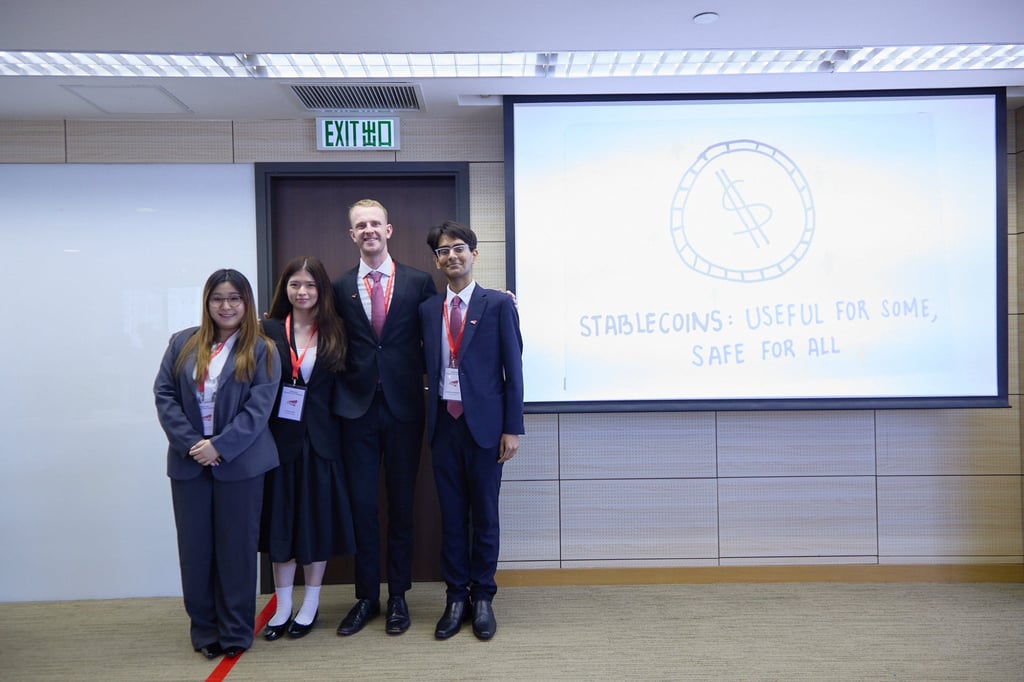
During the Global Finals, students moved between industries, audiences and priorities. One case asked how PopMart could build a more enduring brand beyond a short-term surge. Another treated Hong Kong’s stablecoin landscape not only as a finance issue, but as a communication challenge
The last case centred on Chartwell Capital, a Hong Kong-based investment company led by founder Ronald Chan. The University of Sydney team saw the task not only as a question of growth, but of sustainability: how to reduce reliance on one main figure and strengthen the business as a platform in its own right.
“The key was to move away from reliance on Ronald Chan as the key man, and to leverage the strength of the business itself,” the team said.
This recommendation followed a clear sequence: consider how the firm could attract new investors, then how it could retain those customers over time. Financial analysis sharpened the argument, giving the proposal both strategic direction and commercial discipline.
The value of the competition was not limited to the cases. It also came from the way the challenge forced students to work under pressure over a limited time, with each member responsible for part of the final recommendation. During the 180-minute challenge, someone needed to read through the case, shape the numbers, test the logic and turn the argument into a presentation judges could follow.
“If any of us went in as an individual trying to tackle that three-hour case, I don’t think we would have been able to do it,” Jacob Callaway, another member of the winning University of Sydney team, said.
Teammate Andris Dang added: “With the team, you know that everyone is strong in what they do and brings a lot to the table.”
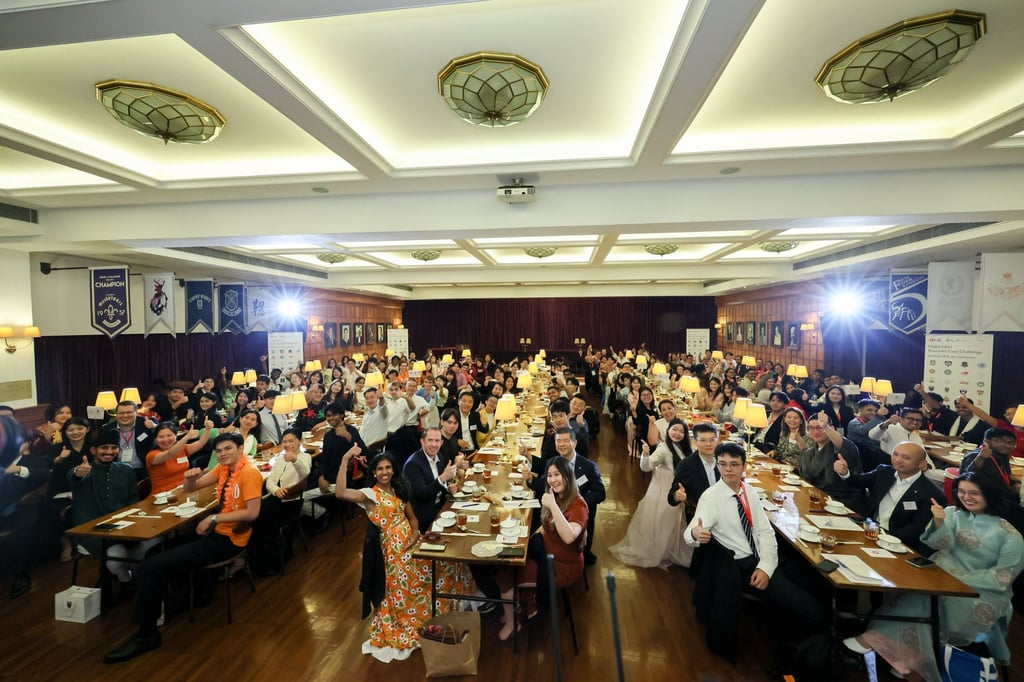
Away from the competition, participants were able to experience Hong Kong life while visiting Stanley, where they were mixed into cross-country teams to take part in a team-building group challenge, which involved tracking down local heritage landmarks and sampling popular neighbourhood treats. Midway through the competition, students were also able to take a boat cruise along the Victoria Harbour waterfront, while enjoying on-board games and activities.
Chiu said one of the clearest career lessons highlighted by the challenge was that students needed to learn how to not only solve a case, but also; rely on others, contribute under pressure and present a shared view with confidence.
The competition gave students a practical setting to test qualities that classrooms could find difficult to recreate: judgement, adaptability, teamwork and clear communication when decisions had to be made quickly, he said.
“AI can help with efficiency, but it cannot replace critical-thinking, common sense and the ability to make decisions,” he said. In the challenge room, students still needed to weigh up incomplete information, organise their thoughts and take responsibility for their recommendation, he said.
That broader objective reflects why the foundation has supported the initiative from the outset: to invest in experiences that help young people build confidence and capability for the workplace.
Giving participants real cases to tackle while competing in front of their peers from different regions and a judging panel of senior executives, means they get a clearer understanding of what the business world will ask of them – and a chance to practise before their careers begin.