Hong Kong medtech start-up scoops top prize at 2025 EQT Impact Challenge
Four finalists pitched breakthrough inventions at this year’s grand finale with healthcare innovators Syngular Technology emerging as winners

The grand finale of the 2025 EQT Impact Challenge saw an exciting conclusion to a competition that showcased Hong Kong’s best science and tech-based start-ups in a battle to win funding and support for their innovative ideas.
Last Thursday, the final four contenders working in the realms of climate change, renewable energy, health and biotechnology – from an initial field of more than 220 pre-seed and seed-funded companies – made their final pitches before the judges.
After presenting their business concepts, financial and operational models, and plans for scalability and longer-term growth, the winner was Syngular Technology, chosen as the outstanding example of how innovative thinking, combined with technical expertise, can be truly transformative.
Based at Hong Kong Science Park, the company has developed a mixed-reality surgical navigation system to guide doctors performing complex operations, such as the removal of bone cancer tumours.
The key to this is the conversion of medical scans into holographic images which can be viewed on a headset as the procedure takes place. The high-definition visualisations allow surgeons to work with greater speed and precision, while also enabling remote collaboration, shorter hospital stays, and data collection for enhanced training opportunities.
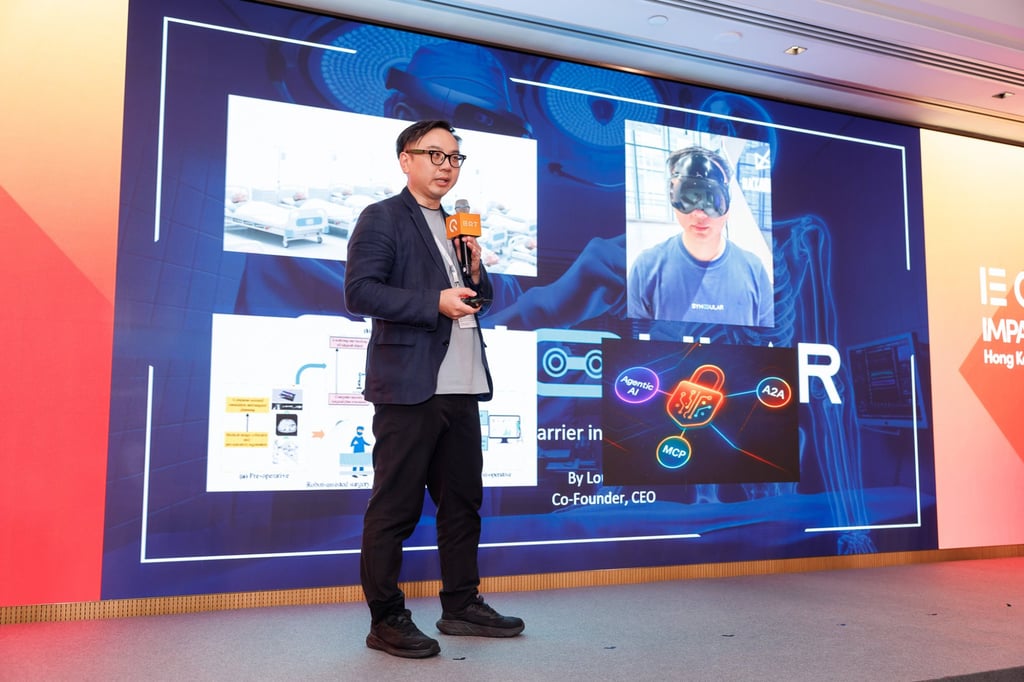
In developing its software, Syngular incorporated “triple-A” gaming graphics and artificial intelligence for low latency and immersive interaction. The company is working with headset manufacturers to improve user experience with tailor-made goggles and sees great potential for using the system to perform remotely guided specialised operations in rural hospitals and clinics.
“This is the first championship we have ever won,” said a delighted Louis Sze, Syngular’s founder and chief executive. “The goal now is to grow our R&D team because we have a lot of requests from users.”
He said Syngular was looking to learn from EQT, one of the world’s largest investment firms, as it “has so much experience nurturing start-ups and has invested in a medical device company in the past. That meant some of the questions they asked were very precise”.
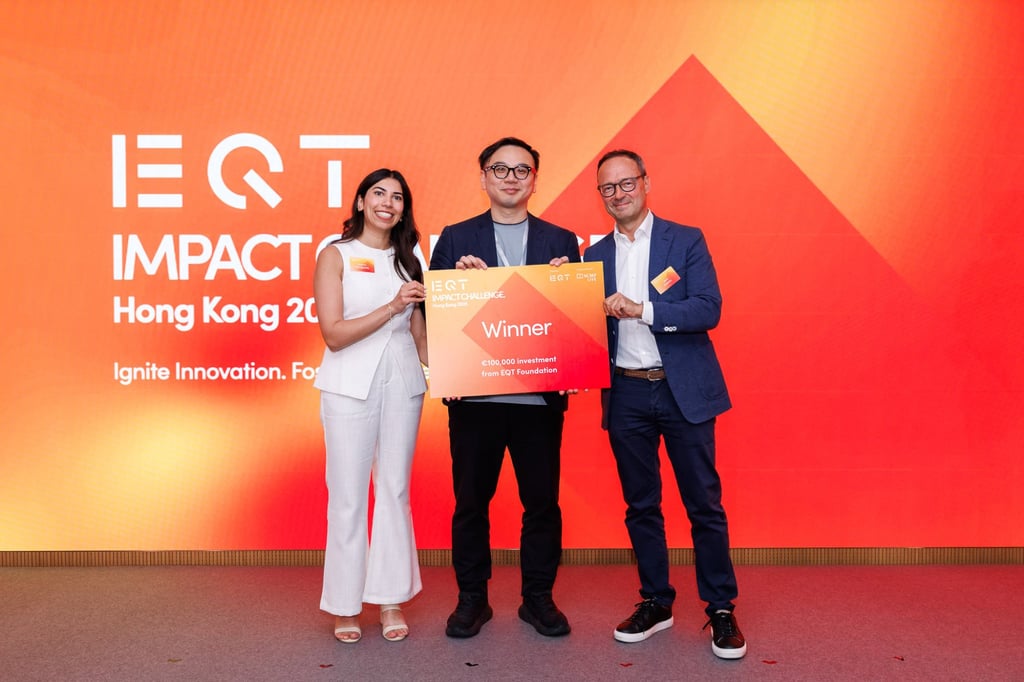
The triumph sees Syngular Technology receive €100,000 (US$117,000) investment funding from EQT Foundation, the philanthropic arm of EQT, along with continuing support from a global network of industry experts, portfolio companies, and potential investors.
EQT said the overall level of the finalists in Hong Kong was impressive, and follows the high standards set by previous editions in Japan, South Korea and Singapore.
In line with the guiding philosophy of the foundation, the competition focused on the themes of climate and nature, and health and well-being with the aim of showcasing cutting-edge ideas and catalytic solutions.
EQT and the EQT Foundation oversee the event, which was held in partnership with the South China Morning Post, and will continue to help the prizewinners beyond capital, with access to the EQT platform, its network of advisors and potential investors.
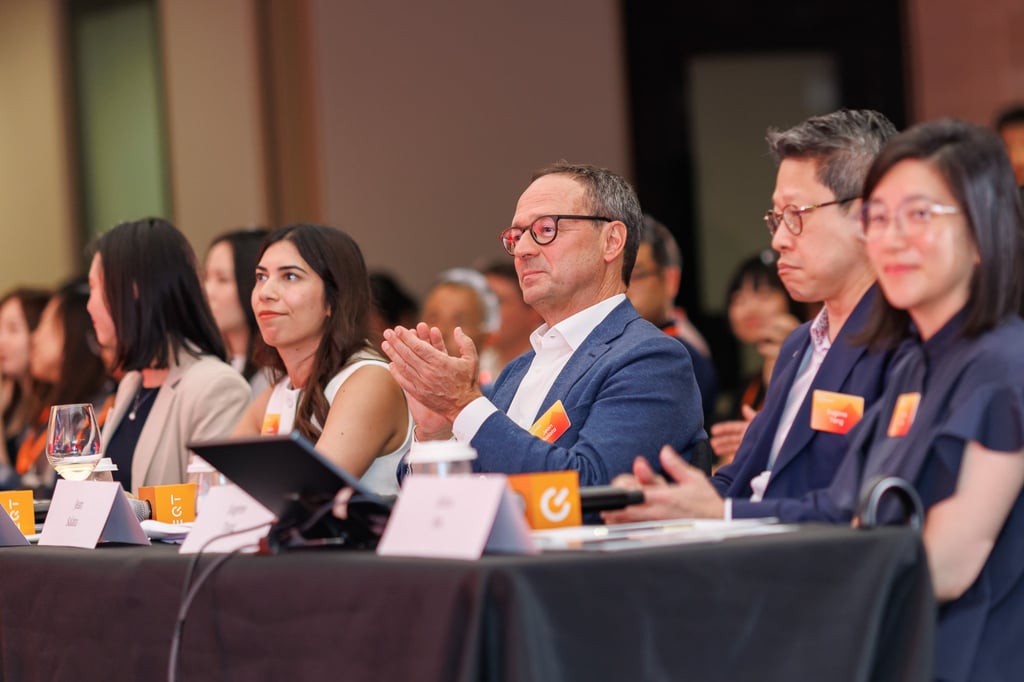
“We have always believed that entrepreneurship can be a powerful force for good, helping to solve real-world problems,” Jean Salata, chairperson of EQT Asia, said. “Here in Hong Kong, young entrepreneurs are so passionate about what they are doing; they are putting their heart and soul into these businesses. We are really privileged to play a part in helping them get off the ground.”
Second place for the 2025 EQT Impact Challenge went to Green Vigor for its invention to generate renewable energy in urban areas by using the inflow of water into storage tanks. This is done by an ingenious device, the HydroVigor, which can turn every water tank in a home, office building, factory, shopping centre or anywhere into a mini hydroelectric plant.
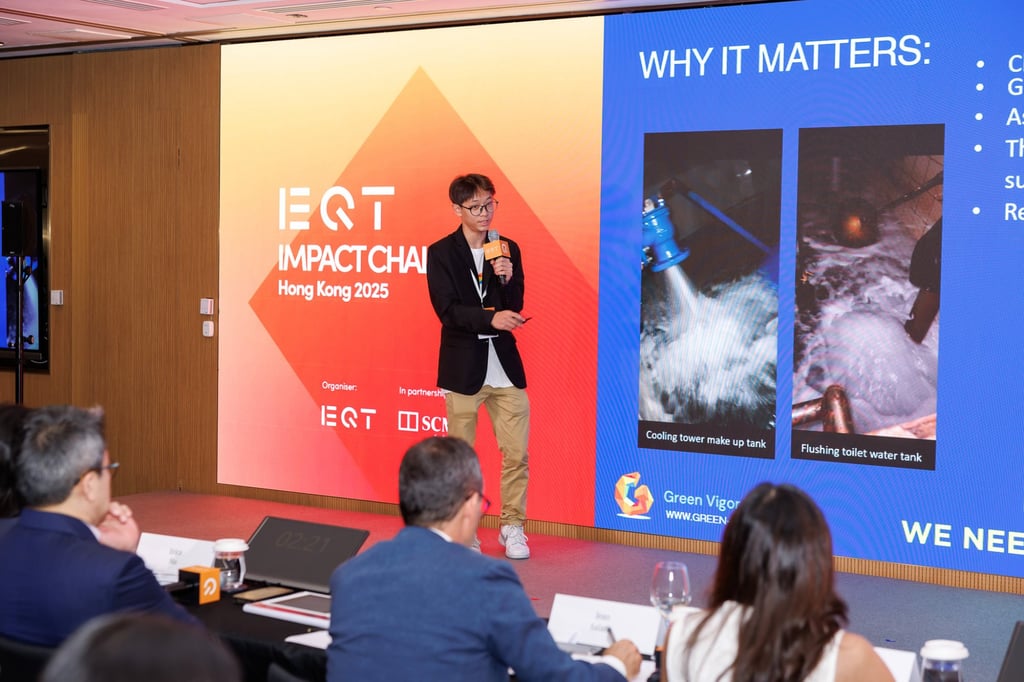
“For me, the most challenging part of the competition was speaking confidently on stage in front of an audience,” said Adrian Li, a 16-year-old intern and student at Renaissance College, who presented Green Vigor’s case to the judges. “But my team members helped me with pitching skills and I believe I nailed it. Now, the company wants to scale up and start a production line. After the proof of concept, we figured out there are a lot of [potential] clients and customers really interested in [our product].”
Joint third place was awarded to Alcarbo Technologies and Allegrow Biotech.
Alcarbo impressed with its outdoor photobioreactor system which uses specially cultivated mutant algae strains to capture carbon dioxide from the atmosphere. That captured CO2 can then be converted into food and biofuel, and can form a system of carbon credits between companies looking to offset their emissions.
Allegrow developed a method to transform a patient’s own immune cells into “living drugs” to combat some of the world’s most serious diseases. It has come up with a proprietary hydrogel-based technology, called AimGel, to simplify the process of growing therapeutic cells outside the human body which is cheaper than existing methods and produces a better quality and quantity of cells.
The second- and joint third-place finishers each receive €50,000 from Central Cove Group, the private investment office of Salata, who was greatly impressed by the quality of this year’s entries. As a result, he is keen to champion Hong Kong’s entrepreneurial talent by extending direct support to other deserving start-ups.
“I have seen first-hand how transformative even a small amount of early belief can be,” he said. “Supporting entrepreneurs at this stage is about sending a message that their ideas matter, that we believe in their potential. If we want to accelerate the kind of change the world needs, we have to help brave people with bold ideas get off the ground faster and stay in the game longer.”
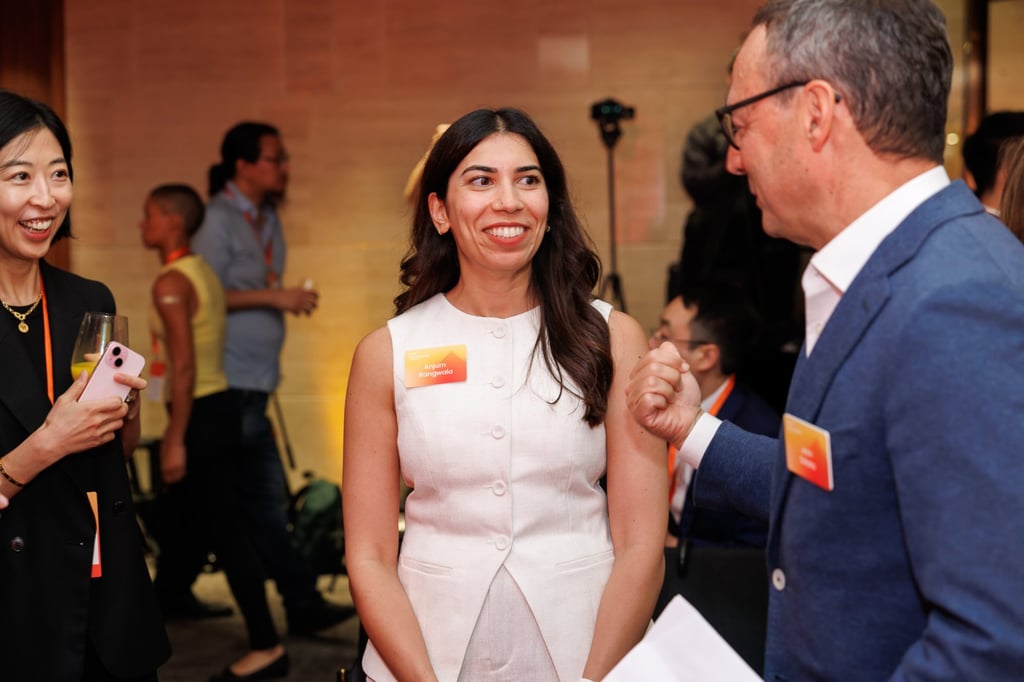
And Anjum Rangwala, investment vice-president of EQT Foundation, said: “During the final, what stood out most was how ambitious yet grounded the ideas were. There were cutting-edge innovations to solve pressing challenges in practical and actionable ways. The companies showed clear signs of market readiness, with solutions that were technically sound and commercially viable.”