EQT Impact Challenge 2026 will help deep-tech start-ups think globally
Five finalists selected from over 200 entries offering innovative solutions to ‘climate and nature’ and ‘health and well-being’ challenges

Hong Kong’s ecosystem of start-ups reached a record high of 5,221 last year – up from 4,694 in 2024, according to InvestHK, the government department tasked with attracting foreign direct investment to the city.
Famed for its entrepreneurial culture, Hong Kong is also increasingly known for the strength of its universities and research institutions, deep talent pool, easy access to financial advice and investment capital, and an efficient transport network within Asia and with the rest of the world.
“When combining all that, you have a place where early-stage companies can start locally, but think much more globally,” said Jean Eric Salata, chair of EQT Group, one of the world’s largest global private markets firms.
“The overall ecosystem can still improve, though, by helping more companies make the jump from research or prototype to becoming a real commercial business. That is often the hardest part.”
When EQT and its philanthropic arm, the EQT Foundation, brought the EQT Impact Challenge pitch competition to Hong Kong last year, after successful runs in Japan, South Korea and Singapore, they were offering something different: an active ownership model.
EQT said the goal was to support “early-stage founders within climate and health working on building breakthrough solutions”.
Last year’s winner, Syngular, a Hong Kong medical tech company offering mixed-reality surgical navigation solutions, secured a €100,000 (US$114,000) investment in addition to direct access to EQT’s global healthcare network and mentors. This support has accelerated the firm’s hospital roll-outs, sharpened its go-to-market strategy and raised its overall profile.
“That is where EQT brings something extra,” Salata said. “Over the course of 30 years, we have built a platform, a network and an active ownership approach which is all about helping companies scale and make better decisions earlier.”
For the organisers of the start-up competition, it made perfect sense to return to Hong Kong this year, knowing they could once again attract high-calibre applications and, in doing so, engage with every section of the broader innovation community.
The Shenzhen-Hong Kong-Guangzhou cluster was ranked top among the world’s 100 largest innovation hubs in the Global Innovation Index 2025, published by the World Intellectual Property Organization (WIPO).
More than 200 entries were received for this year’s EQT Impact Challenge, a figure which reflects the strength of Hong Kong’s start-up ecosystem. The calibre of applicants has not disappointed.
“This year, we have built on our learnings from last year,” Salata said. “We reached a broader group of founders, attracted another strong cohort of applicants, and brought a wider range of perspectives into the selection process and final discussions.
“What stood out for me was the complex nature of the problems the contestants are trying to solve in areas such as healthcare, artificial intelligence [AI] and sustainability. It takes ambition and courage to tackle these challenges, but shows exactly the kind of innovation EQT hopes to support.”
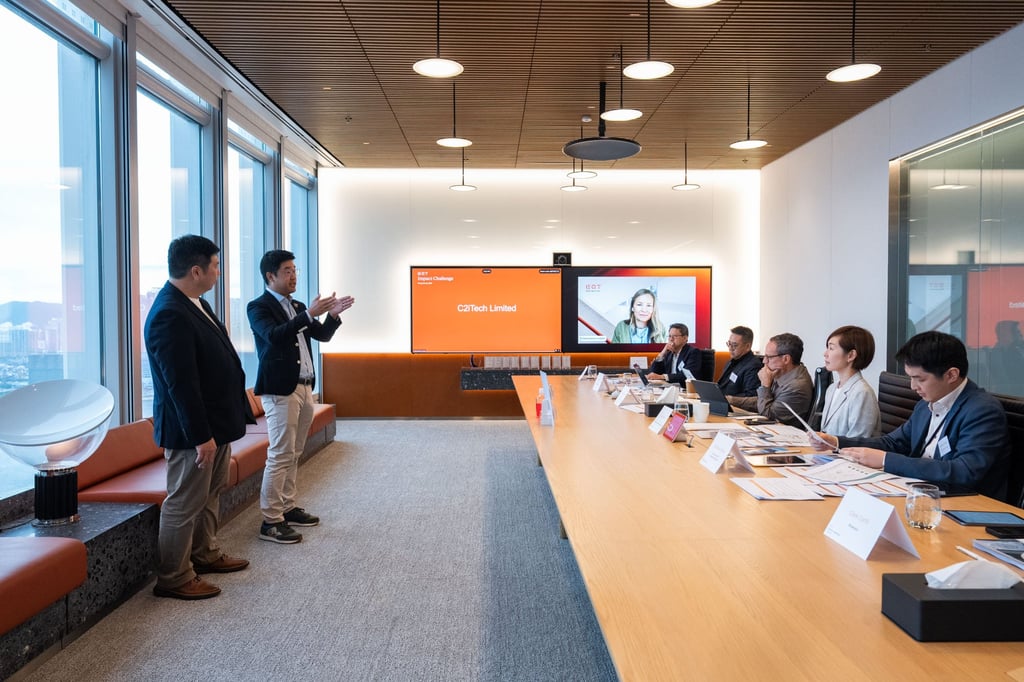
One of the first challenges for the competition’s judges came on the Jury Day on July 14, when they had to identify five finalists from the already stellar pool of 10 shortlisted candidates.
In addition to Salata, the panel comprised Cilia Holmes Indahl, CEO of EQT Foundation and an expert in sustainable innovation and impact investing, and Clara Chan, inaugural CEO of the Hong Kong Investment Corporation and former senior Hong Kong Monetary Authority executive overseeing private markets.
Eric Ng, CEO of global venture capital firm Happiness Capital, the venture capital arm of the Lee Kum Kee family; Dr Alexis Cheng, co-founder and vice-president of operations and business strategy at surgical robotics company Cornerstone Robotics; and Eugene Tang, chief development officer and managing director of PostMag at the South China Morning Post (SCMP) were also part of the panel.
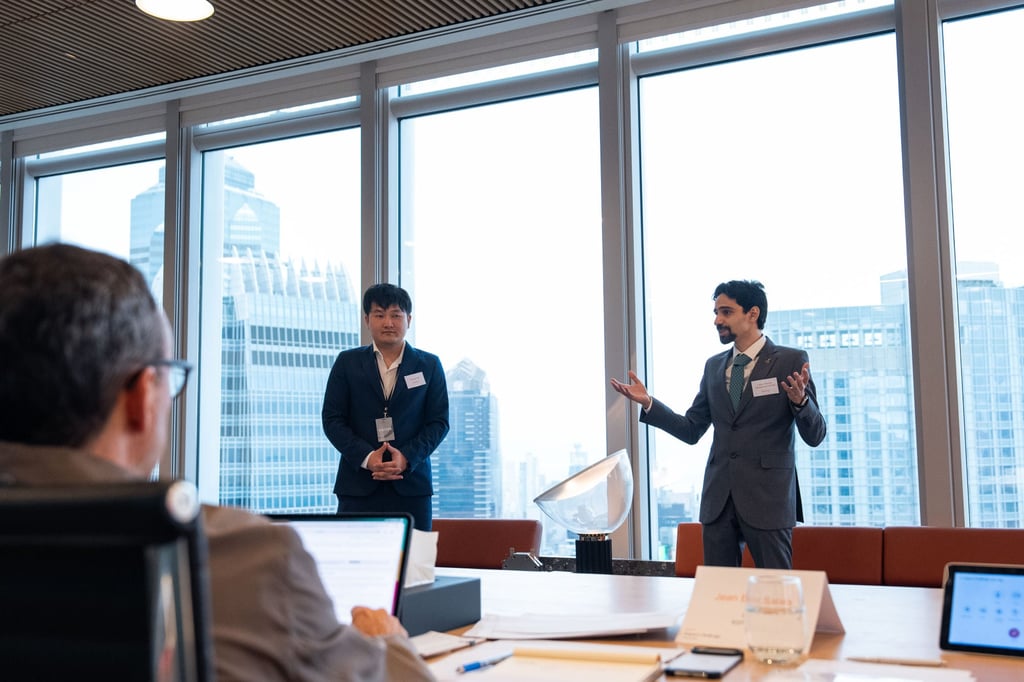
The competition format gave contestants three minutes to present their case without reference to their slide deck and supporting documents, which had been submitted for the jury to study in advance.
This necessitated a concise and fluent summary of the start-up’s objectives, methods and business plans. Some opted for a narrative element and a mention of what inspired them, while others put more emphasis on the precise technical or medical aspects of their work and where it could lead. A five-minute question-and-answer session followed.
The first thing jury members looked for was whether the start-up was solving a problem that really matters. Any technology involved had to be clearly differentiated, but the questions from the jury were always focused on the themes of who needs this, why now and whether the team has what it takes to succeed.
“The warning signs are usually around lack of clarity,” Salata said. “If the market demand is not clear, if the assumptions are not well supported, or if the technology is looking for a problem rather than solving one, that becomes difficult. I am also cautious if a team cannot explain how they will move from scientific promise to commercial adoption.”
Accordingly, the various presenters were asked about actual or prospective sources of funding, professional and scientific advisers and competition within their sector, as well as feasibility, market potential, execution to date and hoped-for impact.
However, the jury also scored them on qualities including drive, leadership, the character to withstand adversity and the ability to recruit a strong team.
After due deliberation, five outstanding start-ups were selected to progress to the final.
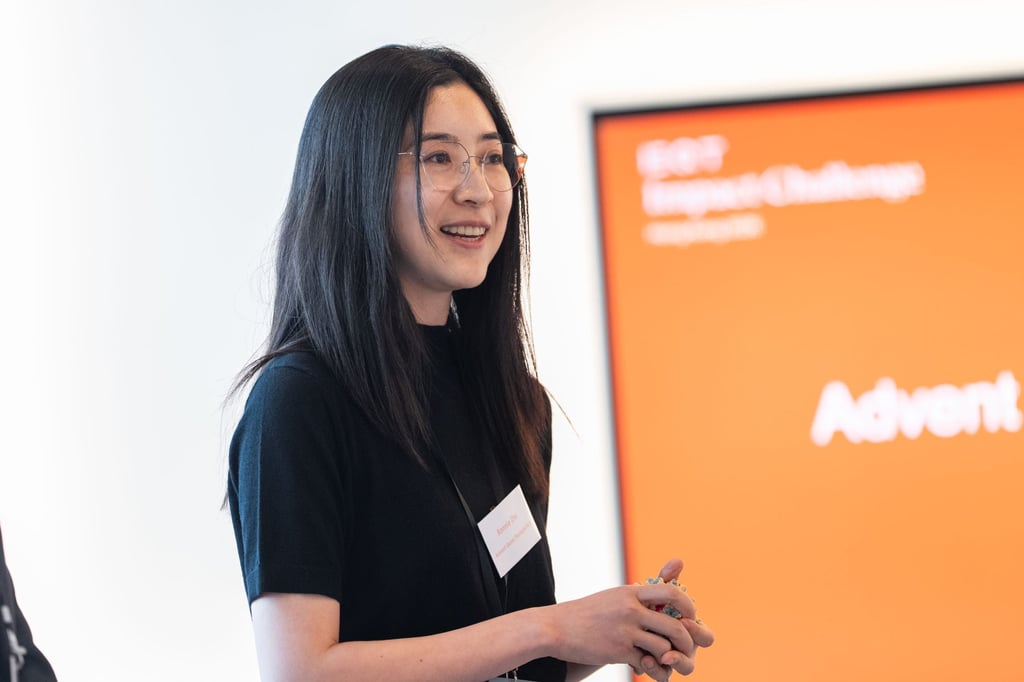
Among them is Advent Gene Therapeutics, a biotech company using AI to develop synthetic AAV capsids (the outer, spherical protein shells of an Adeno-Associated Virus) for gene therapy.
Founder Bonnie Zhu said they took care to consider how best to engage with the jury and put across ideas that can seem “a little abstract” to the non-scientist.
For Dr Alfred Ho, vice-president of business development at another biotech company, C2iTech, the key was to get across the essentials of how patient-derived organoids (PDOs) will be able to improve drug development and clinical decision-making for oncology and cases of respiratory disease.
The breakthrough will help in creating targeted therapies for individuals, and Ho said he was pleased that the jury had asked “very valid” questions – in particular whether this was too small a space in which to operate, and how the company was going to convince the industry to take up the platform.
In contrast, HydroForge is a clean energy company which provides integrated electrolysis systems for low-cost green hydrogen production.
Omar Ahmed Mohamed Ismail, its co-founder and chief technology officer, said there was huge potential for core component sales and specialised solutions for companies in the renewables sector and clients in “water-stressed” regions around the world.
He said that although the company had been founded only in January and was still at the seed-funding stage, its progress was ahead of schedule and the jury had been interested in hearing more about the overall business plan and the demonstration project to be built in Hong Kong. “I think they touched on everything [important],” he said.
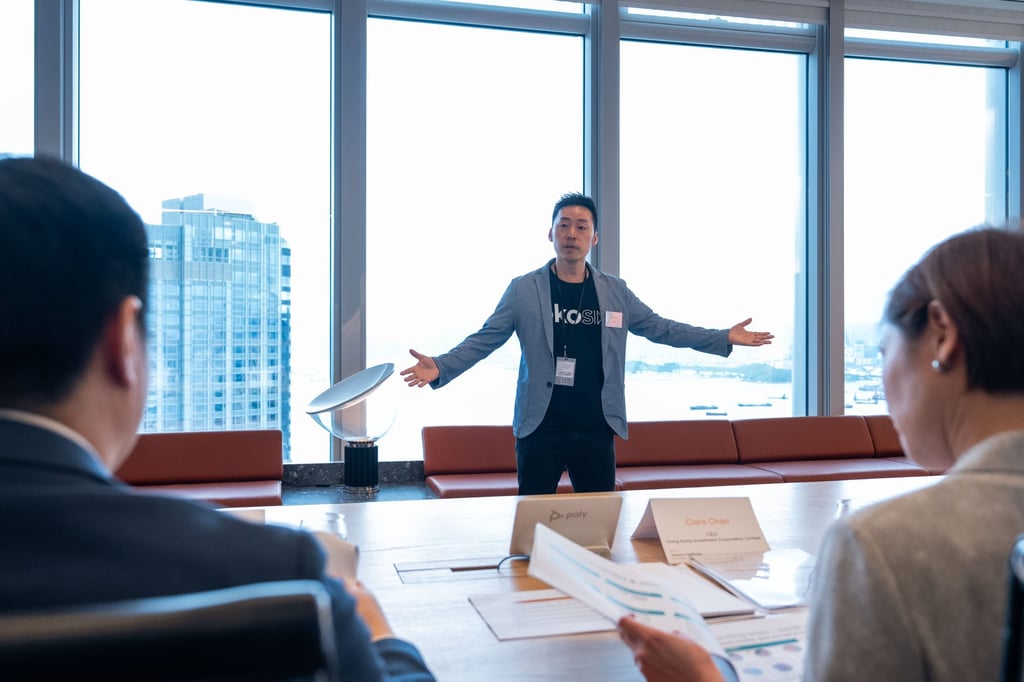
Green-related problems are also the focus of green-tech company Okosix, which has developed an innovative biopolymer platform to replace fossil-based plastics in high-specification healthcare and hygiene applications.
Co-founder and chief executive Eddie Yu said the product had already gained commercial traction, with revenue of about US$3.2 million to date, but that the next step was to secure market share by transitioning to patent licensing and regional production partnerships.
As part of its plan to scale, the company was looking to set up in Europe and North America, where the outlook was good, he said.
“The broad strategy is to lower the cost of our technology to increase sales on a global basis,” Yu said. “At the moment, we are looking to hire more people and are getting a lot of help from our scientific advisers.”
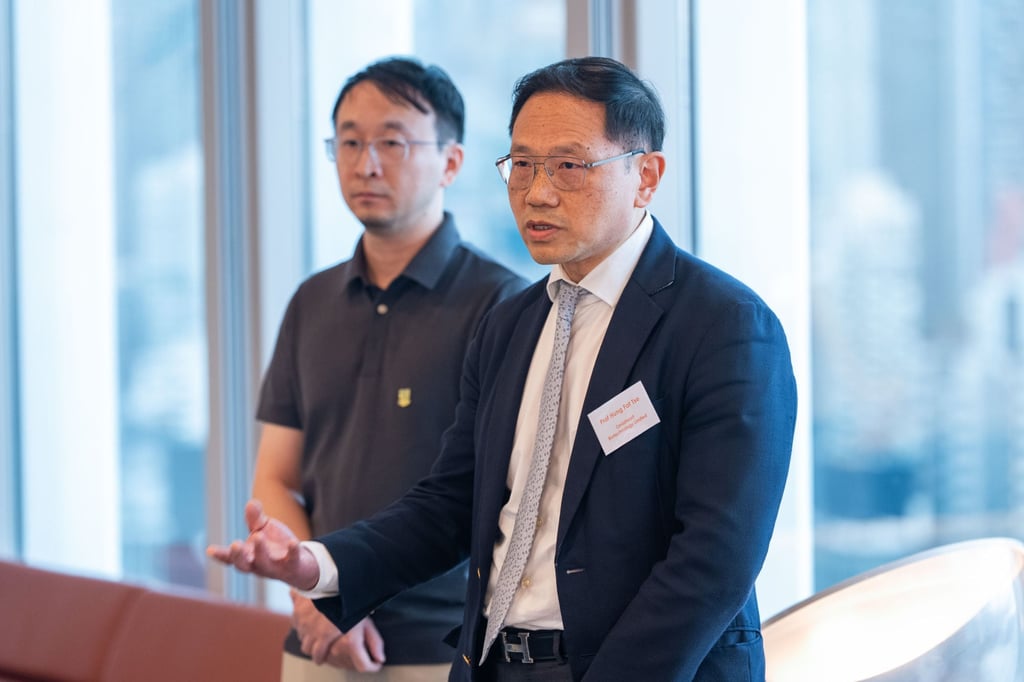
For cardiologist Professor Hung-fat Tse, founder of OmisHeart Biotechnology, the goal is to address severe cardiac dysfunction by developing a non-viral platform which can restore function and treat heart disease and age-related heart decline.
The solution includes proprietary technology, exosomes (microscopic intercellular messengers) for targeted delivery, and injectable hydrogel patches for local tissue regeneration, with the key element currently in the stage of pre-clinical development and trials.
Tse, who has been passionate about developing biotechnology for the past 20 years, knew the information he was providing was quite technical, but found the jury’s questions about methodology and treatment to be very relevant.
“We are now testing the therapeutic platform and need to secure funding for the next step of clinical validation so as to make this idea a reality,” he said.
Yet for these deep-tech companies, proving the technology works is just the first step. The real test is proving the concept can be developed into a successful business.
To reach that point, founders typically need patient investors, as well as advisers with the know-how to anticipate likely problems, avoid possible setbacks and chart the way ahead.
Such experience is invaluable when it comes to identifying potential customers, refining a product, planning new initiatives, recruiting the right people and not committing time and money to technically impressive breakthroughs that have only limited commercial appeal.
“In deep tech, conviction is important; you need founders who really believe in what they are building,” Salata said. “But that conviction has to be matched with discipline, humility and a very practical understanding of what it takes to build a company over time.
“At EQT, we assess the quality of an idea and the quality of the people behind it. Typically, we find that strong founders are open to feedback and realistic about the challenges ahead. They also take the initiative, show perseverance and have the kind of energy that inspires talented people to come and join their company.”
The grand finale of the EQT Impact Challenge 2026 will take place in September at the M+ Museum, in Kowloon, with the winner receiving €500,000 from the EQT Foundation to support business growth. Other runner-up finalists will also receive funding from Salata’s family office, Central Cove Group.
SCMP is the media and events partner of the EQT Impact Challenge in Hong Kong.