Hong Kong charts sustainable and smart future for shipping
Industry leaders target green, digitally-driven and collaborative transformation amid limits on greenhouse gas emissions
The global shipping industry, which handles most of the world’s trade, is at a critical point as it navigates towards a sustainable and technologically advanced future.
Governments accelerated the move away from the use of fossil fuels in the industry in April after negotiators at the International Maritime Organization (IMO) agreed to mandatory greenhouse gas emissions limits and a global price on emissions of ships that exceed them.
These measures will be binding on large ships, which account for 85 per cent of the industry’s carbon dioxide emissions. The deal, if ratified in October, will come into force in 2028 and lead to a 30 per cent base target reduction in emissions – on 2008 levels – by 2030. The IMO is aiming for net-zero emissions by 2050.
For a major shipping hub such as Hong Kong, this transformation presents both challenges and exciting opportunities. Yet industry players in the city have already been hard at work preparing for the changes.

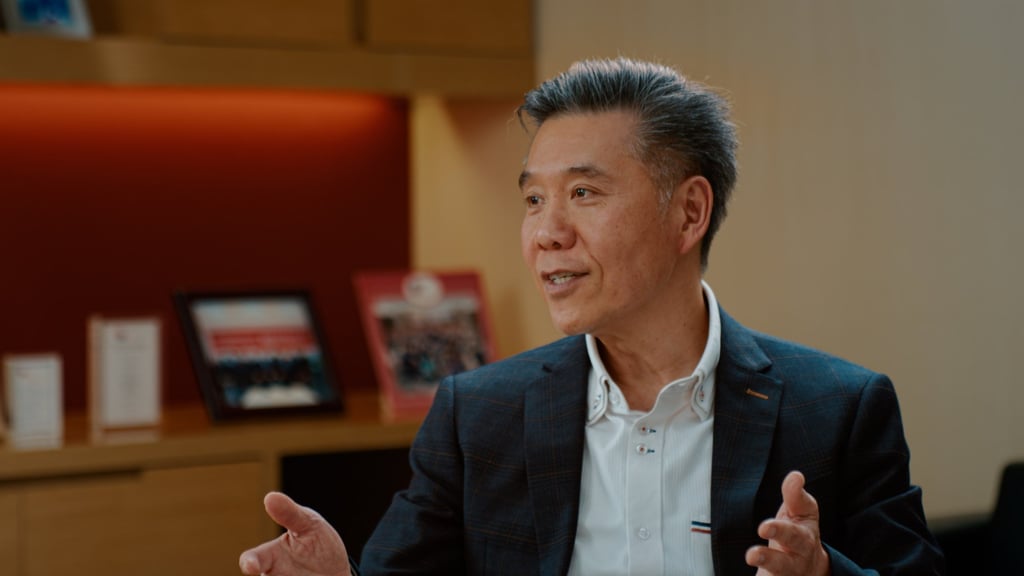
“We started our process 15 [to] 20 years ago,” says Horace Lo, group managing director of container terminal operator Modern Terminals, a major operator at the city’s Kwai Tsing Container Port. “We have spent a lot of effort to convert all the diesel engines to electrify them, or turn hybrid and then go to finally fully electric.”
However, to turn things around, it will require a multifaceted approach, integrating new technology, collaborative efforts and proactive policymaking. A key part of Hong Kong’s transformation will involve the digitalisation of its port operations.
Initiatives such as OnePort, a joint-venture platform established by major Kwai Tsing terminal operators, demonstrate a commitment to enhancing connectivity and streamlining processes.
“Our platforms help digitise the communication between different stakeholders in the shipping industry, such as shipping lines, payment companies and communication companies,” Philip Ho, CEO of OnePort, says.
“By providing a standardised and streamlined process, we aim to increase the efficiency of Hong Kong’s port operations and contribute to its development as a green and smart shipping hub.”
The government’s plan to launch the Port Community System is a crucial step towards this interconnected vision. The initiative aims to promote digitalisation within Hong Kong’s port community, enhance cross-sector information interconnectivity and advance smart port development.
At the heart of it is a pilot data-sharing platform that has gone through phased testing since 2023, and it is set to be ready for industry use early next year. The system is expected to enhance connections between Hong Kong, mainland China and international maritime communities.
To complement that goal, the Hong Kong Monetary Authority announced in April the establishment of CargoX, a multi-year public-private collaboration that consists of a panel of industry experts and key stakeholders such as cargo data providers, trade associations, banks, credit reference agencies and government bodies.
The panel will explore ways to enhance the digital ecosystem for trade finance – financial instruments and products used for streamlining international commerce – by leveraging cargo data.
Apart from optimising current operations, Hong Kong recognises the critical role of greener fuel in helping to achieve the target of net-zero emissions by 2050.
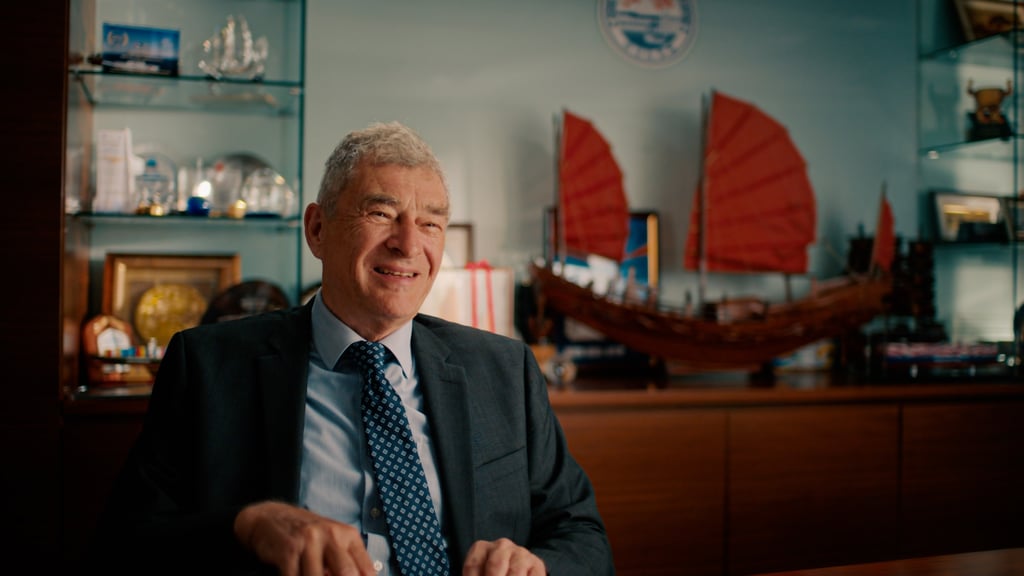
Martin Cresswell, technical director of The Hong Kong Shipowners Association (HKSOA), says: “We have more than 2,300 ships under the registry. Apart from having loads of major owners in Hong Kong, we’re a very major ship management centre.”
As the world’s seventh-largest bunkering – or fuel-supplying – port, the city is strategically preparing for the move to greener fuel options. Recent legislative changes allowing the use of new fuel types highlight this proactive approach.
Last November, the Transport and Logistics Bureau (TLB) released an action plan to develop Hong Kong into a green maritime fuel bunkering and trading centre. The government policy bureau is also discussing with the industry the possibility of developing a specific site for green maritime fuel storage.
Developing storage and supply infrastructure for these green fuels is crucial to position Hong Kong as a key bunkering hub for ships that are moving away from using traditional fossil fuels.
“We’re just starting to bunker with biofuel,” Cresswell says. “The next fuel which has been used is LNG [liquefied natural gas]. The first trial run was just done before [Lunar] New Year.”
Green methanol, produced from low-carbon sources such as biomass or via carbon capture, is also an energy source rising in popularity. TLB released a code of practice on methanol bunkering last month, and duty exemption will be provided to support the adoption of this greener fuel.
A successful transition requires a skilled workforce equipped to navigate the complexities of green and smart shipping. Investment in advanced training centres is also vital to help train seafarers and onshore staff in the use of new technologies and in handling alternative fuels.
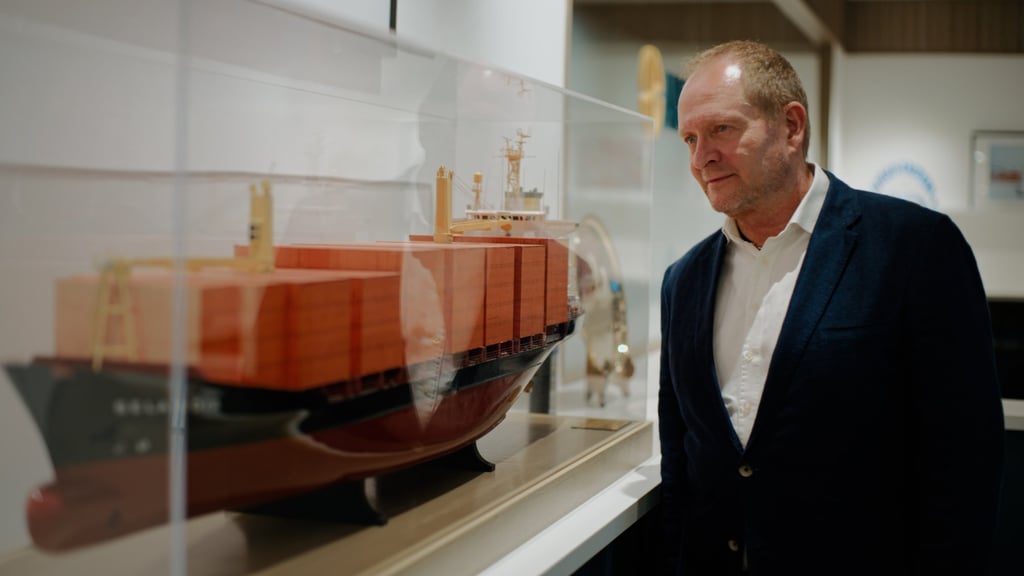
Bjorn Hojgaard, former chairman of the HKSOA, and also CEO of the ship management company Anglo-Eastern Univan Group, believes Hong Kong is well placed to become a smart and sustainable shipping hub.
“The Hong Kong government is very understanding of how incentives can drive behaviours in the industry and has been early, out working with industry, setting rules that move shipowners [and] charterers towards certain practices,” he says. “This green fuel standard is one of those examples.”
The use of digital solutions, such as low-Earth orbiting satellites that allow for high-speed data exchange, is already showing clear benefits. Improving ship operations through better connectivity has led to significant fuel savings, proving that being environmentally responsible can also be cost-effective.
Hong Kong’s way forward requires close collaboration between industry players and the government. Policy support and incentives will be instrumental in fostering innovation and encouraging the adoption of sustainable practices.
Hong Kong’s agility and adaptability will be key in taking advantage of new opportunities.
By strategically leveraging its existing strengths and embracing innovation, Hong Kong can play a unique role as a green and smart shipping hub, and make a significant contribution to a more sustainable global maritime future.
As Hojgaard says: “We all have a role to play in creating a better future, both for the maritime [industry] and for the world.”