How Hong Kong companies can empower belt and road countries with advanced tech solutions
Kodifly’s AI analytics boost transport and infrastructure safety and FJDynamics’ robotic systems enhance farming in emerging markets

By creating a comprehensive ecosystem that supports hi-tech start-ups, Hong Kong is helping to drive innovation and build businesses with the potential to make a positive impact around the globe.
As part of the Belt and Road Initiative – China’s platform to encourage multilateral collaboration in areas such as trade, infrastructure, digitalisation, green development and healthcare – Hong Kong can play to its strengths as a “super connector”, “super value-adder” and innovation hub to enable companies to achieve success locally before expanding their horizons.
This is a key focus of the Belt and Road Office, established under the Commerce and Economic Development Bureau to work with local and global partners to help Hong Kong companies thrive abroad.
The city is also attracting more capital, talent and businesses from belt and road countries. In particular, it is focusing on fostering closer relations with the Middle East.
Earlier this month, Chief Executive John Lee Ka-chiu led a delegation of more than 50 local and mainland Chinese business leaders on a five-day visit to Qatar and Kuwait. A similar visit to Saudi Arabia and the United Arab Emirates took place in 2023.
Hong Kong firms also are playing a key role in driving investments in innovations such as artificial intelligence (AI) in technology-focused belt and road countries. In addition, the city, as an international financial and trade centre, can provide ambitious young entrepreneurs with easy access to seed funding, as well as laboratory and office space, expert advice and introductions to potential clients and partners.
These measures accelerate progress in getting breakthrough ideas off the ground, achieving stable revenue flows and, when the time is right, seeking opportunities to expand into new markets. Part of the process is identifying emerging demand and likely needs in belt and road countries.
For two fast-moving Hong Kong-based tech companies, Kodifly and FJDynamics, invaluable government support has helped them expand into emerging markets. Both began with a clear idea of what applied technology could do and, in a comparatively short time, have developed cutting-edge products that address real-world problems.
Their innovations have led them to finding buyers in the Middle East. With support from the Belt and Road Office, they took part in government-led business delegation visits, such as last October’s Future Investment Initiative (FII8) in Riyadh, Saudi Arabia, which also helped them to explore more opportunities in the region.
Kodifly was founded in 2021 by two University of Hong Kong alumni who saw a way to combine the remote sensing system of LiDAR (light detection and ranging, where laser sensors are used to measure distances to objects) with vibrational sensors, 3D modelling and AI analytics. The aim is to improve the safety and resilience of major transport and infrastructure systems.
This is done by first positioning mobile scanners to capture precise images of, for instance, a busy railway, stretch of highway, construction site or slope prone to landslides. The initial mapping is then uploaded to a secure cloud-based platform to create a 3D replica as a basis for later comparisons.
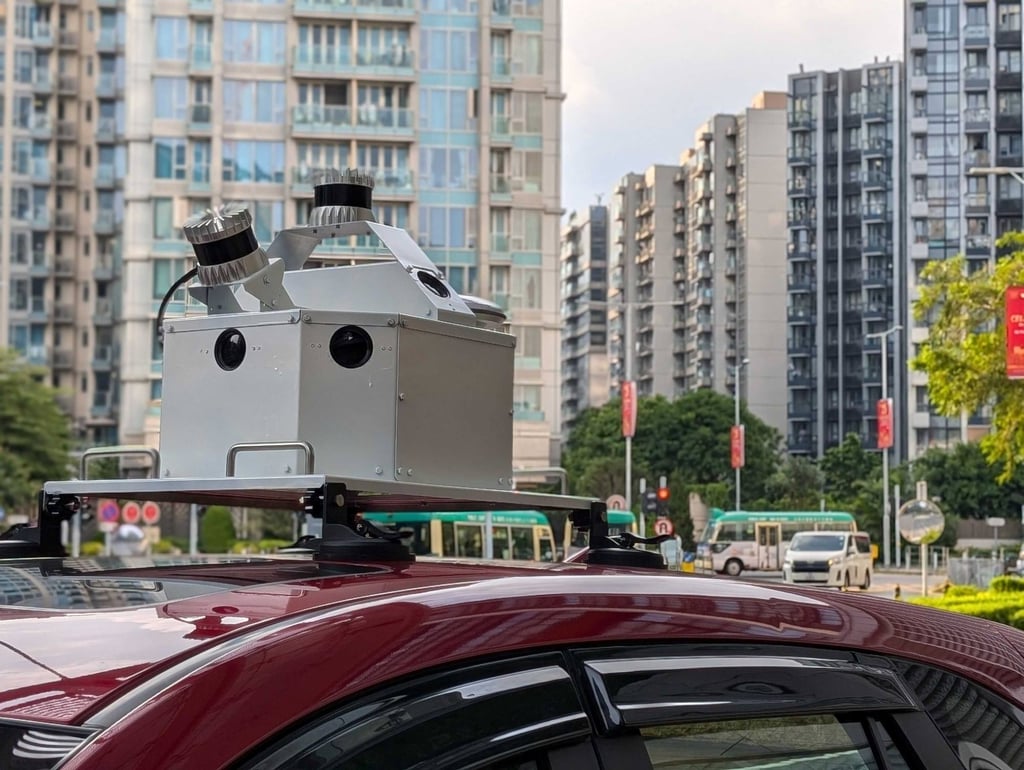
“We basically create real-time digital twins,” says Muhammad Saad Shahid Anwel, Kodifly’s co-founder and chief technology officer. “We use AI, spatial intelligence and GNSS [global navigation satellite systems] to streamline the process and solve inspection and maintenance problems.”
The first scanners and systems were developed in Hong Kong, where Kodifly’s own SpatialSense devices were mounted on trains to record images and collect data. That data is now used to spot potential risks, such as fallen branches, low-hanging power lines, structural anomalies or damage. Maintenance crews then study the most recent data before they head to the site in question, saving both time and money.
Clearly, there is great potential for deploying customised versions of this technology elsewhere. In addition to its head office at the Hong Kong Science Park in Pak Shek Kok, Kodifly also has an office in Islamabad, Pakistan, which supports the firm’s research and development (R&D) efforts in Hong Kong.
Its team in Islamabad is also working with Pakistan Railways on advanced software suites that enhance railway infrastructure safety and efficiency by automating inspection processes and streamlining asset classification for maintenance.
Additionally, Kodifly has plans to find new opportunities in the Middle East and North Africa, starting in Saudi Arabia. The broader aim is to push ahead with systems for monitoring traffic flow on roads and at airports, as well as environmental mapping and asset analytics.
“We envision a future where every city is a smart city,” Anwel, who hails from Karachi, says. He was attracted to Hong Kong for a number of reasons, including the chance to study computer engineering at a top university, the Hong Kong Science Park’s start-up scene, and the city’s links with belt and road countries, including Pakistan and other developing markets.
Hong Kong’s high-quality talent pool also has the right expertise that can help businesses expand and attract investment from around the world, he says.
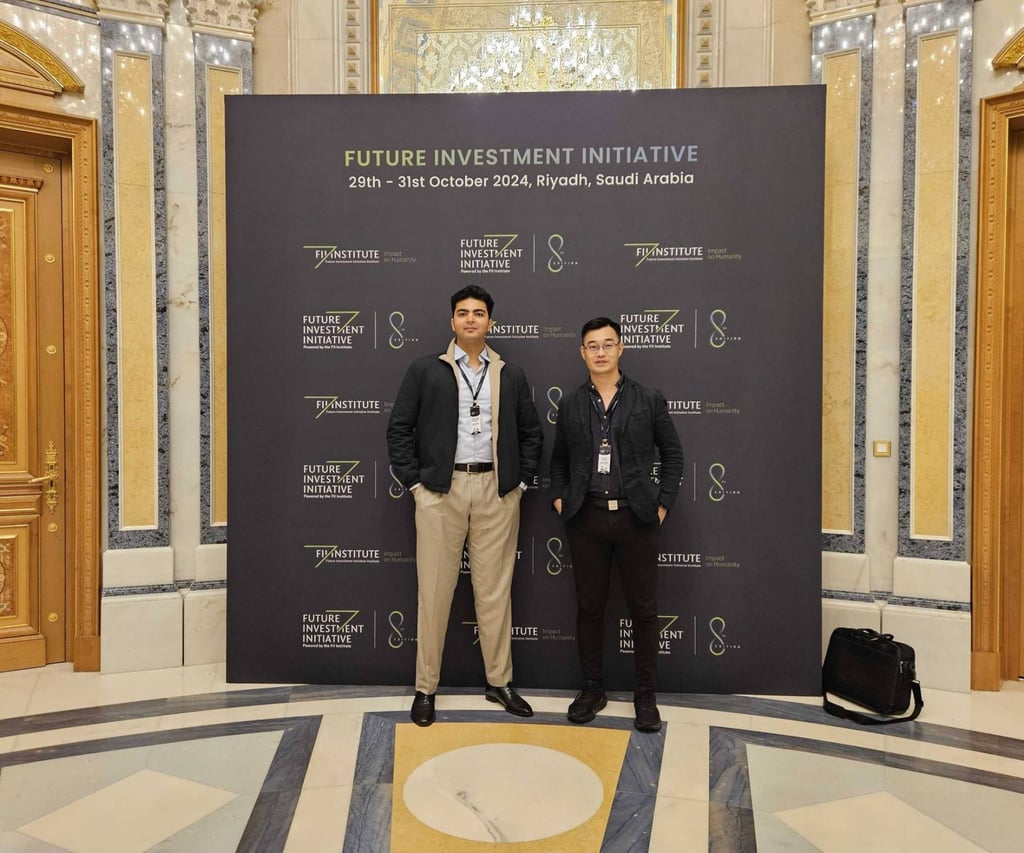
In particular, he says Hong Kong’s Belt and Road Office has been helpful in advising him and his team, and connecting them to the right people and resources in these markets.
“We have received great assistance on how to safeguard our interests when taking Hong Kong innovation abroad,” Anwel says. “I could be anywhere in the world, but still rely on getting that support and input.”
Meanwhile, Chinese robotics firm FJDynamics has also been leveraging the city’s R&D expertise to devise bold strategies to advance innovations in the hi-tech sector.
Founded in 2017, the company took a pivotal step by setting up its global base at Hong Kong Science Park in 2021. From there it develops new products and coordinates international sales.
The company, which is now represented in more than 120 countries, provides customers with the latest in automation solutions to improve operating efficiency, increase profitability and address the day-to-day challenges commonly facing grassroots workers.
Its full range includes products designed to help with agriculture, construction and gardening. But perhaps the greatest impact can be seen in agriculture, where the company’s patented inventions make life easier for farmers and labourers, boosting crop yields and reducing costs for pesticides and irrigation.
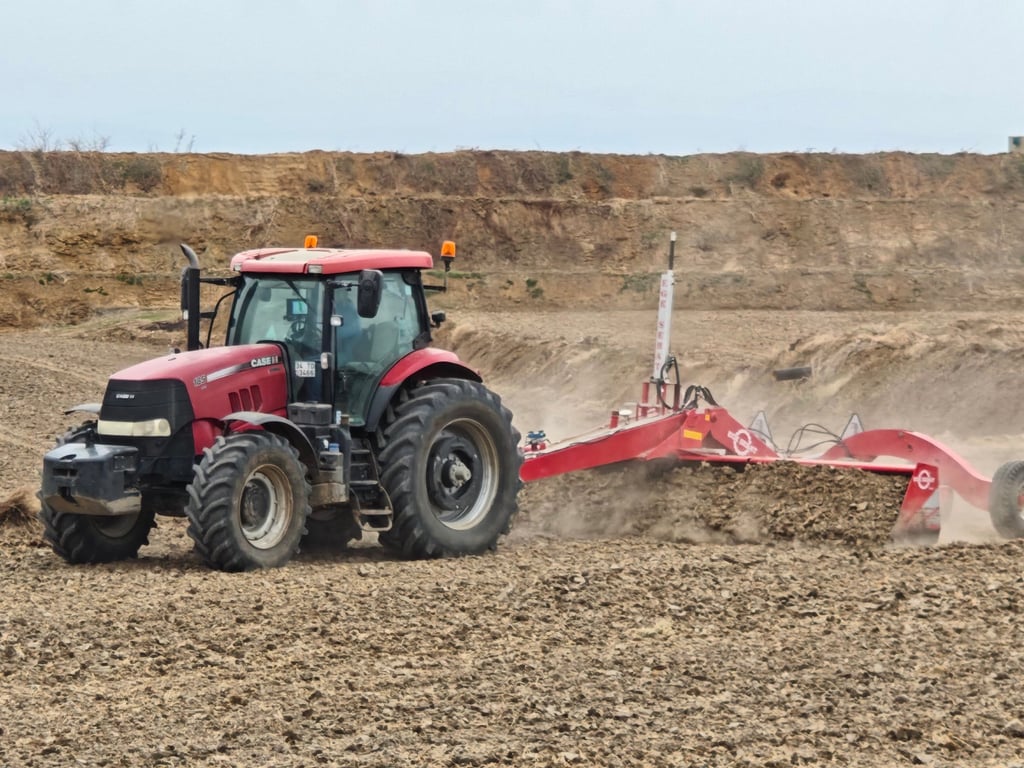
In Turkey, for instance, the introduction of satellite-guided auto-steering systems for tractors and harvesters has been revolutionary. With a device placed in the cab, which is as simple to use as a mobile phone, the company’s technology makes it easy to plant crops in straighter rows, maintain exact spacing, work more quickly and maximise the use of land.
Strong signals from local base stations ensure a reliable connection and optimum efficiency while out in the fields, while built-in programs enable on-screen information to appear in the local language.
“Our auto-steering kit can be installed in existing agricultural machinery and it plans the optimal route,” Kiki Zhang, chief financial officer of FJDynamics, says. “In Indonesia it ensures that sugar cane is planted a precise 150cm [4 feet, 11 inches] apart – the ideal distance for absorbing nutrition. The driver is basically [working] hands-free.”
Another major initiative is to export construction technology developed to control the tower cranes used to build Hong Kong’s skyscrapers. Previously, crane drivers had to work 10-hour shifts in a confined space high above the ground. Now, new systems mean everything can be operated from ground level, resulting in major improvements to safety and efficiency.
“Our solutions in construction are a good example of how Hong Kong can share its technological know-how with other belt and road countries,” Zhang says. “We are working hard to expand its adoption in Hong Kong and in emerging economies where the modular integrated construction system used to ease housing supply problems really needs precision lifting.”
Every year, Zhang represents FJDynamics at trade fairs to showcase its products to potential clients around the world. For example, she was part of the Hong Kong government-led delegation at the FII8 Conference in Riyadh. During the event, the Belt and Road Office helped to foster connections with stakeholders in the region and highlight how the city can empower belt and road markets through its expertise in technology.
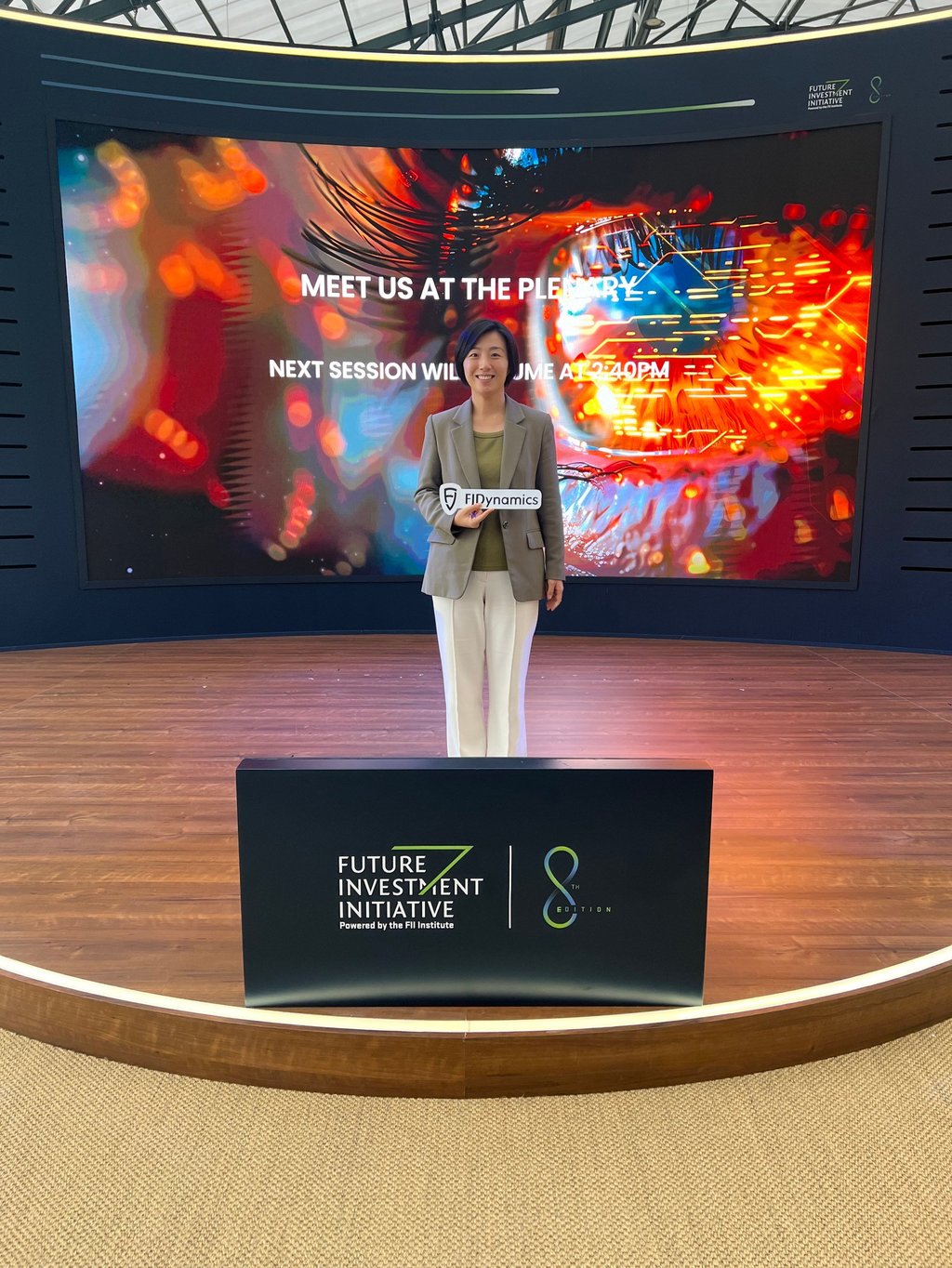
The trip allowed her to gain a better understanding of the demand for construction technology in the Middle East, she says. Additionally, she hopes to work closely with Hong Kong’s Belt and Road Office to explore the market potential of the region and beyond.
“The FII8 made me realise how important Hong Kong’s construction technological know-how is to the Middle East, especially in Saudi Arabia,” Zhang says. “I made many useful connections during the trip, and more importantly, saw that there are so many opportunities available.”
In addition to these overseas events, the Belt and Road Office will continue to organise outbound visits for Hong Kong’s businesses and professionals. The city will host the 10th Belt and Road Summit in September. As with previous editions, this annual event will invite participants from the Middle East and the Association of Southeast Asian Nations, fostering more opportunities for collaboration between Hong Kong, the mainland and belt and road regions.