Hong Kong’s Hysan celebrates more than a century of shaping the city’s growth
The company marked this achievement with a gala dinner, welcoming more than 200 guests to honour the past and embrace the future

This year marks a major historical milestone for Hysan – more than a century since visionary pioneer Lee Hysan bought his first major plot of land in East Point, now known as Causeway Bay.
The remarkable transformation from a narrow piece of land to a world-renowned commercial district owes much to Lee Hysan, whose vision was to create a new residential and commercial precinct catering to a growing and increasingly prosperous population.
In commemoration of the company’s milestones and achievements, Irene Lee, Hysan Development’s third-generation chairman, welcomed more than 200 guests to the Mandarin Oriental, Hong Kong, for a special event inspired by the Chinese saying “Yu Gong Bu Yu”, which pays tribute to the virtues of perseverance and willpower. These very same qualities exemplify the Lee family’s ongoing dedication to improving the social, economic and environmental well-being of the Hong Kong people.
At the gala dinner, Irene Lee paid tribute to more than a century of innovation, growth and community building, which began under the company’s founder.
“My grandfather had a vision 100 years ago when he purchased East Point Hill, which became today’s Causeway Bay. He saw the potential of extending the area to the [eastern side of Hong Kong Island] … the stretch from Causeway Bay to North Point would create a new Hong Kong district.”
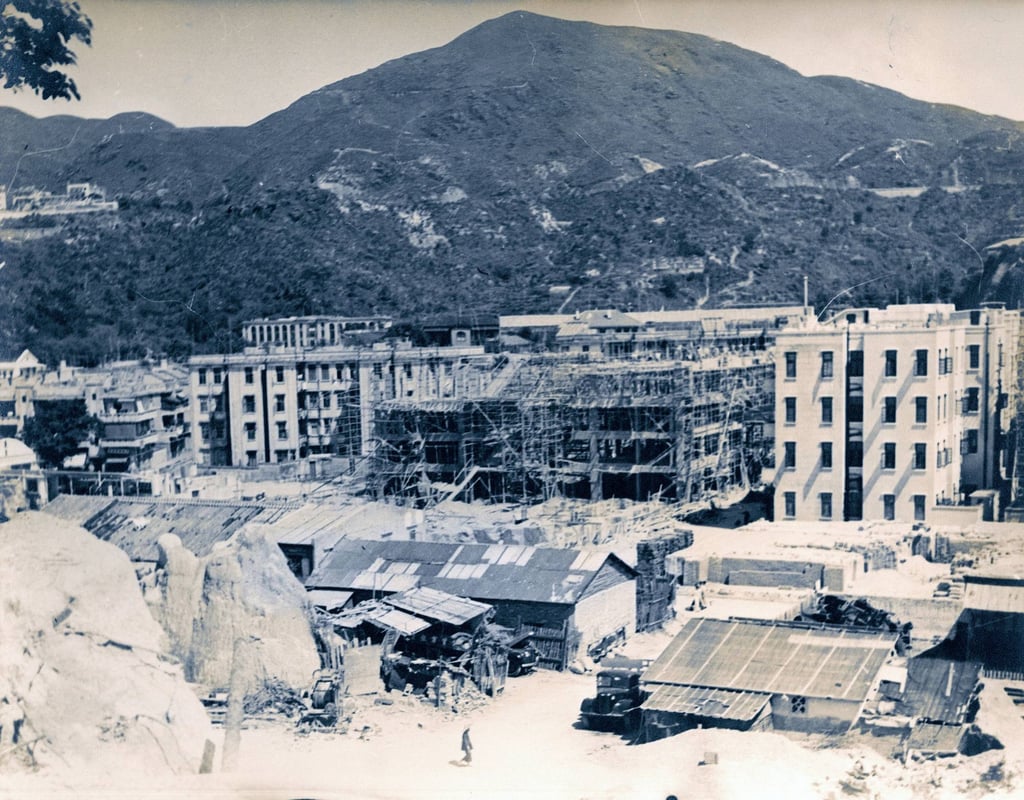
Lee Hysan’s vision was to build a new district on land that was buttressed against the sea with stones from East Point Hill. He encountered many challenges along the way, but undeterred, he built the Lee Garden Amusement Park on the hill in 1924 and the Lee Theatre, a 1,283-seat entertainment venue designed in the grand architectural style of an opera house, in 1927.
Later, he built nearly 100 four-storey residential units located along Percival Street. These concrete and steel buildings pioneered a long-term rental housing project that boasted modern sanitisation facilities.
Lee Hysan envisioned creating a space fostering social and community connection. “My grandfather was forward-looking. He had a wide lens because he had seen the outside world. He was schooled in San Francisco and spent seven years there with his father and relatives, who had a trading business. He saw both local needs and also understood international trends,” Irene Lee said. “He had the courage, the passion and determination to forge new paths and make changes in Hong Kong.”
After Lee Hysan died in 1928, the family continued to develop East Point Hill. It was eventually completed in 1955. On the grounds of the levelled hill, a host of retail, residential, office and hotel developments were constructed, marking the beginning of Causeway Bay as a thriving commercial centre in Hong Kong.
Today, Hysan Development continues its commitment to Causeway Bay, with commercial buildings stretching from Leighton Centre in the west to Lee Garden Six in the east. In between sits some of the district’s best-known retail and office buildings, including Lee Theatre Plaza, One Hysan Avenue, Lee Garden One, Two, Three and Five, and Hysan Place.
After more than a century of innovation, growth and community building, the company continues to evolve and transform as Hong Kong’s economic future unfolds.
And in a world where growth knows no boundaries, technological change is high on the list of nearly every organisation’s top priorities.
Addressing guests at the gala event, Irene Lee said: “The world has been disrupted but also enabled by technology. That is a whole new world out there. We need to adopt and adapt, and continue to sow seeds for our future.”
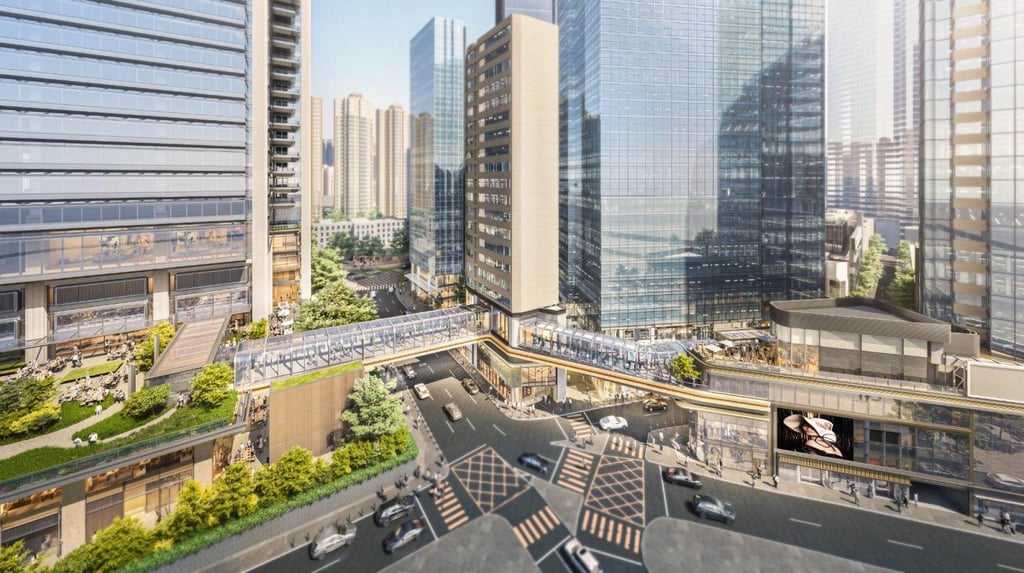
Hysan is committed to harnessing technology in a bid to build Lee Gardens into a sustainable and vibrant community that can adapt to change.
The Lee Garden Eight development on Caroline Hill is a large-scale commercial project which, in addition to retail and office space, will provide community facilities, 60,000 sq ft of green public open space and 20,000 sq ft exclusively for performing arts and cultural facilities. The project showcases Hysan’s commitment to a “Community Business Model”, which focuses on liveability, environmental stewardship and positive economic impact.
By 2026, and with four bridges and a covered walkway, Lee Gardens will become the most walkable neighbourhood: an eight-minute walk from Lee Garden Eight to the MTR station under Hysan Place.
Lee Garden Eight, a Hysan Development and Chinachem Group project, will create “a city within the city”, where workers, businesses and residents can work, shop, meet and enjoy recreational activities. This 1 million-square-foot urban oasis will set a new benchmark in sustainability standards, incorporating the latest green technologies to improve energy consumption, renewable energy waste management and water conservation.
The development uses the innovative construction method of Multi-trade Integrated Mechanical, Electrical and Plumbing (MiMEP), which integrates multi-trade building components into prefabricated modules that are installed on-site. Lee Garden Eight has the highest adoption rate of MiMEP in Hong Kong’s private sector commercial property development. The project has already gained international recognition for being a green building with a focus on health, wellness and technology.
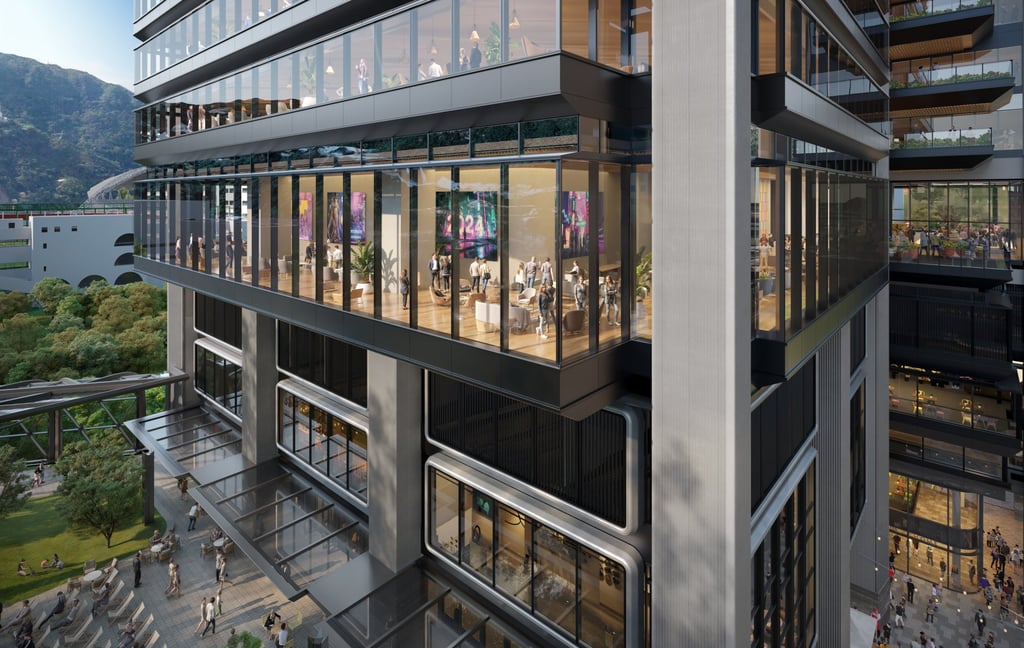
Hysan is also partnering with Hong Kong Science and Technology Parks Corporation to create the Community Lab, an incubator programme for tech start-ups which helps them test-drive their “last mile” concepts in an authentic setting. The initiative aims to establish a breeding ground for innovations in support of Hong Kong’s sustainable, technology-driven city transition.
Through the years, Hysan has received considerable support from many of its finance, trade and technology partners. At the gala event, top executives in these fields joined Irene Lee in a panel discussion celebrating pioneering businesses, building for the future and the meaning of legacy.
“The arrival of China, one of the world’s engines, the biggest market and its impact on Hong Kong, particularly post-1997, created a once-in-a-lifetime opportunity for Hong Kong,” Lee said. “I wanted to take up the challenge and help set our foundation for the future. We have had 100 years to curate, restore, evolve and transform as Hong Kong’s miracle unfolded – and we have only just started.”
According to Brian Gu, vice-chairman and president of Chinese electric vehicle manufacturer Xpeng, Hong Kong is well placed to play a significant role in the global transition to electric mobility.
“We are building flying cars and robots, for example,” he said. “All these new technologies will be available in the next three to five years. [Technology is] going to be hugely transformative to people’s lives, and I think you’ll start to see real economic change in cities like Hong Kong due to those technology drives.”
Other panellists were equally optimistic regarding the city’s ability to adapt to a changing and challenging environment.
“There are very few places in the world that have quite the same cosmopolitan nature as Hong Kong,” said Hans Michael Jebsen, chairman of the marketing, investment and distribution organisation, Jebsen Group, citing multilingualism, inclusivity and proximity to mainland China among its many advantages. “The city has an amazing network that very few other places in the world can match. It’s a hugely important combination that gives it the ability to be a global broker.”
Meanwhile, Peter Wong, chairman of HSBC Asia-Pacific, said the city had weathered many crises over its history, noting that it had emerged stronger and more resilient by adapting to change. “Hong Kong must be the strongest in the financial industry in Asia-Pacific, and the way to do that is to make sure we use our competitive edge,” he said, adding that Hong Kong was ideally placed to help China develop the yuan into an international currency in its bid to become a global leader.
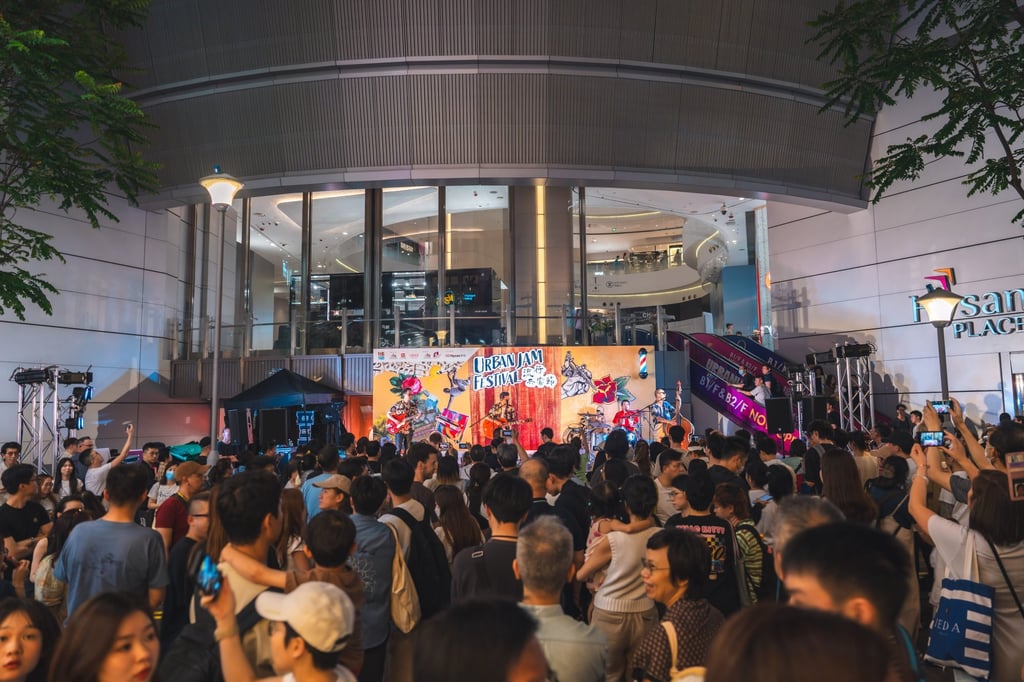
The panel speakers agreed that Hong Kong’s growth and success, like that of Hysan, is a testament to the power of perseverance, just as each anniversary is a reminder to this generation and the next to keep striving and achieving. At the event’s conclusion, Irene Lee invited her guests to not only remember and celebrate the past, but also to use the occasion to look to the future with optimism, confidence and a sense of purpose.
The company’s milestone was a momentous moment in history that reinforced its commitment to the future. Lee said Hysan will continue to expand and transform Lee Gardens in the Causeway Bay area for the people who visit, work and live there, in keeping with Hysan’s “Community Business Model” and its focus on liveability.
“One hundred years on, Hong Kong remains global, cosmopolitan and connected. While we celebrate our history, we celebrate our future. Legacy is not just history, it is a living being, it needs to flow on. What flows on is built on a strong foundation of trust, of values, of culture and of unity,” she said.