Payment tokens change the game for Asia-Pacific’s businesses
Visa Token Service boosts sales, accelerates revenues and reduces payment declines for clients including Adyen, Afterpay and Foodpanda

The use of digital payment services has really taken off in the Asia-Pacific region over the past few years, with the speed and convenience of transactions offering major benefits for both merchants and consumers.
A big step forward, though, has come with the successful introduction of payment tokenisation technology, in particular the Visa Token Service (VTS), powered by Visa, the global digital payment network, which is having a significant positive impact on the e-commerce sector by enhancing security features and minimising the risk of payments being declined.
Such advances can be seen as a genuine game changer by helping to boost sales, revenue and all-round efficiency. Companies using VTS include Foodpanda, one of Asia’s leading food and groceries delivery apps, Adyen, a Dutch payments platform company, and Australian fintech company Afterpay, best known for its “buy now, pay later” model used by more than 140,000 retailers around the world.
These, and many other enterprises can attest to the impact tokenisation has had on their businesses and, with a billion tokens issued in the Asia-Pacific region up to March this year and merchants seeing an increase in authorisation of about US$2 billion, the potential seems unlimited.
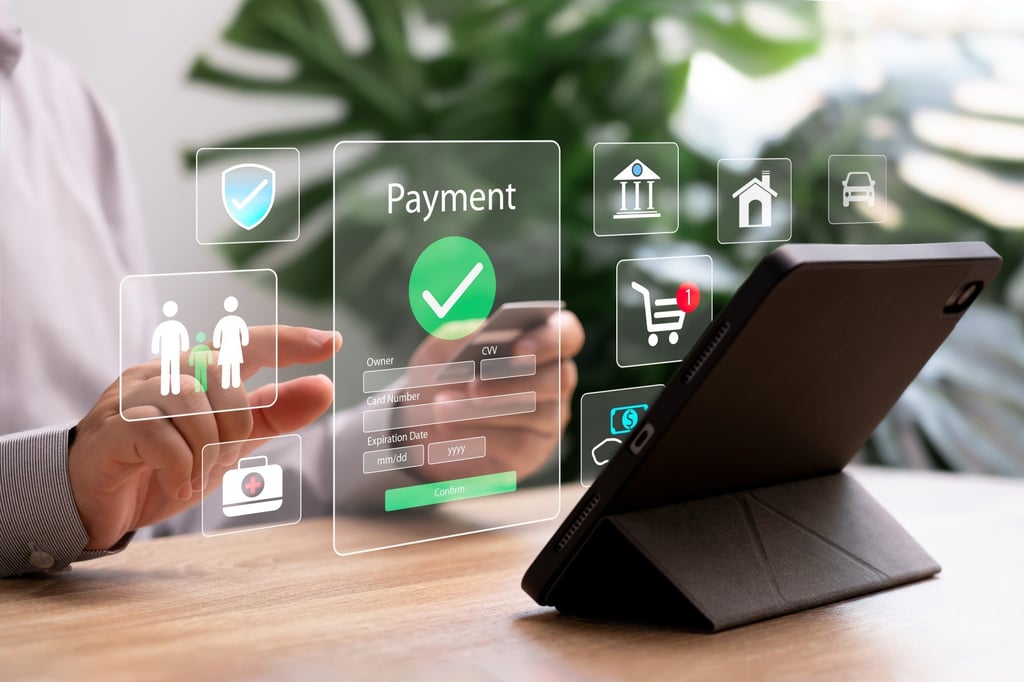
VTS operates by substituting a unique digital identifier, known as a token, for the traditional plastic credit or debit card, with its 16-digit primary account number (PAN). The token serves as a set of cryptographic keys to personal data and payment information and is exclusive for dealings with only one merchant, providing a guaranteed level of safety and privacy.
Improved customer experiences
For Foodpanda, payment tokens undoubtedly offer users a more convenient way to order food online.
“When it comes to food deliveries, customers want a smooth experience,” says Luc Andreani, Foodpanda’s chief operations officer, noting that customers often abandon their online shopping carts if they encounter payment issues.
“By adopting tokens, we have streamlined the checkout process and have achieved a 3.3 per cent increase in our payment success rate. This has boosted our revenue by reducing the number of payment declines and authorising transactions more quickly.”

The company has also decided to team up with Cybersource, Visa’s global payment services provider, to implement the Token Management Service, which uses a digital token for transactions with encrypted data. Encryption prevents all external parties from misusing payment credentials, ensuring transactions are kept secure.
“With Cybersource’s well-established reputation for payment stability and uptime [the period when a computer system works without any problems], we are confident about embarking on this network tokenisation journey, which can simplify, secure and enhance the payment experience for our customers and merchants,” Andreani says.
“Tokenisation will unlock new, personalised consumer experiences, going beyond what physical cards can do and paving the way for more innovations in e-commerce. Being part of that will keep us ahead in the business.”
Boost in security and business revenue
Adyen, which has collaborated with Visa since 2006 and been committed to promoting progress in tokenisation since 2017, has also noticed many positives.
The company works closely with major international brands including Meta, Uber, H&M and eBay, all of which require consistently high standards of service and expect their partners to operate at the cutting edge.
“Network tokens bring the twin benefits of increasing customers’ security and improving authorisation rates,” Ben Wong, Adyen’s general manager of Southeast Asia and Hong Kong, says. “This allowed Adyen to build on its existing in-house performance optimisation algorithm to achieve even better outcomes for our merchants.”
The company worked with Visa to issue more than 125 million tokens in 2020 in 180 markets. In 2023, Adyen marked a further milestone by issuing over two billion active network tokens.
The use of tokens has helped the platform to minimise the number of “false declines”, which can happen when relying on “card-on-file” details for customers checking out a shopping cart, Wong says.
If cards expire, or when credentials do not match the information that the platform has stored, false declines occur, and customers cannot be expected to re-enter their full credentials for every purchase.
In the United States alone, an estimated US$443 billion in revenue was lost in 2020 because of false declines. In one survey, up to 33 per cent of respondents said they would never return to a merchant where this had happened.
In an e-commerce environment, where “card-not-present” transactions are the norm, avoiding such problems and being able to depend on speed and convenience of payment is critical.
Tokenisation has also enabled the company to significantly reduce fraud rates, Wong adds. “This limits the value of stolen data, providing enhanced security for shoppers’ transactions with Adyen and also peace of mind for merchants.”
Results exceed expectations
Afterpay is a multinational financial technology company, founded in Australia, best known for its buy now, pay later service. Shannon Gilham, Afterpay’s group payment partnerships manager, says that the company’s solution is being used and offered by more than 140,000 retailers worldwide.
She says working with VTS has exceeded expectations, making it possible to provide a first-class payments service built on flexibility, security and autonomy.
“Network tokenisation has led to phenomenal results for our customers,” she says. “Businesses are seeing fewer payment declines, leading to more transactions being authorised, which translates into overall revenue growth.”
This has all been achieved by effectively reducing friction in the payment process.
“That is what every business wants to avoid,” Gilham says. “We are glad to partner with Visa on this journey to make the payment experience simpler, safer and smarter. Ultimately, that benefits payees and payers in every tokenised transaction.”
Ansar Ansari, Visa’s senior vice-president of product and digital solutions, is quick to endorse this viewpoint.
“Network tokens seamlessly bridge the gap between security and performance, he says. “Merchants no longer need to trade off performance or security to enable the latest digital commerce experiences for their valued customers.”
For full details of how to become part of the Visa tokenisation network, merchants can visit the VTS website.