Chairman of global tech brand TCL sees digital future in ‘Screen Universe’
Li Dongsheng reveals how creation of innovative platforms can connect people, content and services worldwide on sidelines of ‘Summer Davos’

Li Dongsheng, founder and chairman of TCL – a global technology brand serving users across more than 160 countries and regions – was among the speakers at the World Economic Forum’s Annual Meeting of the New Champions last month.
Under the theme, “Innovating at Scale”, the forum, also known as “Summer Davos”, saw more than 1,800 government leaders, senior business executives and innovators from 90 countries and regions discuss how technology and new ideas and practices can translate into economic progress and jobs.
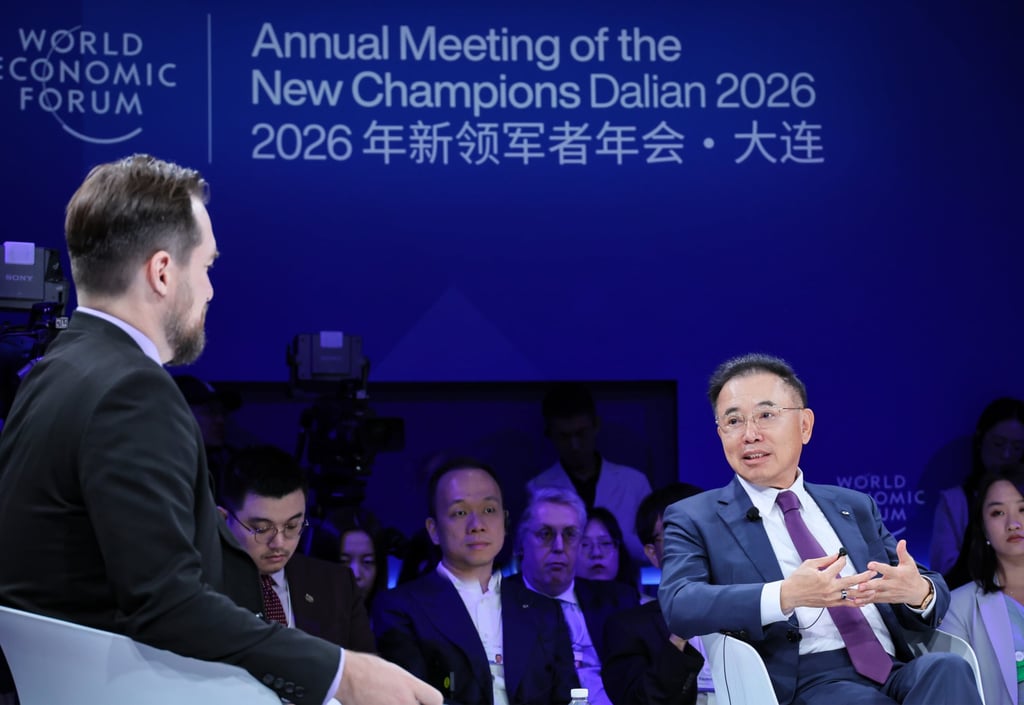
Li took part in the “Reconfiguring Supply Chains” global live-stream round-table discussion at the event, which serves as a platform for entrepreneurship, innovation and next-generation growth, at Dalian, in northeastern China.
While on the sidelines of the forum, Li outlined his company’s concept for the future of digital life, called the “Screen Universe”, in an exclusive interview with the South China Morning Post.
“In simple terms, the Screen Universe expresses TCL’s vision of future digital life: screens will become a critical interface connecting people, content, services and the physical world,” Li said.
“Screens will become more intelligent – AI will enable screens not just to display content, but to understand context, connect services and respond to user needs,” he said.
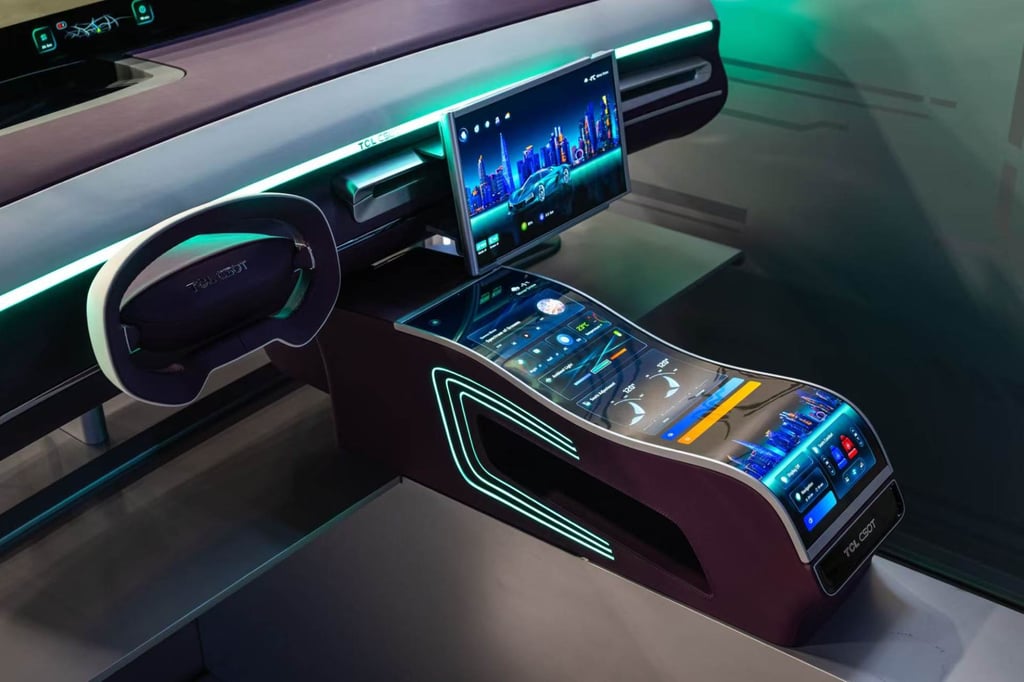
“I believe the screen will remain one of the most vital portals between humanity and the digital realm. It will be present in our living rooms, on our desks, in our cars, and integrated into AR [augmented reality]-AI [artificial intelligence] glasses, blending seamlessly into every aspect of our physical environments.
“While the physical form of the screen will continue to evolve, its function as a portal connecting us to information, content and services will only grow stronger.”
TCL was already confident in its role of integrating display technology, smart terminals and AI capabilities to better serve consumers through screens, Li added.
During the Milano Cortina 2026 Winter Olympics, for example, the brand – as a Worldwide Olympic and Paralympic Partner – had been able to showcase its vision of a “Screen Universe” through the use of its display technology and smart home appliances, he said.
Li also discussed TCL’s 2019 corporate restructuring, which created two independent entities – TCL Technology, focused on display technology and clean energy, and TCL Industries centred on smart terminal products and services, including consumer electronics and smart home devices.
Although both entities are connected along the industry value chain and operate under the TCL brand, they are fully independent in capital, governance, operations and decision-making. He said this dual structure allowed them to make decisions based on their own market dynamics, improve execution efficiency and develop a clearer strategic focus.
“We initiated this separation because the two businesses operate under vastly different business models,” he said. “TCL Technology operates in technology-intensive industries that require sustained research and development [R&D], advanced manufacturing capabilities and long-term investment.
“Success requires immense resources in technology, capital and long-term strategic planning. By establishing an independent entity, we attract specialised capital and resources, accelerating the growth of our display business.
“In contrast, TCL Industries focuses on smart consumer electronic products – a sector that demands a highly efficient, resilient supply chain to support global expansion, a rapid pace of product innovation and iteration and world-class marketing and branding capabilities.”
Before the restructure, TCL reported sales revenue in 2017 of about US$17.6 billion. Last year, the combined revenue of TCL Technology and TCL Industries reached over US$51.9 billion. Between 2019 and last year, TCL Technology’s revenue more than tripled from about US$8.4 billion to US$27 billion, while TCL Industries’ revenue more than doubled during the same period – up from US$11.7 billion to over US$24.9 billion.
Li said the restructuring had also allowed the two entities to expand R&D according to their own priorities. TCL Technology has continued to invest in display technology and photovoltaic materials, which are used in green solar generation, while TCL Industries focuses on smart terminal products and user-facing innovation.
Citing data from market research company Omdia, TCL Technology noted in its 2025 annual report that its subsidiary and display manufacturing arm, TCL CSOT, was ranked No 2 globally for overall TV panel market share and also led the gaming display panel segment.
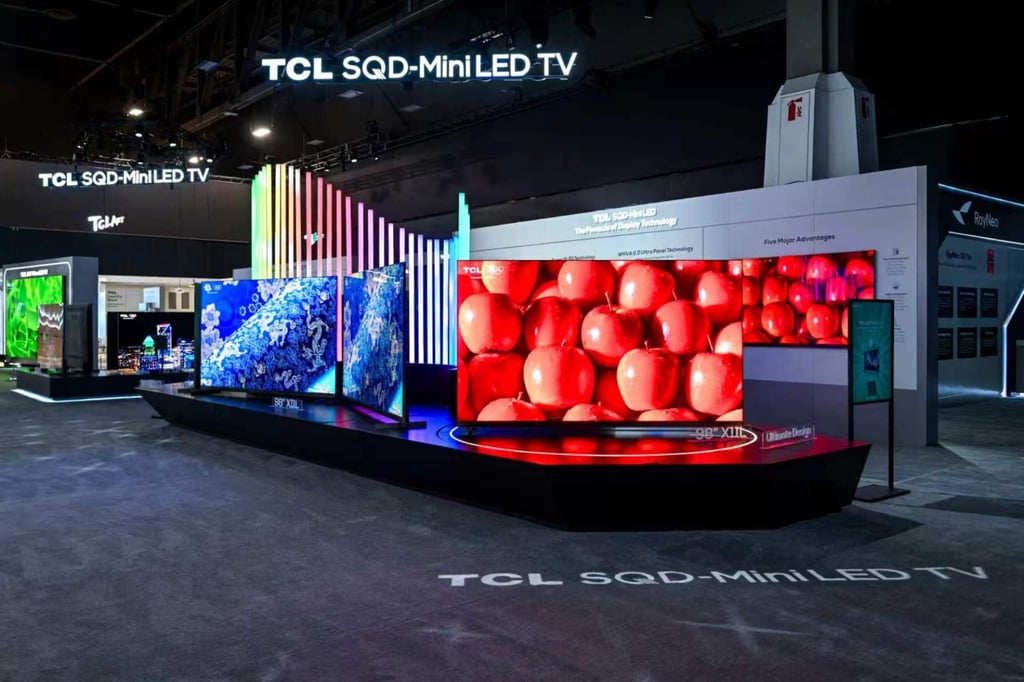
Separately, TCL Industries showcases advanced display technologies to global consumers through smart consumer electronic products, especially televisions including premium models such as its SQD (super quantum dot)-Mini LED TVs. Omdia ranked TCL TV as the No 2 global TV brand and TCL as the No 1 global brand for Mini LED TV by shipment volume in 2025.
“Screens have evolved far beyond mere static sources of information or entertainment, becoming endless digital gateways and points of interaction spread across limitless devices,” Li said.
“TCL’s goal is to translate cutting-edge display technology into tangible, user-centric benefits, such as high-definition picture quality, deep immersion, seamless interaction, and elevated lifestyle experiences. These benefits would form the backbone of TCL’s ‘Screen Universe’.”
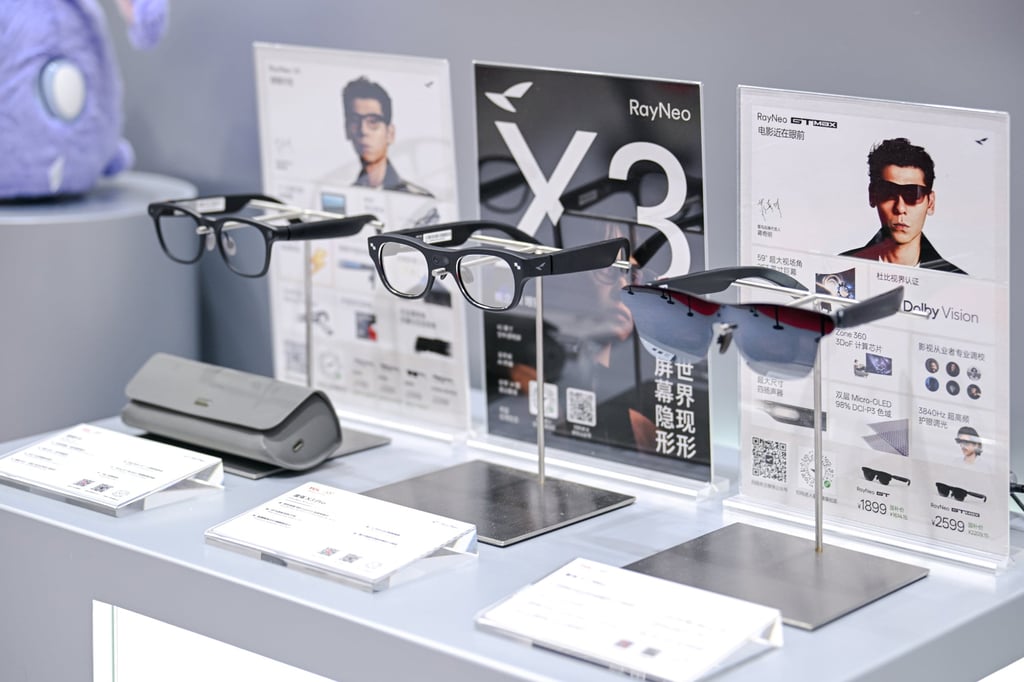
TCL has established a strong foothold in the highly competitive wearables market, particularly consumer AR glasses through sales of its RayNeo glasses. In this year’s first quarter, the company ranked first globally in shipments of AR glasses – capturing a 23.7 per cent share by volume – according to market research company Counterpoint Research’s Global XR Market Tracker.
“Ultimately, whether an experience is digital or physical, the human eye remains the primary gateway through which we perceive it,” Li said. “The question of what kind of display technologies are needed to present that experience to users represents another area of massive, untapped growth potential for TCL.”
AI was one of the crucial advances empowering TCL’s “Screen Universe”, he said. On the consumer side, TCL Industries was now integrating AI into smart devices, including its RayNeo glasses, to make user interactions smarter and more responsive, with intelligent assistants optimising performance and facilitating interactions, he said. It had also recently launched a new AI-powered short-form video service and was planning to release AiMe, the world’s first modular AI companion robot.
Meanwhile, on the industrial side, TCL Technology was embedding AI into R&D, manufacturing and quality control to improve efficiency, enhance process capabilities and accelerate development cycles, Li said.
“Across TCL Technology and TCL Industries, the adoption of AI has significantly strengthened our competitiveness as a manufacturer,” he said. “Over the past three years, these integrations have already yielded more than US$367 million in tangible, comprehensive benefits.”