Malaysia spearheads regional drive for AI-powered solutions to shape modern cities
Southeast Asia’s first Smart City Expo, held in Kuala Lumpur, is set to strengthen the country’s leadership in innovative urban planning

“We will be able to use technology and artificial intelligence to enhance urban living – improving how we live, work and thrive in cities.”
This remark from Datuk Ahmad Zaki Zahid, chief corporate officer for Digital Nasional Berhad (DNB) in Malaysia, sums up the goal of Smart City Expo Kuala Lumpur 2025 (SCEKL 2025).
The event, which has the theme of “AI Cities: Shaping Our Digital Future”, will take place from September 17 to 19 at the Kuala Lumpur Convention Centre. It is being spearheaded by DNB, a Malaysian state-owned company focused on expanding the country’s 5G network infrastructure, and the Malaysia Digital Economy Corporation (MDEC), a government agency tasked with leading the digital transformation of the country’s economy that operates under the Ministry of Digital and its minister, Gobind Singh Deo.
SCEKL 2025 is the first Southeast Asian edition of the Smart City Expo World Congress, an annual event originally established in Barcelona in 2011 to provide solutions to modern challenges faced by urban hubs. The event has since grown to include spin-off events around the world addressing the issues and opportunities in different regions.
The Kuala Lumpur edition of the expo seeks to drive conversations about how Southeast Asian countries can use AI and 5G to improve infrastructure, disaster management, urban development and more. It goes beyond Malaysia’s goal of emerging as a smart nation by 2040 to also align with its 2025 Asean chairmanship under the theme of “Inclusivity and Sustainability”. In its current role as chair, Malaysia is strengthening the regional focus on digitalisation, sustainability and inclusive development.
Public-private partnerships key to digital drive
During SCEKL 2025, Malaysia will showcase its public-private partnership (PPP) strategy for developing innovative and inclusive digital projects across the country.
“Public-private partnerships empower Malaysia to scale national digital initiatives in faster and more strategic ways,” says Anuar Fariz Fadzil, CEO of MDEC. “The public sector provides the policy framework and stability, while the private sector brings innovation and agility. Hence, PPPs can really accelerate national priorities and deliver meaningful impact.”
He adds: “The National AI Framework and other digital strategies are built on PPPs, because only by working together can we stay on the cutting edge. We must anticipate the next wave of innovation and be ready to seize it with the strength of the private sector.”
This approach also reinforces Malaysia’s reputation as an investor-friendly nation. Clear policy direction, openness to innovation and strong institutional support can give global and regional players the confidence to commit resources, with the reassurance that partnerships with government agencies and local industries can result in sustainable growth opportunities.
MDEC plays a central role in making this ecosystem work by linking regulators, private players and end-users to accelerate digital strategies.
“It is about building a symbiosis where policy, innovation and market demand reinforce each other,” Anuar says. “That is how Malaysia creates an environment where investment translates into impact and long-term growth.”
PPPs thrive when the private sector’s innovation is matched by the public sector’s regulatory foundation. MDEC’s work with DNB serves as an example of this, as DNB is owned by private shareholders in addition to Malaysia’s Ministry of Finance.
SCEKL 2025 will feature an AI Cities Pitch Lab that gives start-ups an opportunity to present their AI-based urban solutions to government policymakers and potential investors. Stand-out ideas may be earmarked for support such as funding, a pilot project or access to 5G testing.
Sharing real-world examples of AI and 5G use
During the expo, MDEC and DNB will also share real-world cases of AI and 5G deployment that have improved various operations across Malaysia – cases that also have the potential to be put into practice in other countries across the Association of Southeast Asian Nations.
DNB’s Zaki says: “At MDEC and DNB, we’re working with 12 cities across Malaysia. Some are leading, some are starting, but we are getting a good response. And so we hope to showcase that.”
One of these real-world cases comes from the country’s public health system, where connected ambulances now enable paramedics to transmit patient information in real time en route to the hospital. This helps prepare doctors to operate immediately, if needed, once the ambulance arrives.
“We’re trialling 5G healthcare use cases in Kuala Lumpur. One example involves paramedics sending 3D images to specialists, offering a glimpse into how future tech could improve diagnoses,” Zaki says.
In Ipoh, the capital of Perak state in northern Malaysia, using AI- and 5G-adaptive traffic lights to predict the flow of vehicles has led to a 20 per cent reduction in travel time across the city, in addition to a 15 per cent decrease in road accidents.
In Johor Bahru, digital technology is strengthening disaster response on Malaysia’s southern border with Singapore. “Johor Bahru is using drone surveillance via 5G connectivity to detect incidents, improving response time by up to 60 per cent,” Zaki says.
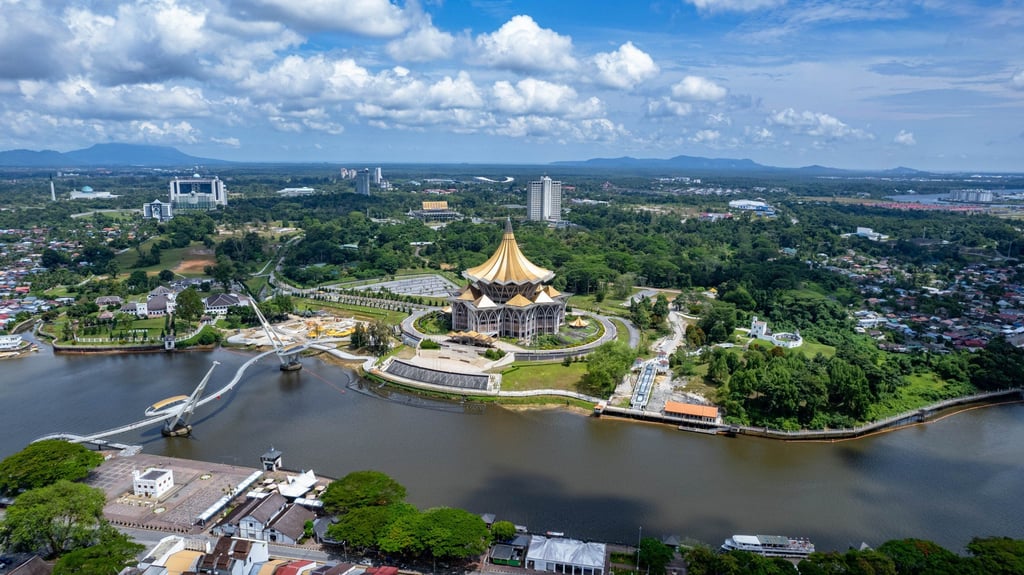
On the environmental conservation front, a geographic information system (GIS) programme that includes Internet of Things (IoT) sensors is being trialled in Kuching, the capital of Sarawak state on the island of Borneo, to map out and monitor the health of the city’s trees. Given Sarawak’s reputation for its rainforests, this initiative carries particular significance for the state’s environmental stewardship.
A big part of Malaysia’s road map to become a smart nation includes “digital twins”, which use AI to create virtual models of cities that can predict scenarios for anything from infrastructure to energy. MDEC and DNB are placing considerable emphasis on this approach to urban planning.
“Once you have a virtual replica of a city, you can plan,” Anuar explains. “You know where the pockets of land are available. You can manage traffic, you could detect the impact of a flooding situation.”
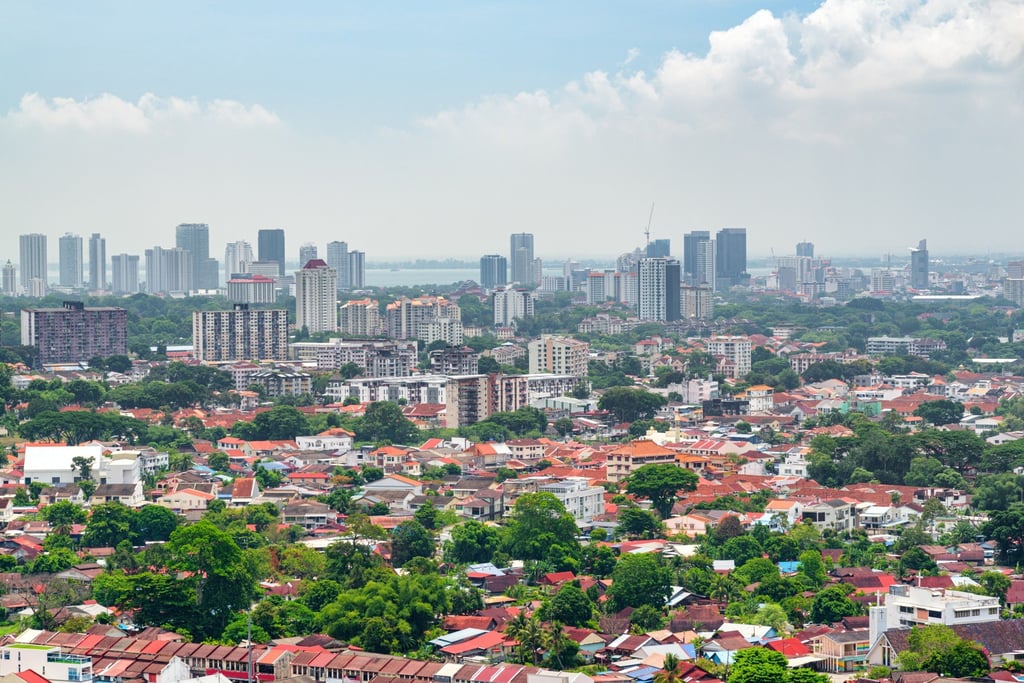
Digital twins are now being used for 50 urban planning scenarios annually in Kuala Lumpur and Penang. “In Penang, there is a 90 per cent prediction accuracy rate for infrastructure maintenance issues,” Anuar says.
While these real-world cases have been driven by MDEC and DNB, at the same time they are grass-roots initiatives that have to be carried out according to the needs of the specific city. Both Anuar and Zaki say that is when PPPs prove beneficial to all stakeholders.
“All the city councils are working with private sector players to speed up the roll-out of digital twins,” Zaki says. “And there’s a demand from interested private sector players who want to supply them.”
With SCEKL 2025 serving as the Southeast Asia edition of the Smart City Expo, other countries in the region will also have the opportunity to share their own real-world cases of digital transformation. A City Leaders Programme at the event will be attended by mayors from more than 20 cities across Asean to exchange knowledge and ideas.
“Every city will have its own problems and challenges, but usually we can tailor the solutions and be able to solve problems,” Zaki says.
Anuar notes that every country in Asean has its own strengths, and there is always something to learn from one another.
“Shared experiences help us adapt policies, attract investment and build stronger digital ecosystems together,” he says. “In that exchange lies the real intelligence of the region, especially when complemented by the transformative power of AI and 5G.”