Relationship between humans and technology put under the spotlight at 2022 New Vision Arts Festival
- Playwright Yan Pat-to brings his futuristic work, Posthuman Condition, from Germany to Hong Kong’s annual performing arts showcase
- Director Ata Wong and composer GayBird Leung combine their opposing views on technology to create Hack, a performance piece

Our fascination with human-like robots and cyborgs is nothing new. Back in the 1970s, the American TV series The Bionic Woman was a global hit watched by millions of people.
In 2000, carmaker Honda revealed its humanoid robot Asimo, which regularly captivated the public with demonstrations of its abilities before its last show at the National Museum of Emerging Science and Innovation in Japan earlier this year.
Hong Kong-based Hanson Robotics brought Sophia, a lifelike robot, into the world in 2016. She became so well received as a public speaker on TV and at global events that she was named the United Nations Development Programme’s first non-human Innovation Champion, and was even granted citizenship by Saudi Arabia.
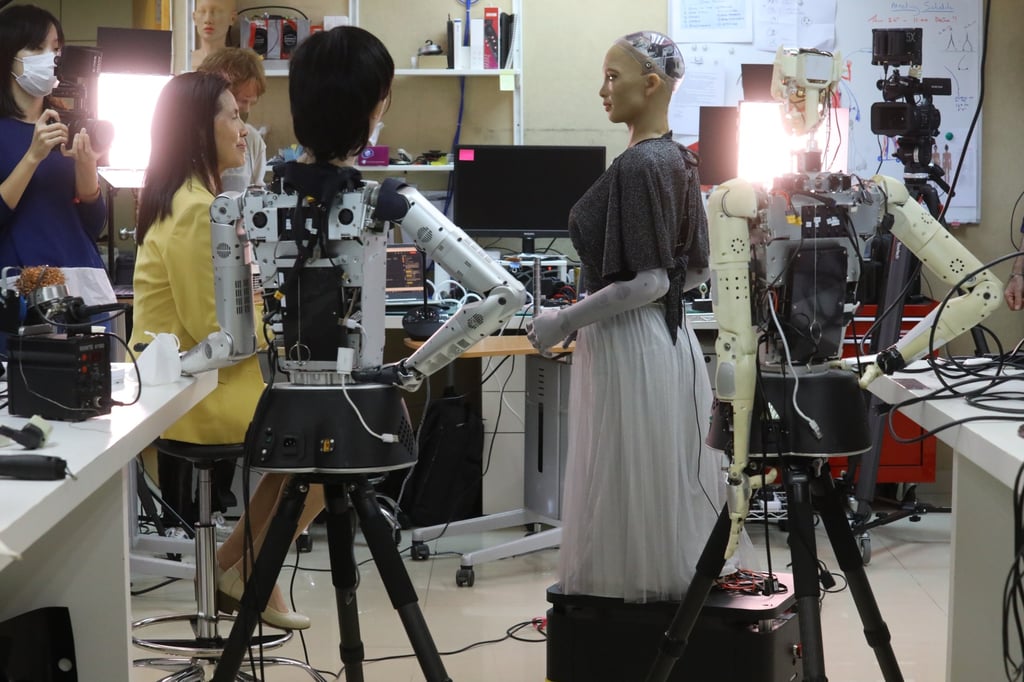
Despite all these advances, it still remains unclear how the relationship between humans and robots will continue to develop. Will we someday become equals, or will machines eventually become so powerful that they subjugate their organic counterparts?
During the upcoming New Vision Arts Festival – an annual performing arts showcase in Hong Kong organised by the Leisure and Cultural Services Department and known for pushing boundaries with innovative performances – two shows will attempt to tackle the big question on the minds of technophiles and technophobes alike: will technology bring humanity to ruin?
“It’s in human nature to be curious about the future and the unknown. With new technology comes two main emotions: excitement and fear,” says Hong Kong-born Yan Pat-to, resident playwright at the Nationaltheater Mannheim in Germany. He will return home to bring his futuristic work Posthuman Condition to the festival in late October.
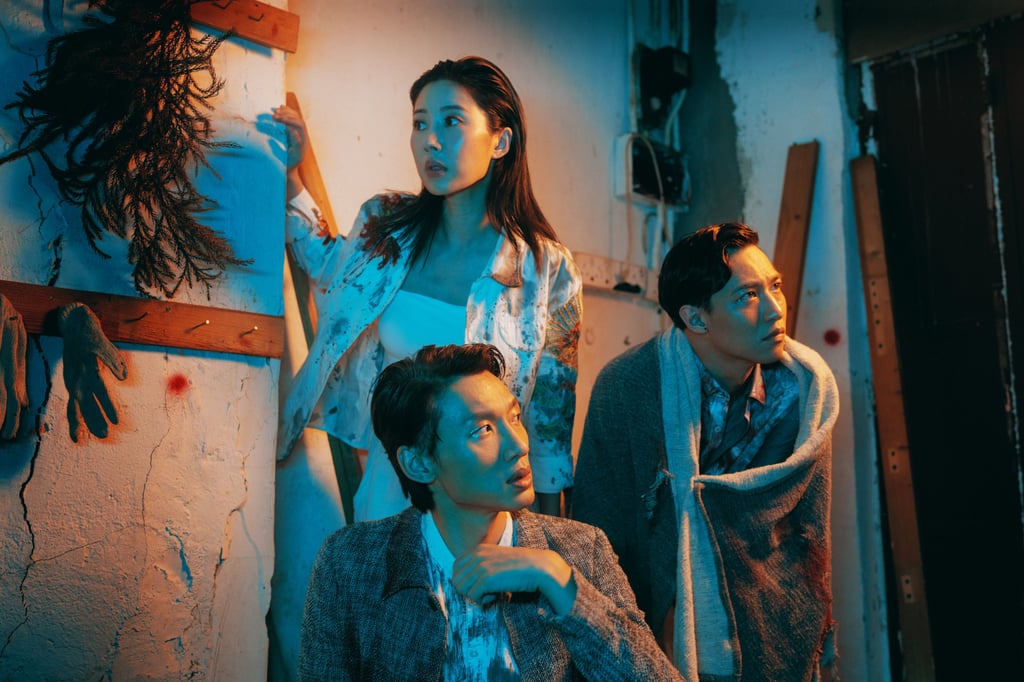
Yan got his inspiration for the play from a visit to a 2014 exhibition at the Museum für Gegenwart in Berlin, where he was stunned by its display of military drones. Posthuman Condition is a dark comedy about Frank, an ordinary man who becomes a remote drone pilot, using his gaming skills to launch air strikes.
When his wife gives birth to their son, named Another, the baby is missing a buttock and has to be fitted with a robotic prosthesis. However, the procedure has a side effect: the child starts growing abnormally fast.
Believing that his son’s condition is bad karma due to the blood on his hands, Frank goes on a journey of redemption to see the places he bombed and apologise to the people whose lives he helped destroy.
Are we losing parts of our human abilities to technology?
In the eight years since glimpsing his initial inspiration, Yan has watched in disbelief as drones have become commonplace in warfare and military actions. “I have completely different feelings towards my play now,” he says. “That’s why I would try to convey more of these emotions in my work now.”
There are varied interpretations to the word “posthuman”, but in Yan’s mind, it means humans who rely on technologies to simply survive.
“When our bodies have become too reliant on technologies – as simple as not being able to navigate well without glasses – we have to ask: are we losing parts of our human abilities to technology?” he says.
Translated into German and premiering last year at the Schauspiel Frankfurt, Posthuman Condition is the second instalment of A Concise History of Future, Yan’s three-part series that raises questions about the complicated relationship between humans and technology.
“Posthuman Condition would remind you of a Hollywood-style narrative, but in an anti-Hollywood way,” Yan says, adding that people will have to see the play for themselves to understand what that means.
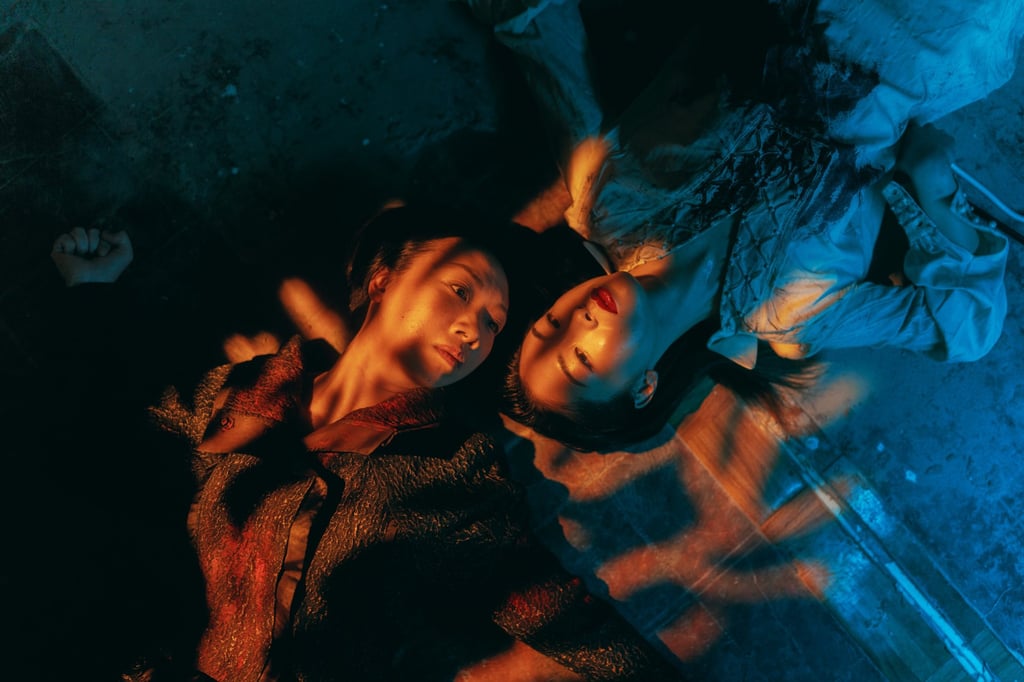
Yan admits that he does not have a definitive answer as to whether or not technology is good for humans. He urges the audience to see his play with an open mind.
“We are, as a Chinese saying goes, crossing the river by feeling the stones. We don’t see what the future holds, but I do think we need the world to come together to discuss the question urgently,” he says.
The playwright cites the work of German sociologist Max Weber, whose concept of rationality defines two ways in which people make decisions: instrumental rationality, based on tools and other resources as well as working efficiently; and value rationality, based on ethics and what is right.
“Humans have been using one principle to justify new technologies – that is, by focusing on the convenience and productivity they bring to our lives,” Yan notes. “It has helped civilisation to come this far, so we can’t say it’s a bad principle. But can we keep on relying on instrumental rationality to shape our world?”
This year’s New Vision Arts Festival will further explore the tangled relationship between humans and machines with Hack, a completely different type of theatrical production.
A collaboration between director Ata Wong and composer GayBird Leung, Hack has been developed as a boundary-breaking performance that poses new challenges to these two established artists. A key factor is that they have opposing views on technology.
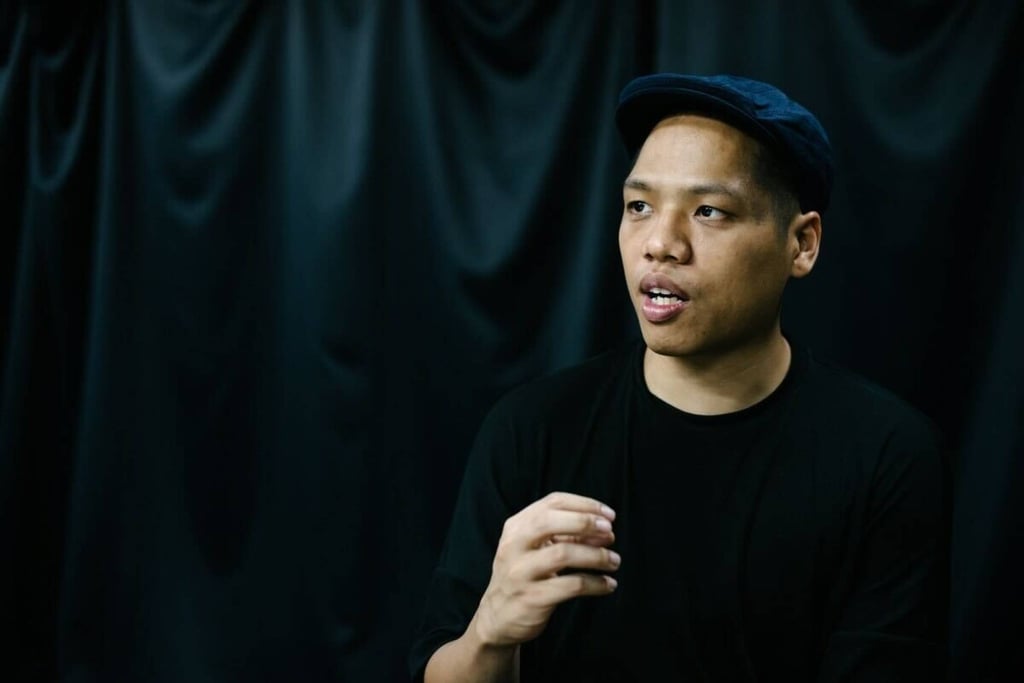
“I always say that I am not a big fan of technology, whereas GayBird likes technology,” Wong says. “For me, humans and their dynamic body movements are the most captivating and impactful element of a show.”
Working as a choreographer and movement coach, Wong focuses on leveraging the powerful movement of flesh-and-blood bodies to provide the main narrative for his shows. Leung has won numerous awards for his multimedia works and innovative music, including the 2018 Lumen Prize, a global award for the best art created with technology.
“Music is always related to technology,” Leung says. “People always see technology as cold and inhuman, but I think it no longer is at this age. We wake up to technology every day. It has become a part of life and my inspiration.”
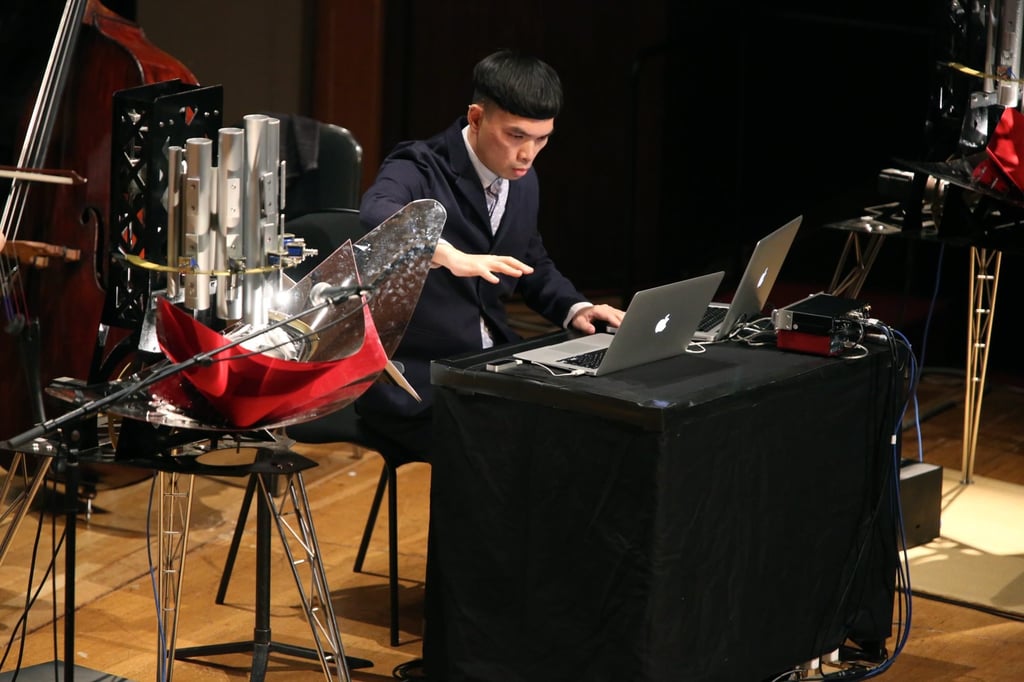
In order to take both of their views into account, Wong and Leung approached their collaborative process by dissecting their personal beliefs about technology – questioning them and putting them under the microscope together.
The result is a surreal performance that shows what its creators imagine about the interactions between men and machines. “Because we have such different stands on technology, it creates some interesting exchanges for our show,” Wong says.
What will happen when our bodies are being replaced?
Hack will present an ensemble of movements, from sound and light to the motion of the set. At press time, Wong and Leung were still mum about exactly how the show would look when it takes the stage in early November – but it was clear that humans would not have the starring role.
Wong explains: “My primary intention is to make the audience unable to distinguish what is being done by technology, and what is done by humans on stage. There are machines on stage that may or may not be real. We ask the question: what will happen when our bodies are being replaced?”
Even though Leung embraces technology in his work, he still views it as mainly a means to an end. He says: “You may program an AI to say things as if they have emotions, but real human senses and feelings will continue to evolve. I don’t think machines can replace humanity totally.”
To that, Wong says: “I hope so.”