Macau puts ‘creative fusion’ on the menu at 2026 International Gastronomy Forum
The annual event, organised by Macao Government Tourism Office and South China Morning Post, explores culinary digital storytelling, youth culture and sustainable tourism
Macau’s status as the home of Macanese cuisine – the world’s first “fusion food”, which reflects Portugal’s rich maritime trading history by combining culinary influences and ingredients sourced from Europe, Asia and Africa – led to it being recognised by Unesco as a Creative City of Gastronomy in 2017.
Last month, the city strengthened its ties with its fellow Creative Cities of Gastronomy by welcoming chefs, content creators, academics and tourism leaders from around the world to the International Gastronomy Forum, Macao.
The event – which examined how food can intersect with design, digital media, youth culture and sustainable tourism to shape the cities of tomorrow, under the theme “Creative Fusion: Reimagining Gastronomy Beyond the Plate” – was held at Macau Fisherman’s Wharf Convention and Exhibition Centre and was organised by the Macao Government Tourism Office (MGTO), with the South China Morning Post (SCMP) as the collaborative partner.
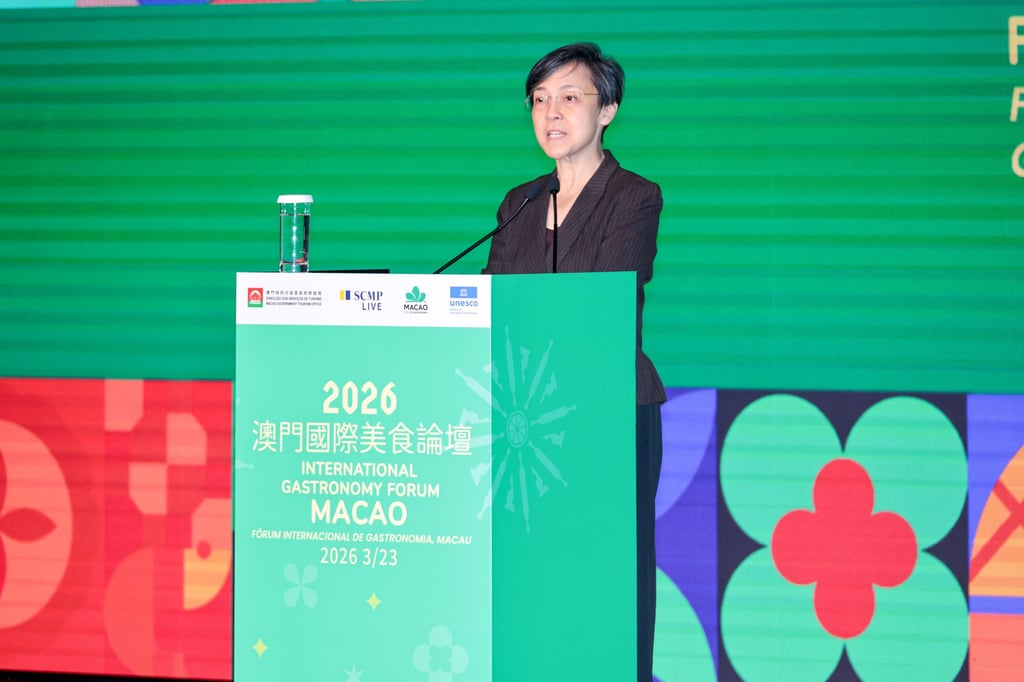
In her welcome remarks, Maria Helena de Senna Fernandes, director of MGTO, said the forum formed part of Macau’s diverse range of gastronomic initiatives introduced since being named as a Creative City of Gastronomy “in active support of the United Nations 2030 Agenda for Sustainable Development, [while] garnering a lot of positive feedback along the way”.
The forum, as one of these major initiatives, was held in tandem with the International Cities of Gastronomy Fest, which brought together delegates from 38 Unesco Creative Cities of Gastronomy and 10 Creative Cities of other fields “to navigate creative paths towards gastronomic preservation, innovation and exchange”, she said.
As next year will mark the 10th anniversary of Macau’s Creative City of Gastronomy designation, “there will be active participation on the way to demonstrate our fruitful development and also our diverse capabilities to the world”, she added.
The forum included a “Chinese Creative Showcase” for seven cities from mainland China that are members of the Unesco Creative Cities Network (UCCN). They are Jingdezhen, Suzhou and Weifang, Creative Cities of Crafts and Folk Art, Changsha, Creative City of Media Arts, Qingdao, Creative City of Film, Wuhan, Creative City of Design, and Wuxi, Creative City of Music.
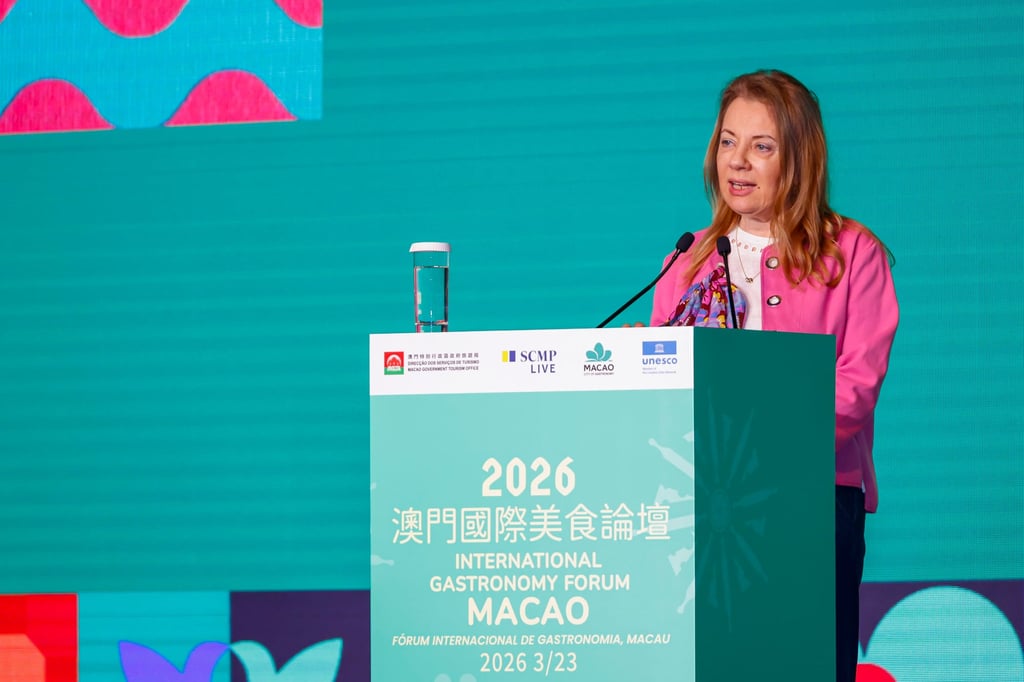
In another speech, Denise Bax, secretary of the UCCN, praised Macau’s efforts since joining the network – created in 2004 and comprising 408 member cities across eight creative fields – which supports “cities that recognise culture and creativity as strategic drivers for sustainable urban development”.
She said: “Since joining the UCCN, Macau has been an active and committed member, consistently demonstrating how gastronomy can serve as a powerful enabler of sustainable urban development at both the local and international levels.
“The [forum’s] theme shines a spotlight on opportunities arising from cross‑disciplinary collaborations between gastronomy and other creative fields. Indeed, it encourages us to rethink gastronomy beyond the plate.”
Bax also announced a dedicated research project that would “document, analyse and showcase Macau’s journey as a Unesco Creative City of Gastronomy”, with it serving as a case study of how designation could be translated into concrete and tangible results at a city level.
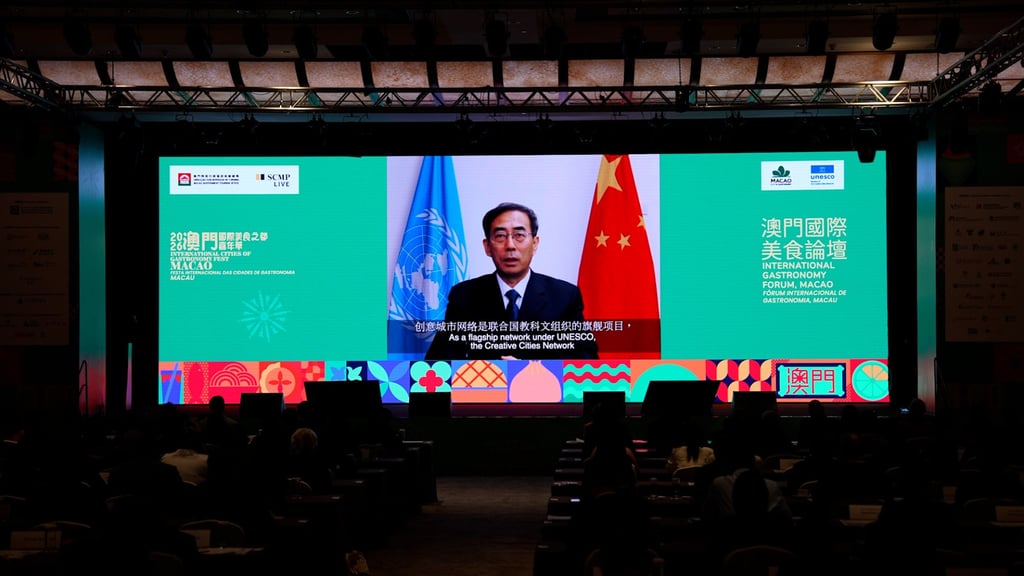
In a speech via video, Qin Changwei, secretary general of the Chinese National Commission for Unesco, emphasised the importance of food as a “major connector that brings people together and deepens mutual understanding and solidarity among peoples from different regions and cultural backgrounds”.
He also highlighted Macau’s initiatives as a Creative City of Gastronomy, particularly through events such as the forum. “Since joining the network, Macau has been committed to steering its development forward as a Creative City of Gastronomy,” Qin said. “Its international influence and appeal continue to grow, making significant contributions to Macau’s economic diversification.”
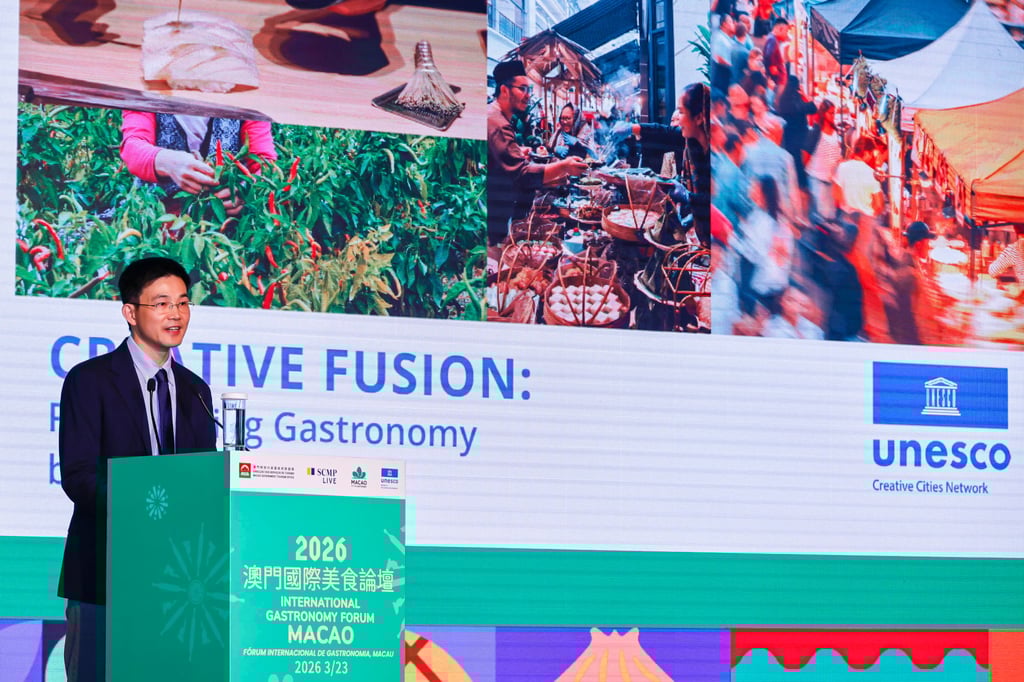
In the forum’s first keynote speech, Ni Qiaobo, project officer for the UCCN programme, outlined how “creative fusion” was more than just a culinary buzzword. The network now covered eight fields – “architecture, crafts and folk art, design, film, gastronomy, literature, music and media” – and cities were increasingly exploring these intersections across creative sectors, rather than treating them in isolation, he said.
Ni highlighted two contemporary forms of creative fusion – the first when innovative fields interacted and collaborated to generate new culture and economic value, the second embracing development dimensions, where culture was connected with economic development, social inclusion, environmental sustainability, education and digital information.
He said collaborations across the network, from European master’s programmes that linked food, design and urban planning, to community‑based initiatives built around shared ingredients and traditional markets, were evidence that “cities are not only connecting gastronomy with design, music or media arts, they are also linking culture with economic resilience, environmental sustainability, education and social inclusion”.
The second keynote speech from Flora Igoe, head of the youth culture and food heritage programme at the UN’s Food and Agriculture Organization (FAO), focused on young culinary professionals. She explained how the FAO had “made a deliberate strategic shift, positioning youth alongside gender equality as a cross‑cutting priority”.
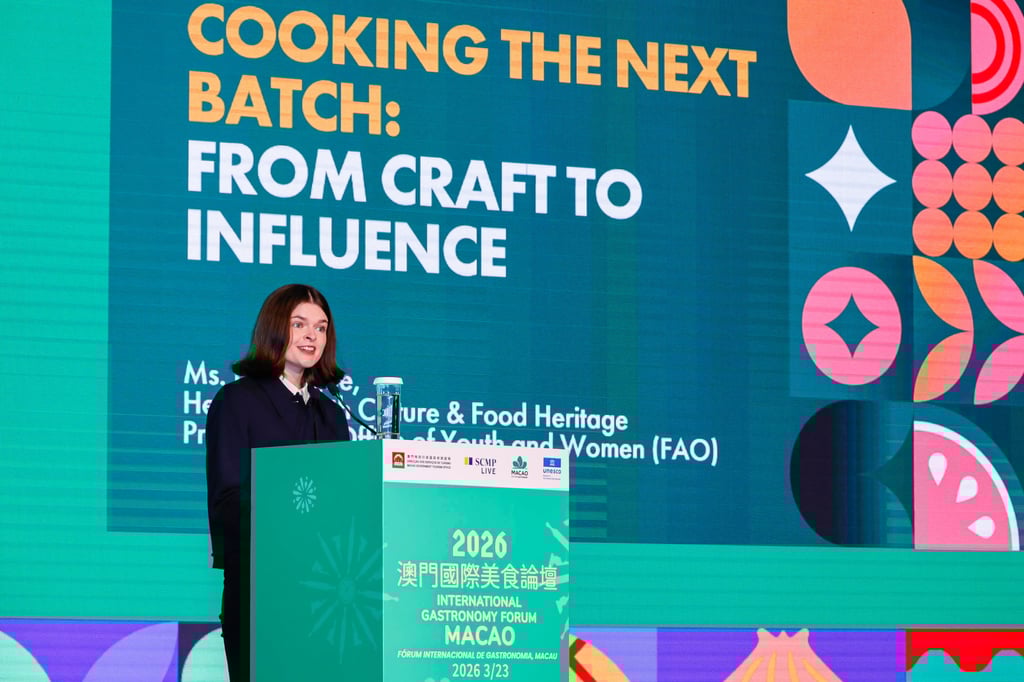
She said that through the World Food Forum’s Global Youth Action Initiative, the FAO had engaged with over 30,000 young leaders across more than 60 active national youth chapters in 2025 alone, by connecting them with governments and institutions to help influence agrifood policy and action.
She focused her talk on the World Food Forum Young Chefs Programme, launched last October, which pairs chefs, aged 18 to 35 from around the world, with mentors, and is structured around three pillars: capacity development, advocacy and local action.
“The Young Chefs programme positions young people as custodians of traditional knowledge and foodways and as active agents of change in agri‑food systems transformation,” Igoe said.
This model offered Macau and other Creative Cities a blueprint for deeper collaboration, she said. “Creative fusion … is not only what happens in a dish. It is a model for how change happens through the fusion of tradition and innovation, of local knowledge and global networks, of individual craft and collective action.”
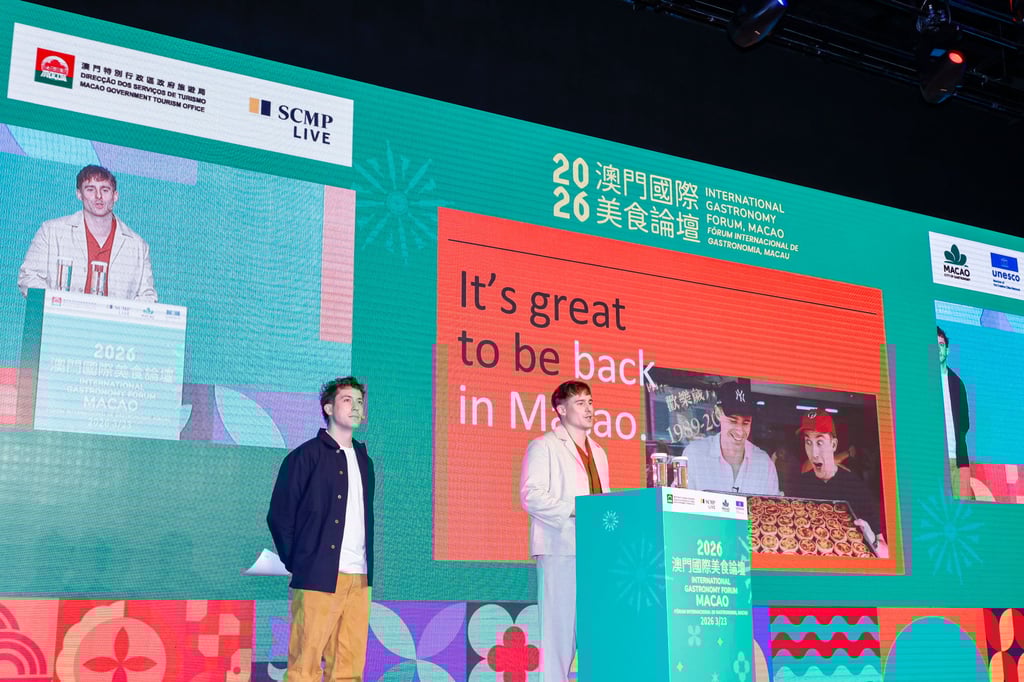
The third keynote speech looked beyond kitchens and policy rooms to the screens of mobile phones and computers, where many of today’s food journeys start, as English YouTube creators Josh Carrott and Ollie Kendal, known for their “Korean Englishman” and “Jolly” content channel, revealed how food had become their most powerful storytelling tool.
They traced their 13‑year journey – from university food hobbyists to creators with millions of social media subscribers. Kendal said it had been built on “a very simple observation, that food is something that we all share in common, regardless of what country or culture we’re from”. Whether filming with global celebrities or everyday diners, “food is something that connects us all, we’ve all got to eat, and that’s what makes food an amazing tool for storytelling”, he said.
The duo’s message was clear, Kendal said. “First, recognise the unparalleled power [that] food gives as the ultimate equaliser … Don’t approach content as a critic, but as a fellow traveller.” He and Carrott said that authenticity was the most valuable currency in today’s media landscape, where digital creators increasingly occupied the space once held by traditional outlets.
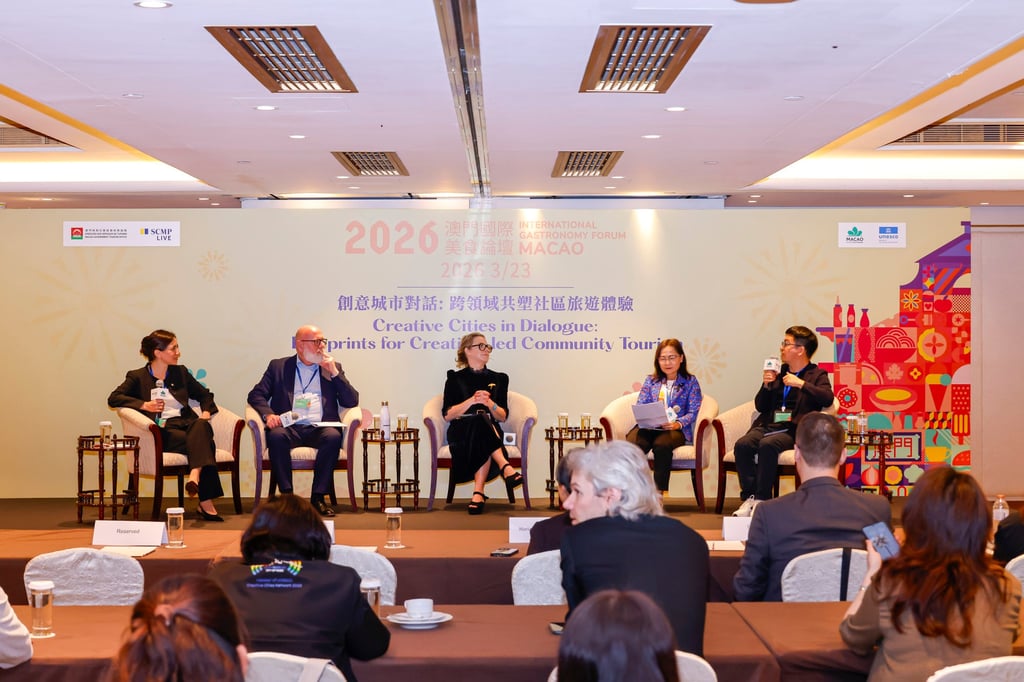
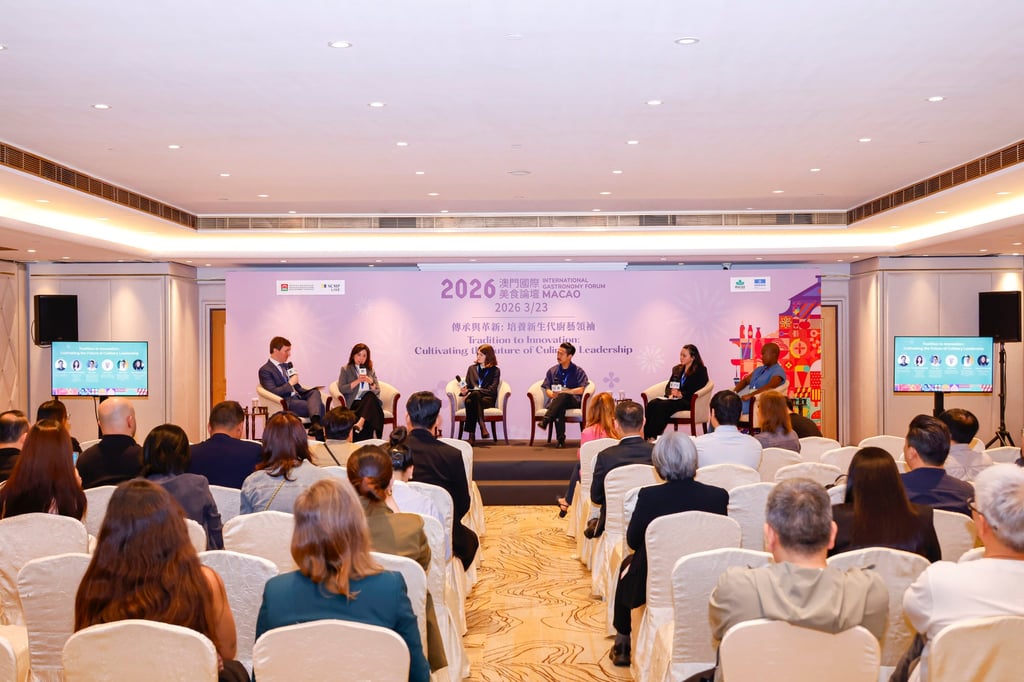
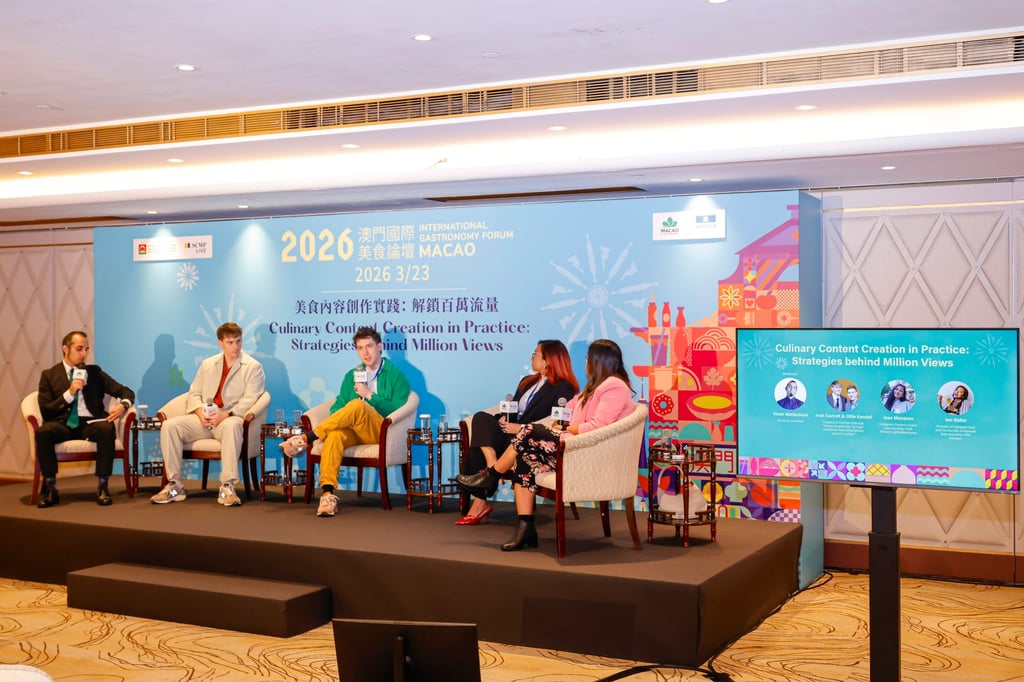
Away from the main stage, the forum also saw Unesco city representatives, young chefs and digital creators offer insights into how to turn big ideas into actionable collaborations during three new interactive breakout discussions.
The first examined community-led tourism initiatives which blend local heritage with visitor experiences; the second highlighted culinary leadership and its role in sustainable innovation; while the third outlined content creation strategies for amplifying gastronomic stories online.
As Fernandes explained at the forum, Macau aims to “embrace the world of opportunities which is unlocked by gastronomy, and transform them into preservation, into creativity, and also into meaningful exchange”.
Such a future looks likely to involve close collaboration, with chefs and youth advocates, digital storytellers and city planners all offering new ways to reimagine gastronomy beyond the plate – and the use of Macau as a platform for sharing those ideas with the world.