Water music: speaker innovation to make you sit up and listen
Do you want to listen to music while swimming, or an actor whispering on a movie soundtrack while seated anywhere in your living room? Now you can

Major innovations in sound reproduction systems have been few and far between over the past 50 years.
Many audiophiles still consider a vinyl record sitting on a turntable, connected to a living room‘s amplifier powering large, floor-standing speakers, as the best set-up for achieving realistic, clear sound quality.
Yet, over the past 10 years, this attitude has been changing with companies increasingly eager to introduce new ways in which we can listen to music.
Listening basics
A standard type of speaker system is stereo sound (2.0) consisting of two channels: left and right.
Add a subwoofer (.1) – a speaker that produces very low bass frequencies – to the set-up and you now have 2.1 channels.
Movies and game soundtracks are typically recorded in 5.1 channel home-theatre sound: five channels of sound presented by five speakers (left, centre, right, back right, and back left) and a subwoofer.
Some movies are also recorded in 7.1 format, which requires seven speakers placed around the room.
Shattering the sound ‘barrier’
Until recently, you needed to drain your bank account to achieve the ultimate in terms of your room’s speaker set-up and the proper padding offering excellent acoustics.
However, sound-system companies, such as Devialet, KEF, Tayogo and Bang & Olufsen, are all offering more affordable products that can enhance our listening pleasure.
Size no longer matters ... as much
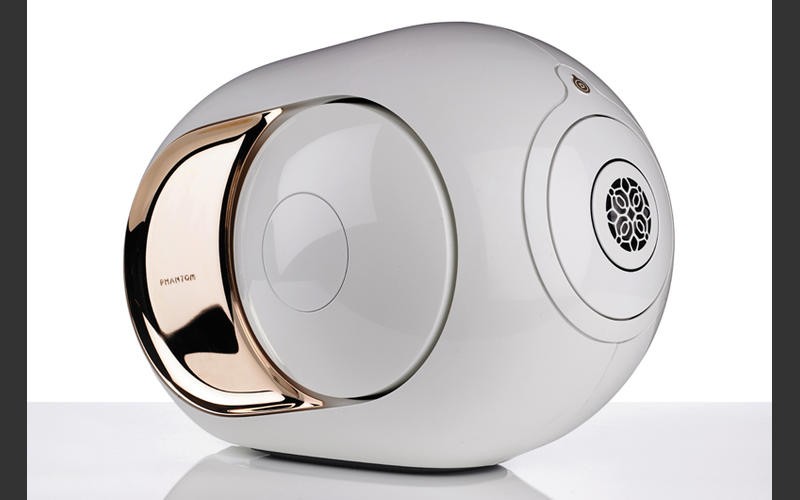
It is considered up to 30 times smaller than a top-tier, traditional audio system that uses multiple components.
It uses ADH (Analogue Digital Hybrid) intelligence to replicate the best analogue sound experience in the most compact format.
In order to make this possible, Devialet invented compact acoustic transducers, such as its HBI (Heart Bass Implosion) and its own electronic chips for its ADH amplification technology.
Surround sound
It features a dome-shaped room, much like an amphitheatre, which allows you to clearly hear both high and low frequency sounds – even whispers from a long distance away – as if they are coming from right next to you.
The room allows sounds to bounce off its curved walls, similar to the way that light reflects off mirrors.
It means that the optimum position in the room for listening to music and the sound of movies, as they are intended to be heard, can be almost anywhere inside.
It means there is no need to position your speakers directly towards a small listening area, such as your sofa.
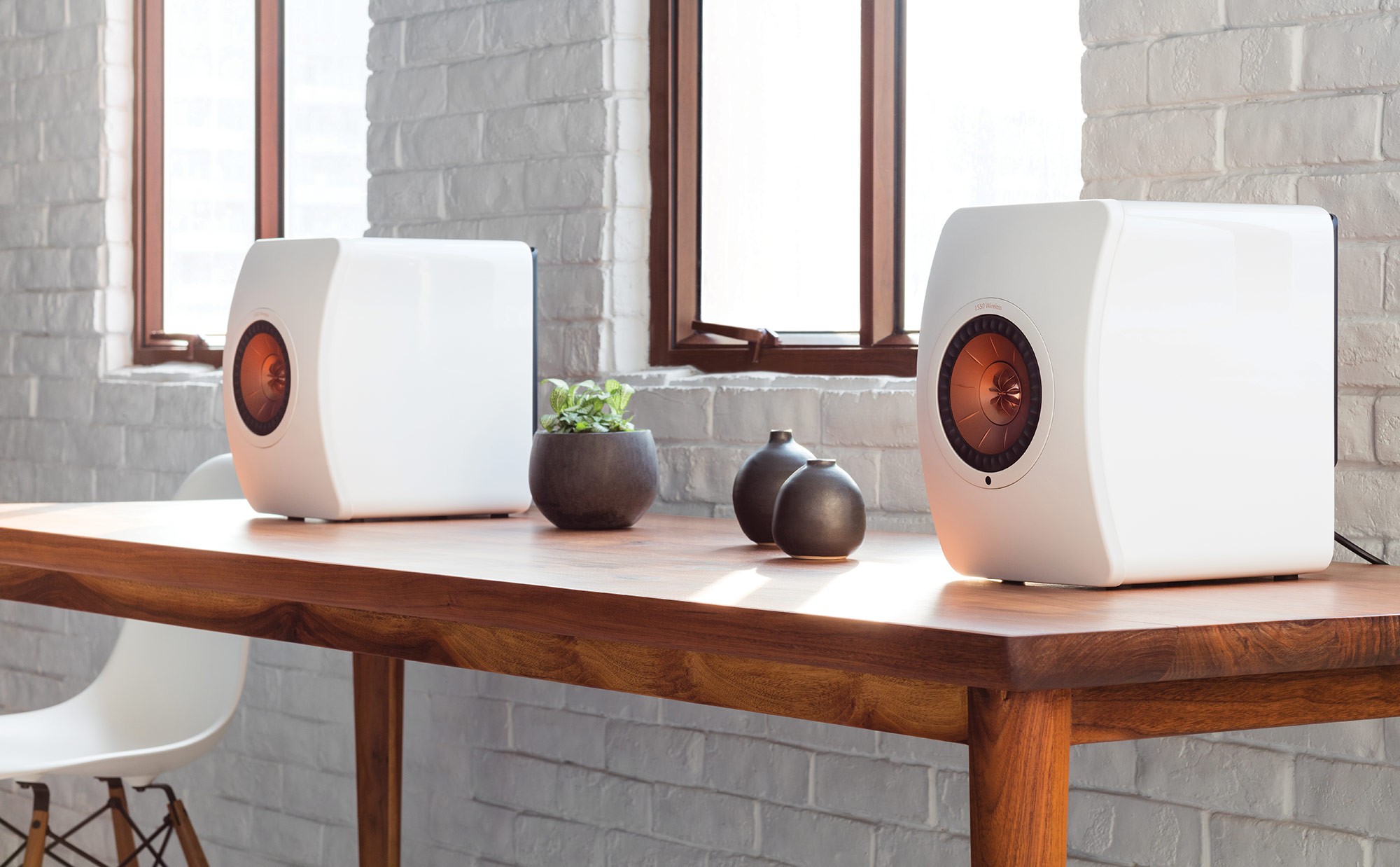
Of course, few of us have dome-shaped homes, but there is a way for you to immerse yourself in a similar environment, through the use of a technology developed by the British loudspeaker manufacturer, KEF.
Its LS50 wireless speakers feature “Uni-Q and time correction technology”, which allows you to be anywhere in a room yet still hear sounds as if you were seated in the optimum listening position of a dome-shaped room.
The speakers use intelligent technology that synchronise exactly when you will be able to hear sounds as various frequencies travel at different speeds.
Submerged in music

A post shared by Tayogo (@tayogoamp) on Dec 2, 2016 at 5:45am PST
Tayogo is an up-and-coming company that specialises in affordable underwater speakers and headphones.
You can listen to music that has been loaded onto one of its Amphibious Music Phones devices while underwater, or, away from the water, use a Bluetooth connection linking your smart devices to Spotify or other music providers.

Singing in the shower is cool, but its “music anywhere policy” means you can listen to your music while you visit your favourite spa or resort – even while swimming laps up and down the pool, or while snorkelling, or sat relaxing on the beach.
Omnipotent sound

The speaker, which comes with up to 16 hours of battery power, also features built-in Wi-fi, Bluetooth and Chromecast (Google’s digital media player), which makes it easy to sync up seamlessly with your smartphones.
What does future hold for sound?
Technology is nothing without good content.
There are a lot of exciting prospects, especially if technology companies are able to shrink devices down to really portable sizes. Just think what life would be like if they put their patented intelligence chips inside our smartphones, laptops, or other devices that have speakers.
It means that premium sound might actually truly be at our finger tips.
As the way we listen and relay sound progresses, one of the most riveting parts of all this is that artists can now record their music in innovative ways.
For example, the US audio noise reduction company Dolby Laboratories’ Dolby Atmos surround-sound technology has pioneered an innovative spatial sound format, which goes beyond the standard 7.1 channels of sound.
Rather than using a standard sound set-up, with sound channelled to specific speakers positioned in predetermined locations, Dolby Atmos is able to produce sounds as individual audio elements, so they can be heard in much greater detail.
Imagine being in your living room and being able to replicate the exact experience of a private studio session with your favourite music band, or experiencing a real, behind-the-scenes movie, complete with “intimate”, whispered conversations.
Now, doesn’t that sound great?
Derek Ting has worked with Tayogo on its photos and videos.