Exploration of Earth’s most biodiverse areas can solve planet’s environmental challenges
Rolex’s Perpetual Planet Initiative supports vital research by Michel André in Amazon rainforest and Steve Boyes along Africa’s rivers

Two pioneering individuals, Frenchman Michel André and South African Steve Boyes, have both embraced big ideas and bold actions to help find the answers to some of the Earth’s major environmental challenges.
André is an acclaimed bioacoustician – a field combining biological and acoustic sciences, which records, stores and analyses animal communication – who is using the latest technology to monitor and protect the Amazonian rainforest by better understanding the health of the ecosystem’s rich biodiversity.
Conservationist Boyes has been exploring the rivers of Central Africa for more than a decade to unravel the mysteries of water supply across the continent and protect the sources on which so much life depends.
Their scientific endeavours have received continuing support from Rolex’s Perpetual Planet Initiative, which supports explorers, scientists and organisations working to safeguard the planet in three major areas – ocean conservation, wilderness protection and the preservation of the living world.
Acoustic research helps protect Amazon’s biodiversity
André has won deserved international recognition for developing a set of scientific tools and techniques to help protect biodiversity around the world.
Throughout his career, he has used sound to research and interpret changes in the natural environment, leading to decisive action that promotes conservation efforts in vulnerable ecosystems and can achieve transformative results.
One of his notable early successes was the invention of an underwater device that detects the sound of whales and then alerts nearby shipping to help avoid collisions.
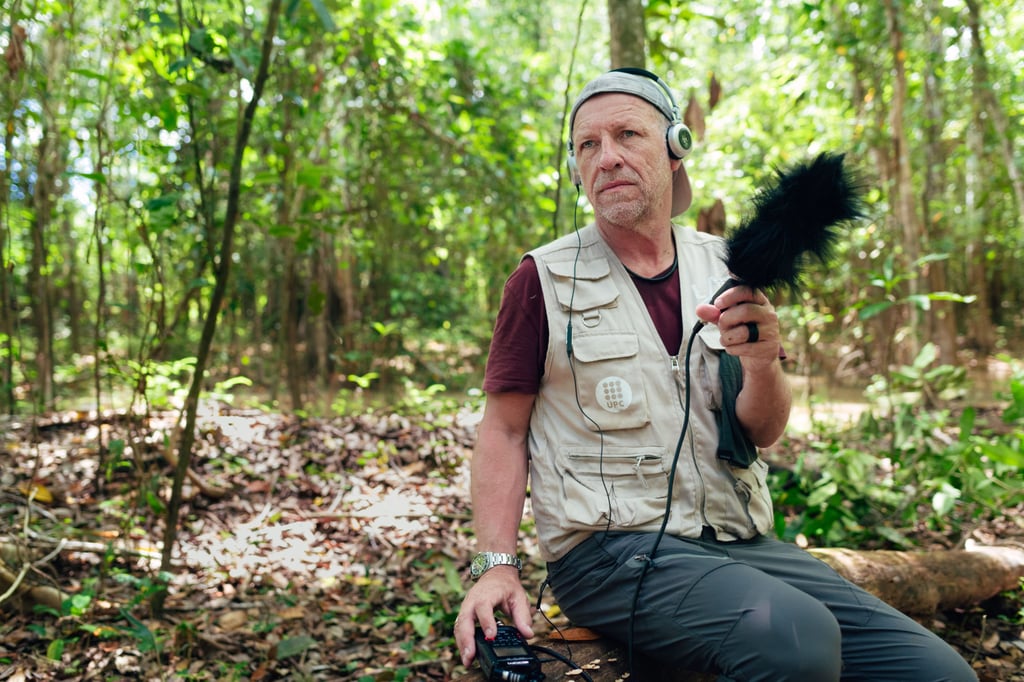
The project, prompted in part by André’s childhood fascination with the sounds of sea creatures, also discovered that whales were losing their hearing because of human-generated noise in the oceans caused by ships’ engines, sonar pulses and underwater blasting.
These findings subsequently inspired his Listen to the Deep-Ocean Environment initiative. Its objective was to set up a worldwide network of deep-sea microphones to monitor the oceans’ acoustic environment and detect sources of human noise pollution as opposed to natural sounds or geological events.
The work won André a Rolex Award in 2002 and, fortuitously, led him to meet his fellow Rolex Laureate, José Márcio Ayres. The late Brazilian primatologist and conservationist had founded the Mamirauá Sustainable Development Reserve, in the Brazilian state of Amazonas, to gauge the health of the Amazonian rainforest and assist riverside communities.
In 2013, André finally visited Mamirauá and, struck by the flooded forest area’s beauty and state of preservation, saw the potential for another large-scale project which would involve “listening to the Earth”.
Aware that traditional surveying tools such as remote-sensing satellites could only observe the forest canopy, he teamed up with Mamirauá’s scientific director Emiliano Esterci Ramalho to use bioacoustics technology to gain an accurate picture of biodiversity on the ground.
They installed 22 acoustic sensors, or “nodes”, as part of the ambitious and innovative Project Providence, which records sounds on various wavelengths over a distance of several kilometres, along with video footage.
“The technology behind Project Providence was born in the ocean, where we developed this capacity to monitor automatically in real time,” André says. “Knowing that we have the technology at hand to contribute to preserving these amazing habitats, you feel a responsibility to implement it, to develop it further. It’s this feeling of responsibility that drives me.”
Members of the research team collect the nodes from treetop positions once a year and then conduct maintenance and analysis in a mobile laboratory on board a riverboat.
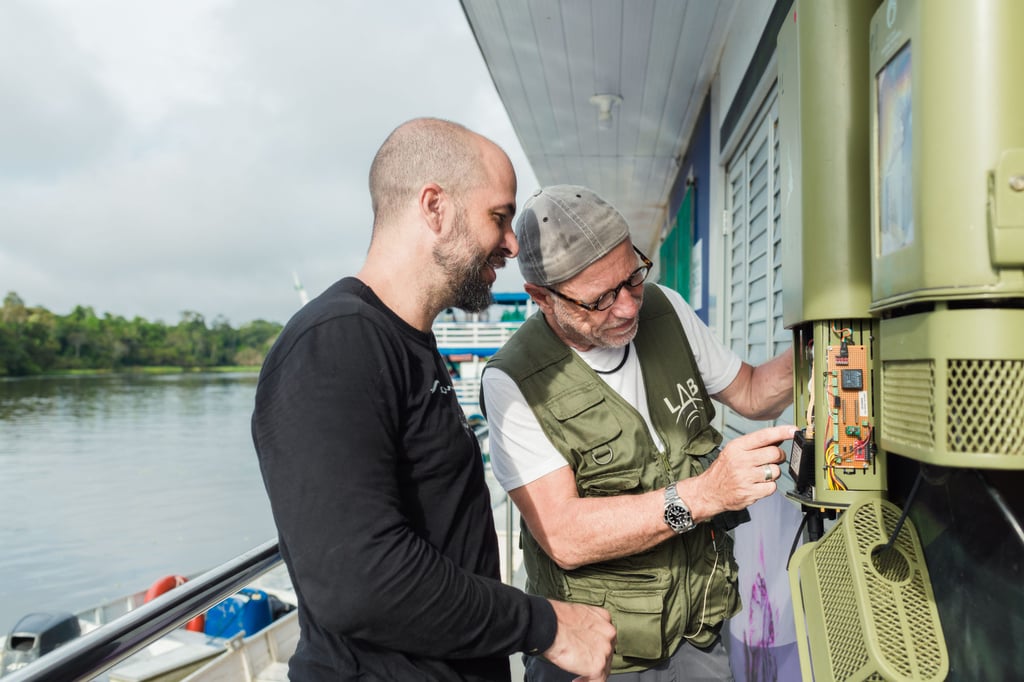
The retrieved data is used to create a multilayered “sound map”, which provides invaluable insights into the life of the rainforest and the type of conservation strategies needed to maintain its habitats. These efforts have helped to create what may be the world’s largest single bioacoustics database.
However, in future, André says the plan is to roll out the project to cover the whole of the Amazon basin, which spans not only Brazil, but seven other rapidly developing countries – Bolivia, Peru, Ecuador, Colombia, Venezuela, Guyana and Suriname – and France’s overseas territory of French Guiana.
Almost 100 nodes have already been installed from the Andes to the Atlantic Ocean. “We are going to Bolivia, Peru, Ecuador, following the Amazon River,” André says, “Our ambition is to cover the whole Amazon rainforest across the nine countries.”
By listening to nature, they plan to minimise or prevent existing threats to the health of the Amazon and the planet.
Studies can help safeguard Africa’s water security
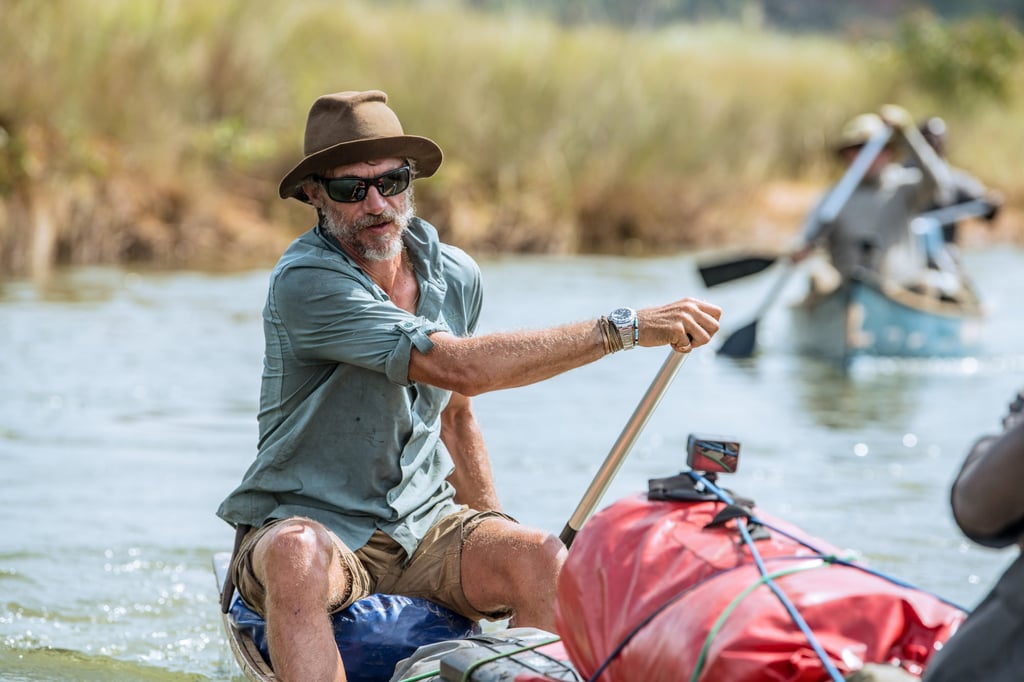
Boyes could almost be the intrepid central character from an adventure story of the late 19th century. Over the past decade or so, the Rolex Perpetual Planet Initiative partner and National Geographic Explorer and his team have explored more than 12,000km (7,460 miles) of Africa’s wild rivers and, along the way, made some remarkable discoveries about the continent’s water supply, where it originates, and what could affect it.
That knowledge is vital for the protection of an area that provides water security for about 500 million people – particularly when the threat of climate change is an ever growing concern.
On his most recent trip, Boyes led a team of 12 on a five-week expedition along a 627km stretch of Angola’s Cassai River, which is one of the major tributaries of the Congo River. They found that its source may previously have been misidentified and that the little-known natural water towers of the Angolan Highlands in the “great spine of Africa” – only 20km from the source of the Zambezi – could potentially be Cassai’s true source.
These water towers are high-altitude peatlands that act like a giant sponge, storing and releasing fresh water into river basins, and thereby providing a constant supply, even in the dry season and without the run-off from glaciers or snowmelt.
Boyes believes the flow from these water towers could be as much as 423 cubic km (101.5 cubic miles) a year, making them a vital resource, as well as a cause for cautious optimism about the continent’s future.
“The world looks at us as climate change sets in and thinks that Africa is going to suffer the most,” he says. “But when we modelled that, we didn’t know that Africa has these water towers, this inbuilt resilience that can still be protected, which is something we do need to protect now.”
Importantly, peatlands also act as carbon sinks. They can store vast amounts of closely compacted carbon for thousands of years and, at the same time, are rich in biodiversity.
On every such expedition, Boyes and his team have documented not only the headline discoveries, but also the smaller details, which could turn out to have lasting significance. For instance, they use aerial photography, regularly measure water flow and quality and take DNA samples of the environment to establish precise ecological and hydrological baselines.
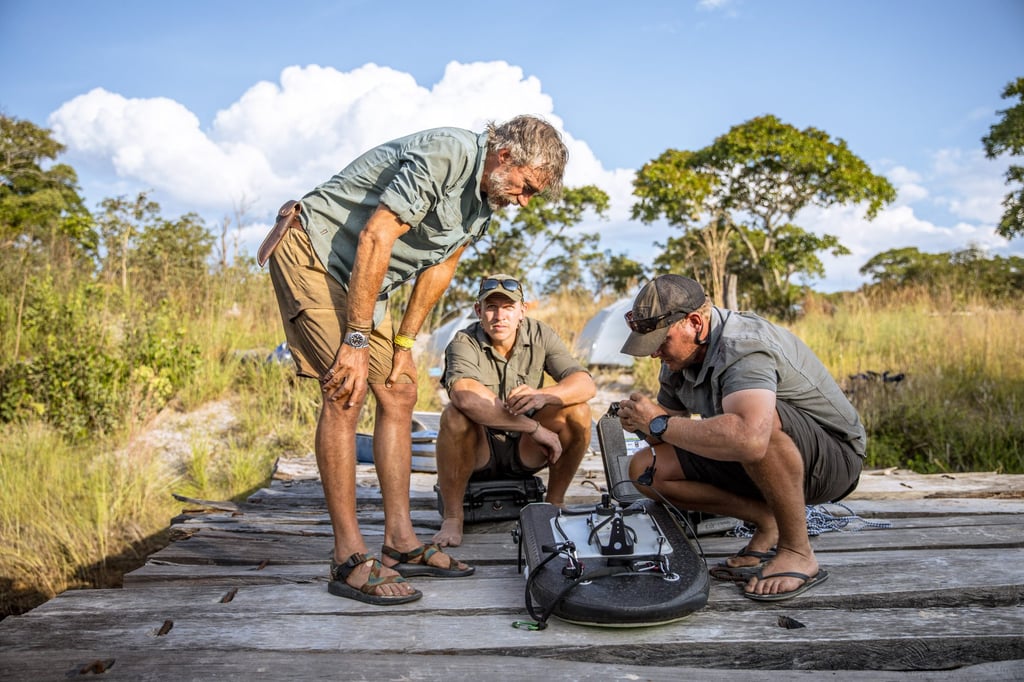
“We record everything we see: birds, animals, people, settlements,” Boyes says. “These are the most detailed river baselines ever undertaken, so in 50 years’ time scientists will be able to make comparisons.”
He says the Cassai expedition was a chance to discover species new to science in the Angolan Highlands and, despite inevitable hardships and physical challenges, to undertake work that will help governments make informed decisions about water use, urban developments and conservation.
For Boyes and his team, protecting the region’s biodiversity includes preserving the cultures, traditions and languages of the rural communities, which form a vital part of the ecology. It has seen them building relationships and forming teams of local scientists, fishermen and hunters to work together to improve river conservation.
Providing scientific links between Africa’s natural water towers and the continent’s major rivers and establishing ecological starting points are essential steps for protecting Africa’s water security. “That is what the Great Spine of Africa expeditions are trying to do,” Boyes says.