Why dark Irish reimagining of Swan Lake ballet ditches the tutus and Tchaikovsky’s music
Michael Keegan-Dolan’s acclaimed version, with doomed heroine sexually abused by her priest, forms part of Hong Kong’s New Vision Arts Festival

Michael Keegan-Dolan’s retelling of Swan Lake – the story of a princess turned into a swan by an evil sorcerer's curse – is as far from the white tutus and satin pointe shoes of the classical ballet as you are likely to ever see.
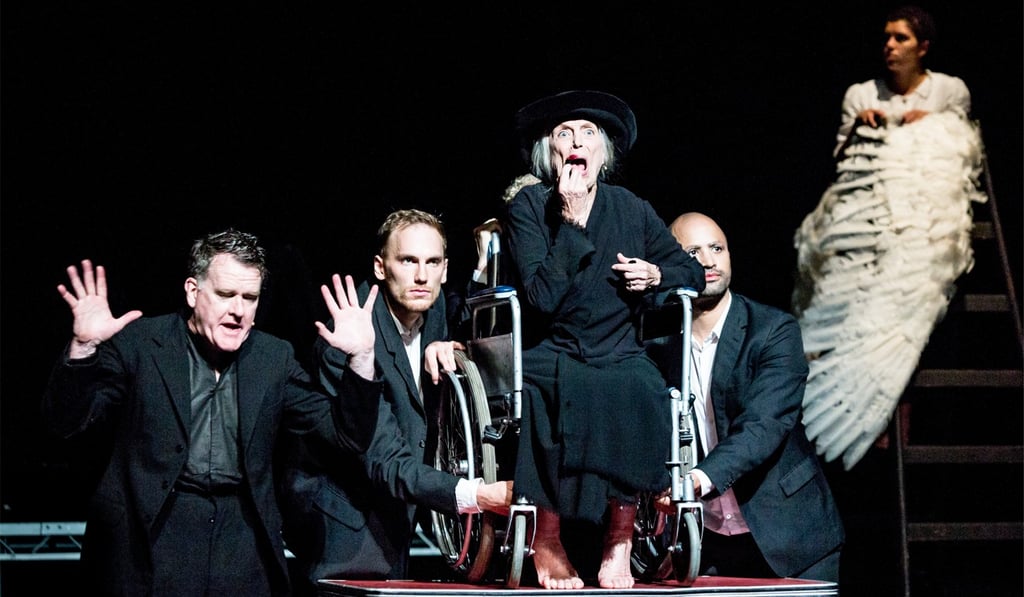
The prince in his version is a suicidal depressive and the doomed heroine has been sexually abused by her priest.
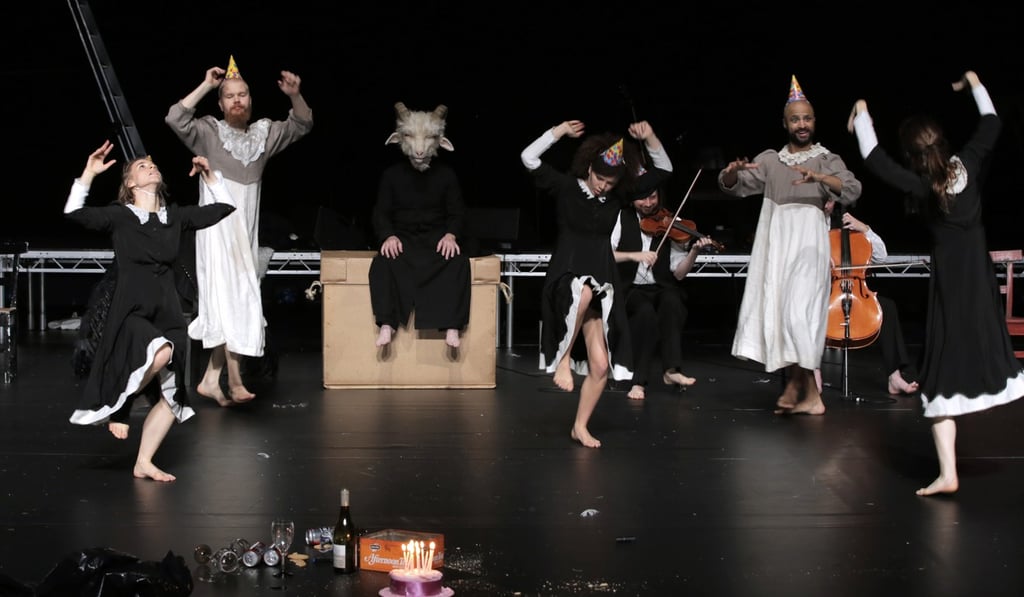
The original composer Tchaikovsky’s world-famous score has been replaced with Irish-Nordic folk music and performers talk and shout to the audience from the stage.
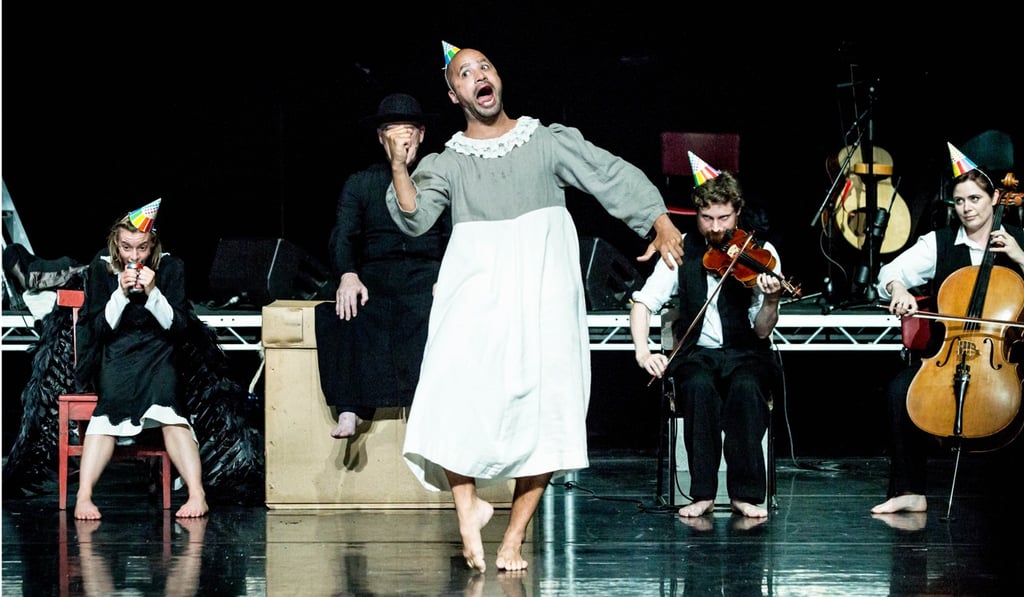
Different and dark it may be, yet this uncompromising dance theatre production has received five-star reviews around the world.
The Hong Kong performance of Swan Lake /Loch na hEala by the Irish company, Teac Damsa, at the Kwai Tsing Theatre from November 16 to 18, forms part of this year’s ninth New Vision Arts Festival.
We speak to the multi-award-winning Dublin-born Keegan-Dolan about the show, co-produced by the Sadler’s Wells Theatre London, and how he likes to shake up preconceptions and put the sinister back into our stories.
Your career in dance was unconventional from the start – tell us about your training
I came to dancing quite late, having my first dance class when I was around 17 years old.
I was under the delusion that if you wanted to be a dancer you had to do it properly, with full classical training.
[After graduating] I was pretty unemployable. Necessity is the mother of invention, as they say, so I started coming up with my own works … [and got] work as a choreographer, mainly operas and some ballets
I was accepted by London’s Central School of Ballet, but they probably shouldn’t have let me through the door!
After about a year I realised I wasn’t cut out for ballet. I spent three years there, I graduated, but I was pretty unemployable.
Necessity is the mother of invention, as they say, so I started coming up with my own works. I started to get work as a choreographer, mainly operas and some ballets.
I worked with large groups of dancers and opera singers, often in Germany and Belgium.
While it wasn’t my big dream, working with these big groups trained me in the art of communication and power dynamics – very valuable lessons.
Since starting work on your own shows you have reworked things such as Giselle (2003) and The Rite of Spring (2009). What inspires you to retell these well-known works?
I like old stories. Traditionally, ballet was based on – and built around – old stories, from Swan Lake, which was based on an old fairy tale, to Romeo and Juliet.
Certain stories do well without language and ballet is good at exploring these. I’ve always been drawn to stories that can be communicated with less emphasis on text.
Certain stories do well without language and ballet is good at exploring these. I’ve always been drawn to stories that can be communicated with less emphasis on text
My story of Swan Lake in this production is not just one story, though: it’s four or five stories all working together. It’s like a magic carpet with different threads woven together.
There’s the classical ballet of Swan Lake, then in Irish mythology, we have the story of King Lir, who has four children who are turned into swans by their jealous stepmother.
Then I’ve brought in the real-life story of John Carthy, an Irish man with depression, who was shot dead in controversial circumstances in 2000. These are the three primary stories.
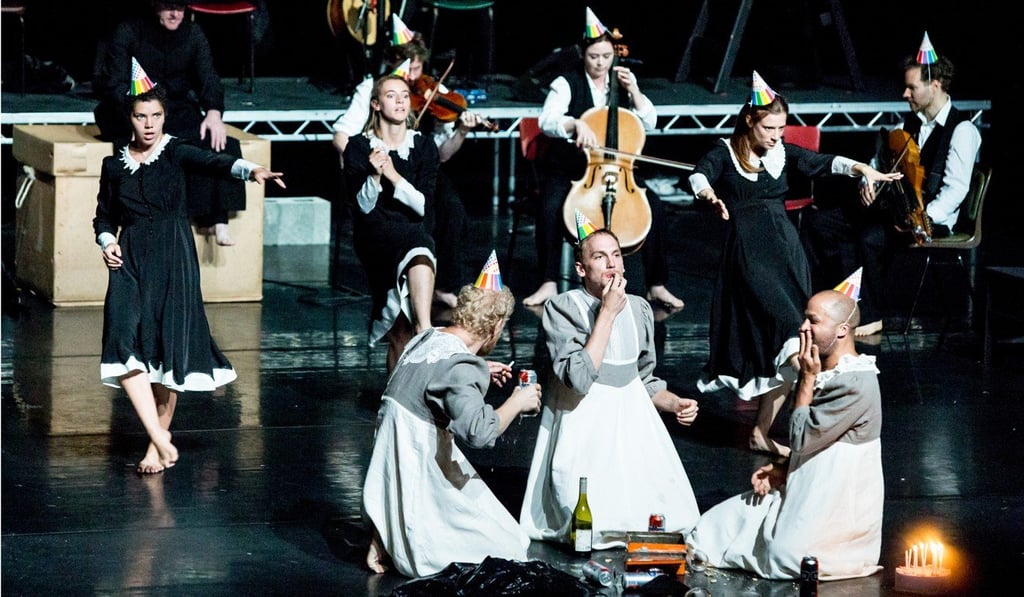
There are dark themes ... the princess, Odette, or Finola has been sexually abused, Prince Siegfried, or Jimmy, is depressed and suicidal, plus a bent policeman and a shadowy local councillor: there’s not much lightheartedness here ...
No, but neither is the classical ballet lighthearted. Over time, it’s just become sanitised.
Swan Lake isn’t about beautiful swans, it’s about women turned into swans by a man.
‘Swan Lake’ isn’t about beautiful swans, it’s about women turned into swans by a man. Even in the classical ballet, the prince suffers dark moods ... Everything in these tales gets tidied up, but they are very dark
Even in the classical ballet, the prince suffers from dark moods.
And think of the story of Giselle – she dies of a broken heart as she’s betrayed by a prince who pretends he’s a peasant and she can’t be buried in the church cemetery.
Everything in these tales gets tidied up, but if you look harder at the stories they are very dark. I don’t feel I’ve done anything darker than what was there already
One feeling I had very strongly connected to this work is the contemporary need to make everything nice, saleable, superficially beautiful – like what we see on Facebook and Instagram.
But I think 50 per cent is beautiful and 50 per cent is ugly. Mental illnesses, especially depression and anxiety, are epidemic now. In my Swan Lake, death is OK, depression is OK.
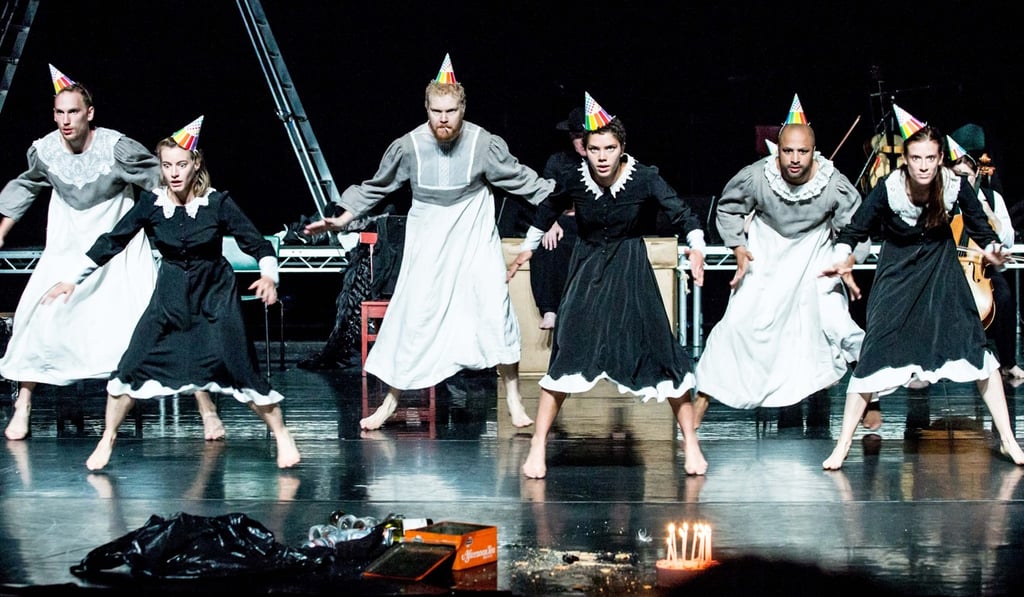
Some characters and themes are universal in nature, but others – for example the Catholic priest – are more locally inspired and relevant. How important was it to have something “Irish” in the production?
I want to create work that speaks to as many people as possible. I make a piece of work that’s in me. We’ve performed in Seoul, Moscow, Stuttgart, we’re going to New York City … I think it’s a universally human piece of work.
I want to create work that speaks to as many people as possible.
I grew up in Ireland; I lived in England for 13 years but came back in my 30s. I love Ireland. But I don’t like going to see a show that’s so “Irish”.
I find it reductive; it’s sailing too close to the winds of cliché and stereotype of a place and people.
I make a piece of work that’s in me. We’ve performed in Seoul, Moscow, Stuttgart, we’re going to New York City … I think it’s a universally human piece of work.
Irish people happened to have been Catholic; I’m no longer a Catholic. There are legacy issues that are important in Ireland and we need to resolve them.
Yet to me, this show asks bigger questions: why would a man change a group of women into swans?
Tchaikovsky is a genius. I could’ve used his music if I could have had a 50-piece orchestra touring with me.
In my Swan Lake, it’s to silence them. It’s an act of power. Abusers often make their victims silent and feel ashamed.
It’s the colonial impulse, too – to take everything and make the indigenous people feel ashamed. The postcolonial legacy is to find out who you are and deal with the mess left behind.
So, I’m also looking at the culture of the victim. Jimmy could be perceived as a victim, Finola is a victim, and a victim means there’s a master or victimiser.
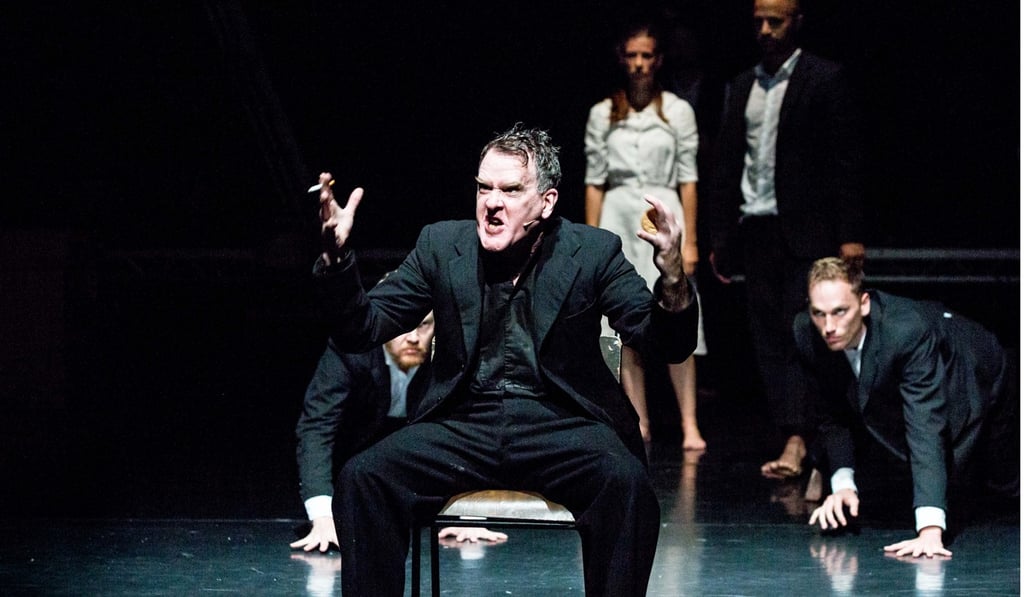
Classical Swan Lake is so linked in people’s minds to Tchaikovsky’s score – was it a difficult decision to replace the music with something so different?
Why should one composer have a monopoly on a story? Our job is to shake the tree, ask ‘what is this about?’ and ‘why do we do that?. Tchaikovsky does not own ‘Swan Lake’
Tchaikovsky is a genius – a master. His legacy is unfathomable. I could’ve used his music if I could have had a 50-piece orchestra touring with me.
I can’t sit in a theatre if the music is going to be played through a sound system: that would be like instant toast or frozen sandwiches – horrible!
But also, Swan Lake the story is older than Tchaikovsky. Why should one composer have a monopoly on a story?
Our job is to shake the tree, ask “what is this about?”, “why do we do that?”. Tchaikovsky does not own Swan Lake.
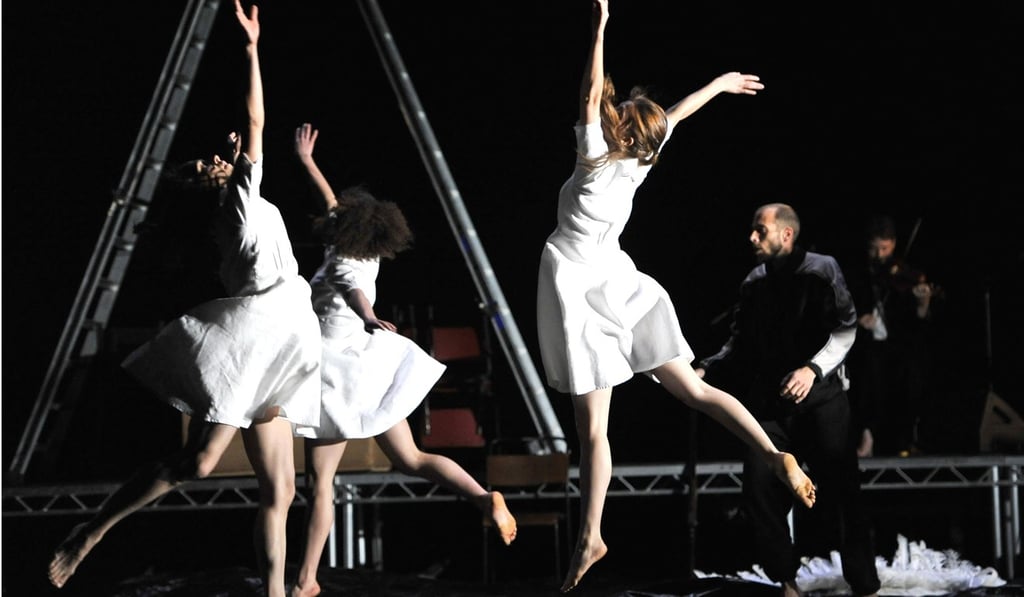
Your score is performed by the band, Slow Moving Clouds, which plays live on stage. How did it come to play Irish-Nordic music?
Like many Irish people, I always thought Irish traditional music to be the pinnacle of world folk music, but when I worked for a while in Denmark, I heard Nordic folk and realised how brilliant it is.
Great folk music is everywhere. There is actually a link between Nordic and Irish traditions in history when the Vikings moved into Ireland.
Slow Moving Clouds has AKI, who plays nyckelharpa, a medieval Swedish instrument, Danny Diamond who plays the fiddle, and Kevin Murphy on cello.
They developed the sound for Swan Lake/Loch na hEala with the dancers; it’s a folky Nordic score.
The story isn’t as grand as the ballet is; I wanted to tell a folkloric tale, something that feels familiar to the audience.