‘Logging off from life’ ensures tech family-office entrepreneur Patrick Tsang’s success
True wealth means being happy and healthy and choosing to do what you want with people you love, Tsangs Group chairman and founder says
Entrepreneur Patrick Tsang has a decidedly positive outlook on life, which applies to both his professional and personal pursuits.
He is chairman and founder of Tsangs Group, an “innovation-focused” family office in Hong Kong, which handles investment management services for members of high-net-worth families who want to invest in technologies that promise to have a positive impact on society.
“The seven sectors we invest in are AI [artificial intelligence], biotech, renewables, mobility, robotics, software and gaming – technology that hopes to help people, help create jobs and help the ecosystem to create more positive change,” he says.

Tsang, 48, is also the author of The Global Citizen, a book published last month, which explores the cultural nuances that define today’s interconnected business world.
He has had a lot of success as an investor over the years, but he sees material wealth as simply a means to an end. “For me, true wealth is the freedom to choose what you want to do, how you want to do it and with the people that you love and you like,” he says.
“Obviously, you have to have sufficient finance to support yourself and your family, but you also want to have the freedom to challenge yourself at your work. In order to reach that goal, you have to be happy and healthy.
“You need to have physical and mental well-being, and that involves exercise, meditation, sleep, having good friends around you and reducing the negativity around you.”
These requirements are the result of Tsang’s own professional and personal journeys. “I grew up in a very traditional Chinese family,” he says. “My parents wanted the children to be healthy, and then, secondly, they wanted us to do well academically.
“My family wanted me to [study] either medicine or law. I ended up doing my law degree. I worked hard, got my training contract, qualified as a solicitor in the UK [United Kingdom] and also in Hong Kong.
“I did that for a few years and then I realised that it was not the career that I wanted. So I pivoted from being a lawyer to finance and entrepreneurship, and never looked back.”
However, Tsang admits that he also has the tendency to push himself too hard. “I love what I do, but sometimes loving something too much and doing something too much becomes obsessive,” he says “I end up working a bit too much.”
His work also requires frequent travel, which may have contributed to the two hip injuries he has suffered.
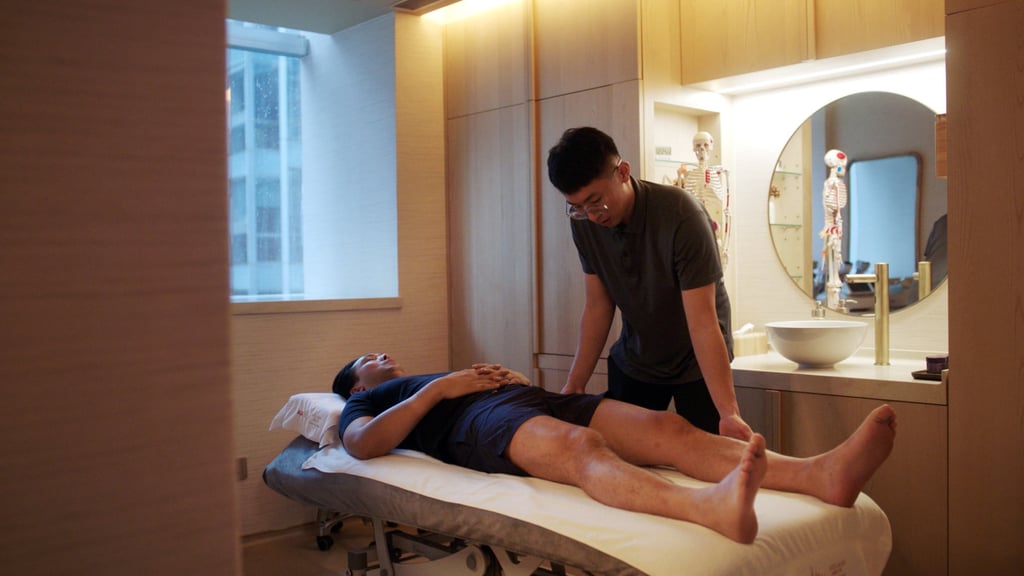
“I’m always sitting in hotel lobbies, at airports and on the plane,” he says. “These can be factors that aggravated [an] injury or affected my health condition.
“I had to receive keyhole surgery twice, once in 2010 and once in 2020. The first time, it was very successful; I recovered very quickly and then I started to do other outdoor activities. I started to do [the strength, conditioning and fitness programme] CrossFit. I did that for three or four years and actually made a really good recovery, and I was actually fitter and much stronger than I was pre-surgery.”
Yet at the age of 44, after Tsang suffered his second hip injury, he needed more surgery, and this time it took him much longer to recover. “I wasn’t able to walk properly for three to four months,” he says. “Previously, I recovered in a couple of weeks. I was 10 years older and muscular recovery was very different to where I was before,” he says.
It was also during the pandemic, when Tsang did not have to travel for his job, so he took the time to reflect on his experience. “Even though I couldn’t move, I still had access to my phone [and] my computer,” he says. “So I was able to continue to work efficiently. I ended up becoming healthier in a way because I was getting up early. I was doing my recovery. I would eat earlier within an intermittent fasting time frame, and I gave up alcohol for a year.”
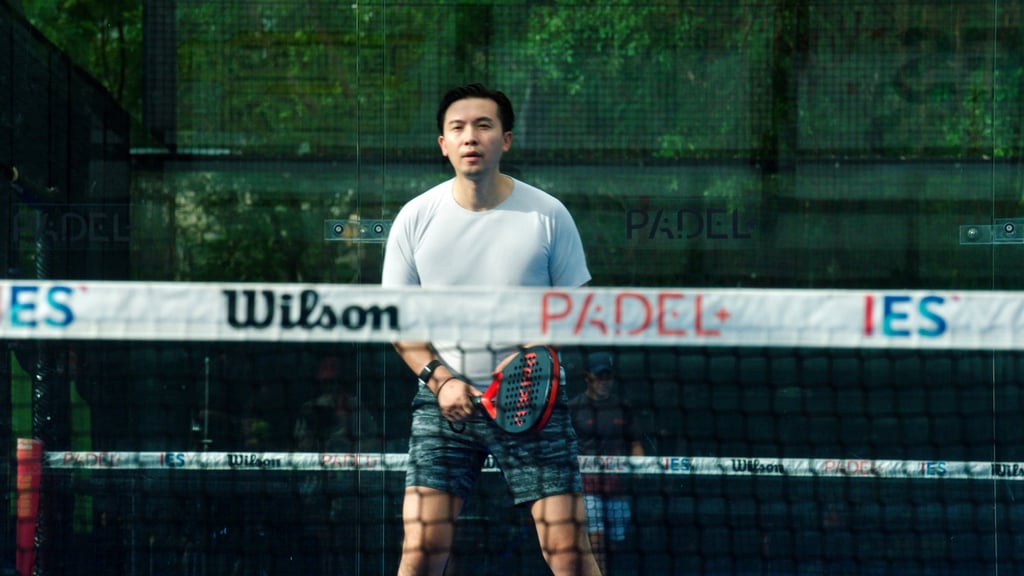
After recovery, Tsang quickly went back to his adventurous self, picking his favourite sports again, such as padel tennis, and taking on new challenges. “I tried the ‘200 burpees for 30 days’ challenge, just to see if I could do it, and then I climbed Mount Kenya for charity reasons, with 20 plus people including Sir Richard Branson,” he says.
Physical pursuits aside, Tsang has also resumed his frequent-travel schedule. But this time, he knows how to deal with the stresses and strains that are put on his body while being on the road.
“In most of the cities I travel to, I have regular physiotherapists and chiropractors that I visit,” he says. “I try to go at least once a week to help alleviate the damage done over the week because of work. Massage also helps. If I have no time to visit them, I stretch on my own, either in the morning or in the evening.”
Tsang was invited to try out the pain management programme at AIA Alta Wellness Haven, in New World Tower II, Queen’s Road Central, Hong Kong, and after only a brief session, he was already able to feel the result. “Even though it was short, I could feel that it helped me through stretching the very tight muscles and relieving inflammation; it definitely helps,” he says.
For his mental well-being, Tsang has also made it a point to give himself some downtime. “I’ve neglected the mental side for many, many years,” he says. “It’s something I have been trying to pay more attention to recently. My aspiration right now is to maintain a work-life balance … finding time to log off is something that I encourage everyone to do more.
“I meditate, I [keep a] journal and I listen to audiobooks, [and] to music. At night, I reward myself by watching TV for a little bit, and let the brain relax before I go to bed.”
He says it takes time for each person to find out what works for them. “If you want to make change, whether it’s mental or physical, it’s always small steps,” Tsang says. “When people get to see the progress small steps bring, then they are more happy and satisfied with themselves and they will try to do more.”
He has learned that having that balance in life is also what it takes to have continued success. “With the mind being more calm, being more peaceful, being more happy, more relaxed, you’re going to do better,” he says. “I am now in a much better place.”