Academic innovation can help budding entrepreneurs overcome future challenges
Xi’an Jiaotong-Liverpool University’s 20-year evolution ensures it meets world’s fast-changing technological, industrial and societal needs

As globalisation and technological advancements continue to reshape the way we live and work, educational institutions must also evolve to help equip students with the right mindset and skills to tackle the challenges in our rapidly changing world.
Academic innovation has been the guiding principle at Xi’an Jiaotong-Liverpool University (XJTLU), in the city of Suzhou, in eastern China’s Jiangsu province, which is an international, research-focused joint venture between Xi’an Jiaotong University in China and the University of Liverpool in the United Kingdom.
The university, which was established in 2006 and celebrates its 20th anniversary this year, is based at two campuses in Suzhou Industrial Park and Taicang, a county-level city about an hour’s drive northeast of Suzhou.
It offers about 110 degree programmes in the fields of science, engineering, business, finance, architecture, urban planning, language and culture, with all of them taught in English.
Although the university has remained steadfast in its mission to become both an academic innovator and a leader in China’s educational reform, its strategy and methods for achieving this are always evolving, says Professor Youmin Xi, who since 2008 has served as its executive president and an integral figure throughout its establishment.
He tells the latest edition of EdTalk – the South China Morning Post’s recurring series of interviews where experts discuss pertinent issues surrounding education – that the university has been embracing artificial intelligence (AI) in recent years by incorporating the technology into its curriculum and the everyday routines of students and staff.
However, it has also spent the past decade working on “finding the right balance that can properly cater to the needs of the country and the digital age”, he says.
In response to the world’s rapidly evolving technological, industrial and societal needs, it introduced its “syntegrative education” strategy in the 2016-17 academic year to help develop new global talent by equipping students with the practical leadership skills and an entrepreneurial mindset to meet the demands of their future careers.
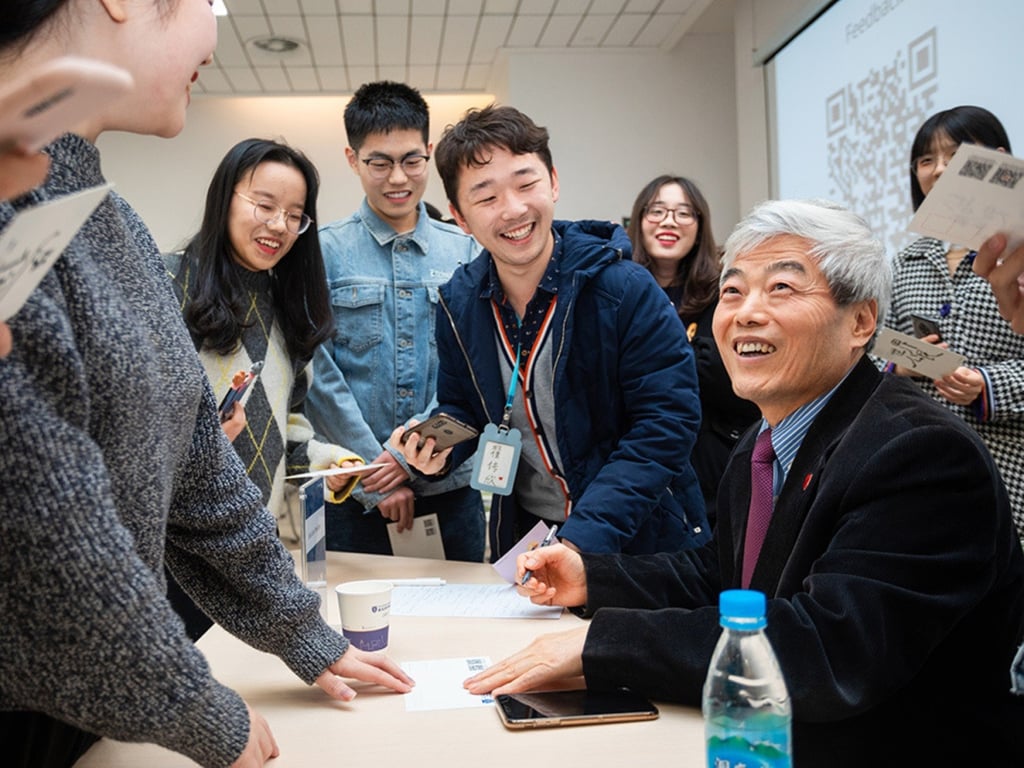
It offers many opportunities for students to hone these vital skills through the courses offered at its XJTLU Entrepreneur College, based at its Taicang campus. Xi says this “syntegrative” approach, which integrates real-world industry projects and expertise directly into its curriculum, encourages students to come up with solutions to real business problems by working on projects with the university’s industry partners.
“We hope that by bridging the gap between education, businesses and society we can spark new conversations and collaborations, which can create innovative solutions for global issues and bring an even more long-lasting, positive impact to the world,” he says.
“Bringing a positive impact to society through education has been my lifelong pursuit. Through the efforts of everyone at Xi’an Jiaotong-Liverpool University, we have had about 50,000 graduates over the past 20 years, and many of them have gone on to pursue postgraduate degrees at some of the world’s top universities.
“Meetings with some of our alumni during my visits to these institutions have been the happiest moments of my tenure at the university.”
Professor Stuart Perrin, the university’s chief officer of (education) ecology, agrees that the use of an interdisciplinary approach to education and alliance between industries and the school is important for cultivating an entrepreneurial mindset in students and preparing them for the demands of a dynamic world with evolving technological and societal needs.
“One of my responsibilities at the university is to oversee the creation of new academies that can better position us to be a leader in the future of education and to ensure all the different units within the university are functioning cohesively,” he says.
Bringing these academies together helps create greater interdisciplinarity among the school’s degree programmes, which enables students to develop their own interests or specialities within their selected field of studies, such as robotics, smart manufacturing or humanities.
In an AI-led future, where people do not necessarily stick to one career or one geographical region, an entrepreneurial mindset with a global perspective can help them become more adaptable to a more volatile market environment, Perrin says.
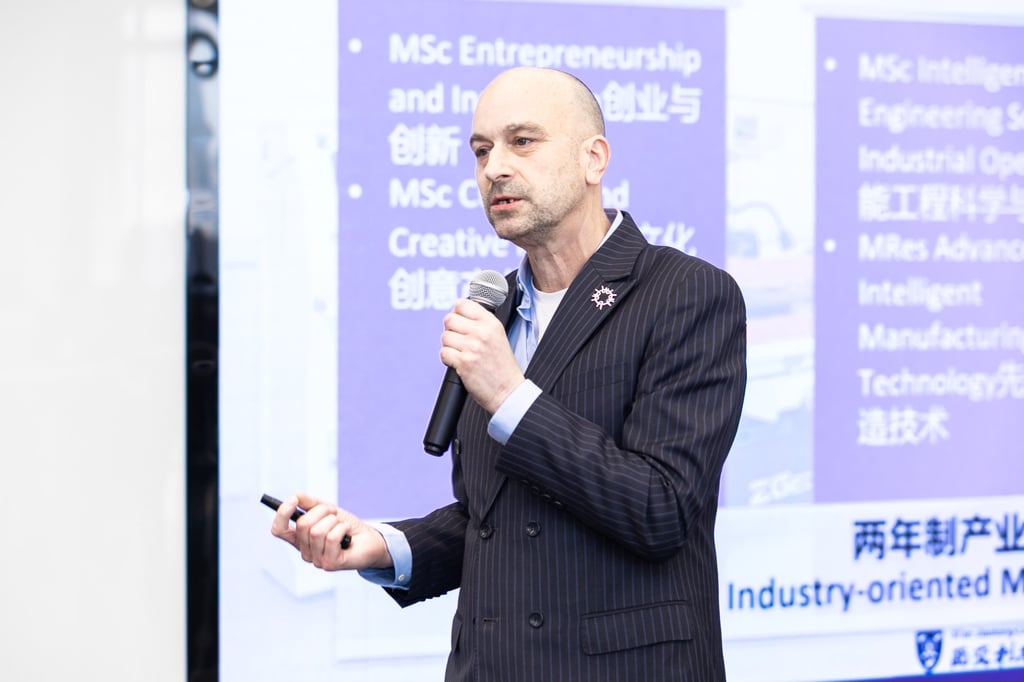
The Global Citizenship course in Year One, delivered through the Learning Institute for Future Excellence within the university’s Academy of Future Education, is another example of how the school aims to develop students’ global mindset.
The course is designed to reflect the 17 Sustainable Development Goals adopted by the United Nations in 2015 as a universal call to action to protect the Earth and help ensure that by 2030, all people can enjoy peace and prosperity.
It encourages students to learn about, and discuss various issues affecting the planet such as poverty, hunger, climate change, Aids and discrimination against women and girls to help them acquire the knowledge and attitudes necessary to become global citizens.
“What’s interesting about this course is that it uses a project-based learning approach, which many of our Chinese students, who would have gone through a more passive approach to learning from a young age, are not familiar with,” Perrin says.
“Essentially, in addition to preparing them to become global citizens, it also teaches them about how to learn at our university and the future of education. The course also provides opportunities for them to be successful in their postgraduate studies abroad, should they choose to do so after their time here at the university.”
Xi says such courses echo his hopes for Xi’an Jiaotong-Liverpool University over the next 20 years as it evolves from an “international university into a global university”. Plans are already in progress for its expansion beyond China into Southeast Asia and the Middle East, including the construction of a school in Thailand, which will be dedicated to discovering the potential of young adults and facilitating older people’s journey for lifelong learning.
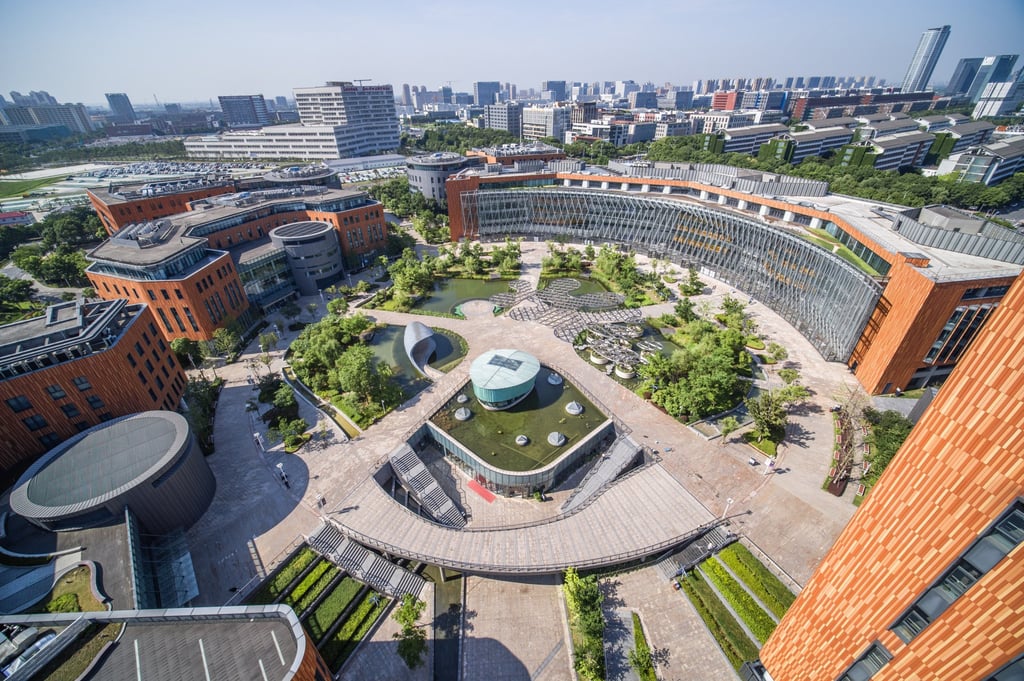
In addition, the university will start building a new campus this summer near its Suzhou Industrial Park site. Once complete, the new campus’ mission will be to strengthen the university’s efforts in helping to integrate society into education – something which Xi believes will play an important role in the future of education.
“Whenever the topic of ‘transnational education’ is brought up among educators around the world, Xi’an Jiaotong-Liverpool University is cited as one of the most innovative and successful case studies,” he says.
“I am proud that our work over the past two decades has been recognised around the world and hope we will continue to remain an example for education innovation.”