How Hong Kong government initiative entices fintech, AI, data science and advanced manufacturing businesses
- Over 30 strategic enterprises expected to invest US$3.8 billion in city after launch of Office for Attracting Strategic Enterprises
- Smart retail solution provider Dmall will use Hong Kong presence as springboard to expand software-as-a-service platform in Asia and across world

Hong Kong remains an attractive regional location for foreign direct investment (FDI), two recent government studies reveal.
Last year there were 9,039 companies based in Hong Kong with parent companies overseas or in mainland China – showing a recovery back to the high level from before the Covid-19 pandemic – December’s “2023 Annual Survey of Companies in Hong Kong with Parent Companies Located outside Hong Kong” says. These businesses employ about 468,000 people in the city.
A second study shows that start-ups are continuing to flourish in Hong Kong, with 4,257 new businesses beginning to operate in the city last year – an increase of 272 compared with 2022’s total – the “2023 Startup Survey”, also published in December, reveals. These start-ups now employ 16,453 people in various industries, such as financial technology (fintech), e-commerce, supply-chain management and logistics technology, the report says.
The findings of these surveys come as the government initiative, the Office for Attracting Strategic Enterprises (Oases), revealed that it has attracted over 30 strategic enterprises to establish a foothold in Hong Kong since it was launched in December 2022.
It says these businesses are focused on industries of strategic importance to the city, including life and health technology, artificial intelligence (AI) and data science, fintech, advanced manufacturing and new-energy technology. They are expected to invest a total of more than HK$30 billion (US$3.8 billion) in the city in the next few years, and will create over 10,000 jobs, with most in research and development or senior management positions.
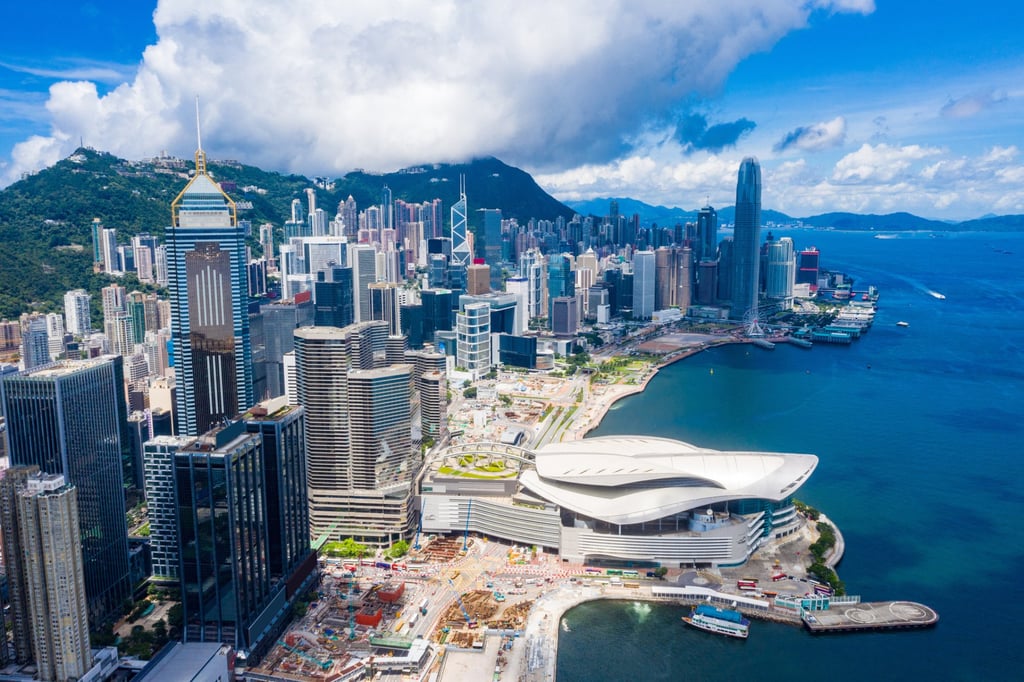
One of those businesses is Dmall, an omnichannel, smart retail solution provider and software-as-a-service (SaaS) platform, which can help retailers improve their customer experience and efficiency. Its technology is already used by more than 150 retailers throughout China, including the Wumart supermarket chain established by the same founder, Zhang Wenzhong, and many retail operations the group has acquired. Now, the company is looking to expand its reach worldwide.
“When our founder set up the company in 2015, he had a vision for it to become a global enterprise, to bring the technology outside China,” Marcus Spurrell, Dmall’s CEO, says. “Hong Kong is the ideal springboard for us, not just to Asia, but to the rest of the world, with its use of English, free-trade policies, being a free economy, and open culture and legal framework.”
Dmall entered the Hong Kong market in 2020, with DFI Retail Group – formerly known as Dairy Farm Holdings – among its major clients. It has helped install all of the self-service machines that many Hongkongers have become used to seeing at DFI’s Wellcome and Market Place supermarket chains.
Spurrell, who was DFI’s chief digital officer from 2019 to 2021, and its chief technology officer until 2023, says he then joined Dmall after becoming impressed by its comprehensive smart retail platform, which includes an app, website, point-of-sales system and – in areas customers never see – warehouse and inventory management.
“What we offer is an end-to-end retail operating system,” he says. “A retailer today needs e-commerce, so that’s the app and the website. Then there is technology that goes into the store, which is the point-of-sales system. And then you need a warehouse management system and an inventory management system. Our platform has all of these elements.”
Spurrell says that by using AI, Dmall has been able to drive on-shelf availability to 99 per cent, which means that the customer almost never finds that an item they want is unavailable. “It’s an extraordinary number: our competitors are at about 80 per cent,” he says.
The company also pledges to help retailers of all sizes to get digitalised seamlessly, including establishing best-in-class, e-commerce channels within weeks.
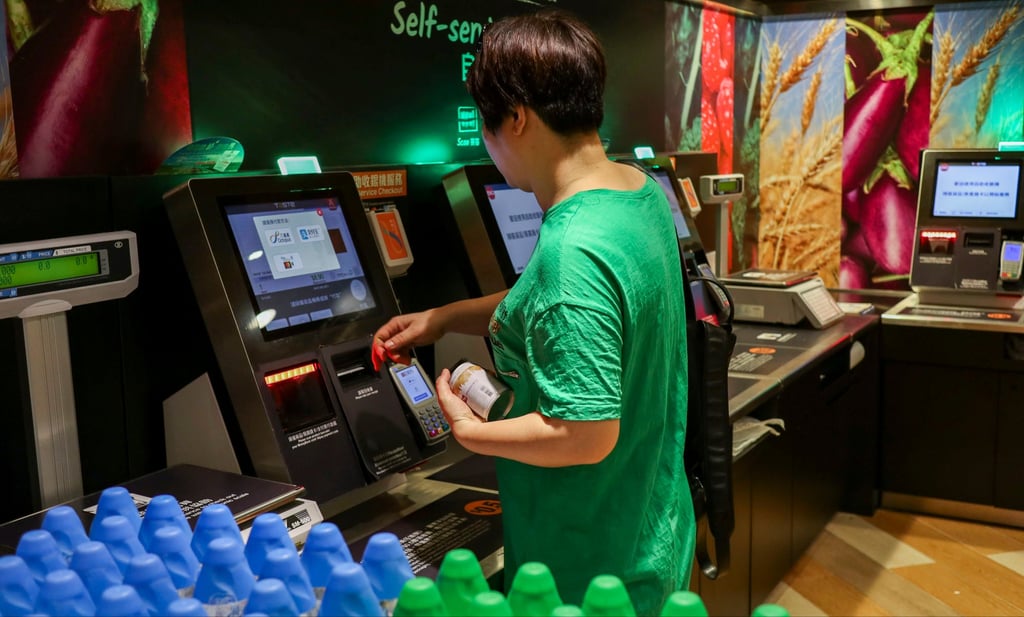
“Our system is unique in that it’s completely SaaS-based, and it’s in the cloud, very efficient and extremely secure,” Spurrell says. “We keep it modern all the time, so it doesn’t age, it doesn’t get turned into outdated legacy technology, which would become technical debt and is a big problem for retailers.”
Last year, Dmall signed an agreement with the city’s Cyberport business park on Hong Kong Island, to establish its headquarters there and become part of a tech community with over 1,900 members. It includes 300 start-ups committed to the research and development of smart retail and e-commerce, marketing technology, the Internet of Things (interconnected, data-sharing, everyday devices) and robotics solutions in product procurement, data analysis, customer rewards, smart marketing and customer service platforms.
Dmall will build a world-class retail technology experience centre at Cyberport and also stage industry events to promote digital transformation among small and medium-sized enterprises in Hong Kong and Southern China’s Greater Bay Area development zone. The company will also support firms as an accelerator to foster start-up development and help them expand into overseas and mainland Chinese markets.
Oases has been instrumental in making it easier for Dmall to increase its presence in Hong Kong, which includes plans to increase its staff levels from 45 to 300 in the next few years. New roles will include hiring a team of engineers to help the company internationalise the code of its retail platform for overseas markets.
“Oases has been a fantastic organisation for us as it has incredible ties to business networks in Hong Kong and chambers of commerce,” Spurrell says “It has made it very easy for us to navigate regulations, tax and other elements. It has a strong support team and offices in Beijing, Chengdu and Guangzhou, which are also cities we are in.”
It also helps that Dmall’s new Hong Kong headquarters has a growth region right on its doorstep. Despite facing headwinds such as a global economic slowdown and tighter monetary policies, the International Monetary Fund – the UN organisation concerned with trade and economic development – reported in October that the Asia-Pacific was on track to contribute two-thirds of last year’s global growth. It also tipped the region to grow by 4.6 last year and 4.2 per cent this year – up from 3.9 per cent in 2022.
Dmall has already established a regional presence in Cambodia and Singapore, with Thailand, Malaysia and Indonesia coming online soon. At the same time, Spurrell is working – or in talks – with a number of large retailers in Europe, with plans to get them on board over the next 12 months.
Customers abroad can also expect to see innovations from Dmall that will enhance their in-store experiences, including being able to find out the sustainability metrics and supply-chain journey of fresh produce – even a live fish – simply by scanning a QR code. It seems we are on the cusp of a smart retail revolution.