Redefining Manila’s skyline: new ultra-luxury residential tower raises the bar in real estate
The Estate Makati, in the heart of Manila’s main business district, represents the best in premium modern living

The Philippines is one of the hottest markets in luxury property right now, with a surge in demand for high-end condominiums that puts it ahead of key markets such as Dubai, Hong Kong and Singapore.
According to Knight Frank’s “Wealth Report 2024”, luxury property prices in Manila rose by 26 per cent compared to the previous year, followed by Dubai where prices climbed by 16 per cent over the same period.
One of the reasons for this surge in demand is a change in the Philippine investment climate, with new regulations that allow foreign investors – both corporates and private individuals – to purchase property for investment and personal use. These properties, which are restricted to condominiums and townhouses, are usually located in business districts and upscale residential neighbourhoods, and developed to high specifications with premium amenities.

One of the most prominent new developments to come onto the luxury property market is The Estate Makati (TEM), situated on the exclusive Ayala Avenue in the heart of the Makati central business district. Makati is the capital’s business and lifestyle hub, and home to embassies, multinational corporations and upmarket shopping malls and restaurants, making it one of the most prestigious addresses in the Philippines.
TEM is a joint venture between Philippine’ real estate developers SM Development and Federal Land, who collaborated with Foster + Partners to turn their vision into an architectural masterpiece. Led by Norman Foster, the internationally renowned architectural practice’s works have helped shape the landscape of cities around the world. They include the Gherkin in London, whose spiral facade design enhances air ventilation reducing the need for air conditioning, and helped establish a blueprint for green buildings; the HSBC headquarters in Hong Kong; and the Apple Park in California’s Silicon Valley.
It is the first project undertaken by Foster + Partners in the Philippines, and the practice brings its philosophy of redefining the relationship of buildings with people through cutting-edge designs that represent a new generation of sustainable structures. The development, which is located on the commercial stretch of Ayala Avenue, also sits close to a quiet residential village with low-rise houses and gardens. This setting inspired Foster + Partners to recreate the intimacy of a private house within a high-rise building by designing exterior garden spaces for use by residents.

The 60-storey edifice is expected to reshape the Makati skyline, and set a new standard in luxury real estate and architecture in the country. TEM comprises 188 two- and three-bedroom units, as well as bi-level and penthouse suites. A tree-lined driveway takes residents to the ground-floor entrance, which is raised above street level with views over the village; it leads to a series of smaller spaces connected by water and greenery intended to create the privacy of a private garden. Four banks of lifts take residents directly to their own private lobby and on to their apartments.
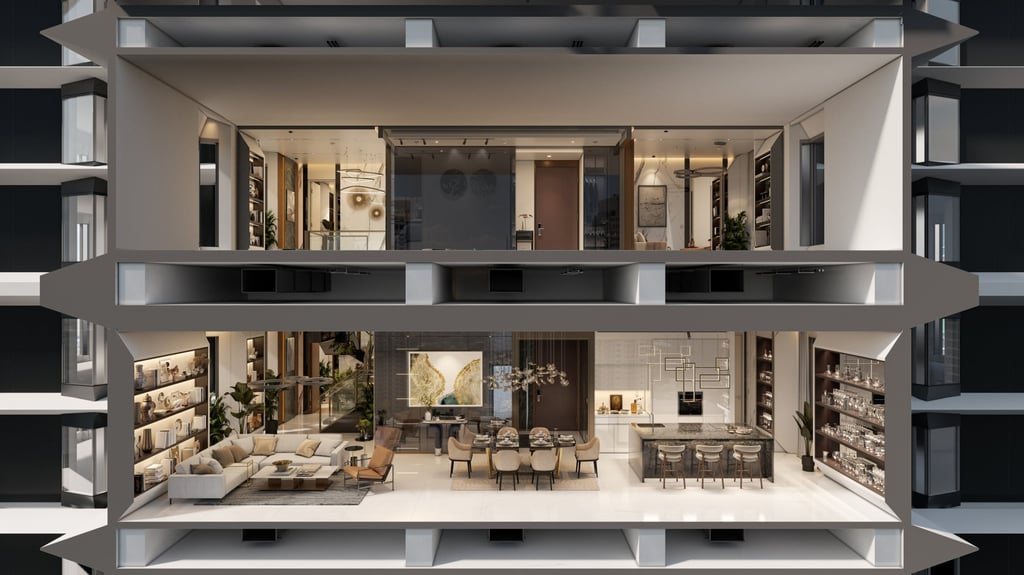
Foster + Partners designed TEM using a cruciform configuration: each unit occupies one corner of each floor plan, and living spaces are arranged radially so that they spread out from the centre of the building towards angular windows, creating versatile spaces that can be used as work, relaxation or entertainment areas. This design means that every apartment benefits from 180- to 270-degree views over the city without overlooking other apartments, while maximising daylight as well as shade from direct sun.
One of the key architectural design features of TEM is the deployment of innovative double- slab technology between floors that conceals the plumbing and electrical systems. This innovation brings a greater degree of flexibility to interior layouts, meaning spaces can be remodelled or configured to owners’ specifications without the constraints usually posed by wiring and pipework. Interior finishes combine materials such as bronze and marble.
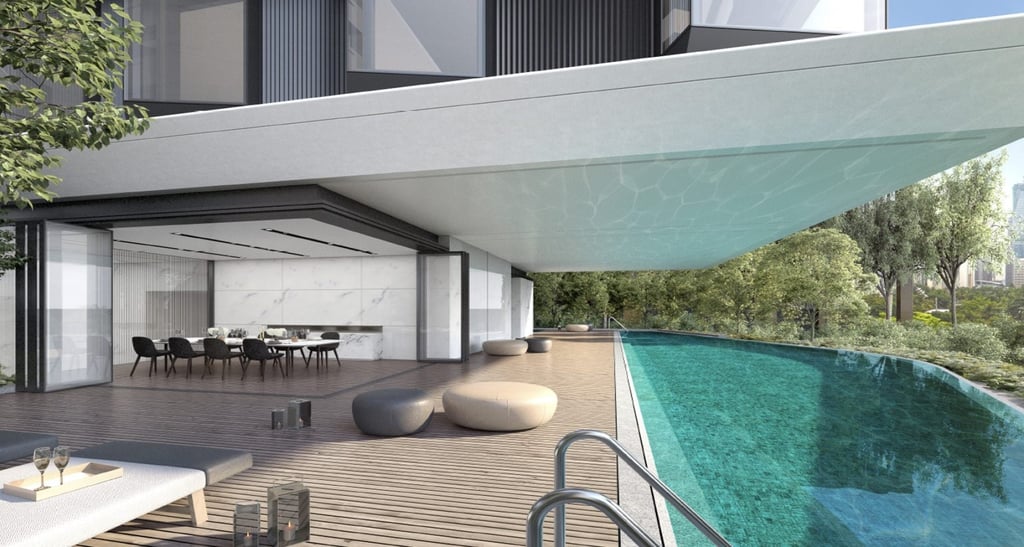
The development will also offer enhanced facilities and amenities, including a pool deck and pavilion lounge on the lower and upper ground floors, and a fitness centre, beauty salon and yoga room on the second floor, as well as a golf simulator, multi-purpose conference room and children’s play area. The 25th floor houses a wine lounge, sky garden and a library. Further elevating the concept of luxury living, The Estate Makati will offer bespoke residential concierge services, as well as housekeeping and secretarial services.
A theme central in every Foster + Partners design is sustainability, and the company worked closely with the developers to create solutions that optimise environmental performance, in addition to practical solutions to counter the local environment. Key features include a facade with deep, horizontal fins providing shade and natural ventilation; it helped The Estate Makati earn a gold rating certification in Leadership in Energy and Environmental Design (LEED). Other energy-efficient measures include the recycling of rainwater to irrigate the landscaped gardens, and electric vehicle charging stations in parking bays.
The development is expected to be a new landmark building in Makati, elevating its position as a modern, forward-thinking district and driving demand for high-end real estate in Manila’s fast-growing property market.