Paris Olympics success shows Hong Kong builds bright future for city’s new sporting talent
City’s government has allocated more than US$7.7 billion since 2017 to nurture the city’s sporting talent.

This summer’s Paris Olympics was one of Hong Kong’s most successful ever, as the city’s sportsmen and women returned home with two gold and two bronze medals.
Cheung Ka-long successfully defended his Olympic fencing title by claiming gold in the men’s individual foil while Vivian Kong Man-wai won fencing gold in the women’s individual épée.
Swimmer Siobhan Haughey, a two-time silver medallist in the women’s 100m and 200m freestyle at the Tokyo Olympics, joined Cheung as a Hong Kong flag bearer during the opening ceremony in Paris, where she doubled up again to win bronze medals in the same two events.
Another Paris competitor, Wong Chun-ting, Hong Kong’s top men’s table tennis player, just missed out on a mixed doubles medal at his third Olympics when he and Doo Hoi-kem lost their bronze medal match.
Wong, 33, with a career-high world ranking of No 6 in singles in 2017 and 2018, fell in love with the sport as a young child. He says watching the Hong Kong men’s doubles pairing of Ko Lai-chak and Li Ching win silver at the 2004 Athens Olympics inspired him to try to play the game professionally.
“Table tennis was the first sport I played,” he says. “My family and I would play after dinner on a concrete table near our home. Even after trying other sports, I found that I still enjoyed the speed and excitement of table tennis the most.”
The veteran player is excited about the new talented sportsmen and women that have been emerging in the city. He also praises the increased support over the past decade or so from the government, the Hong Kong, China Table Tennis Association and society in general, which has helped to significantly bolster the growth of the Hong Kong table tennis team.
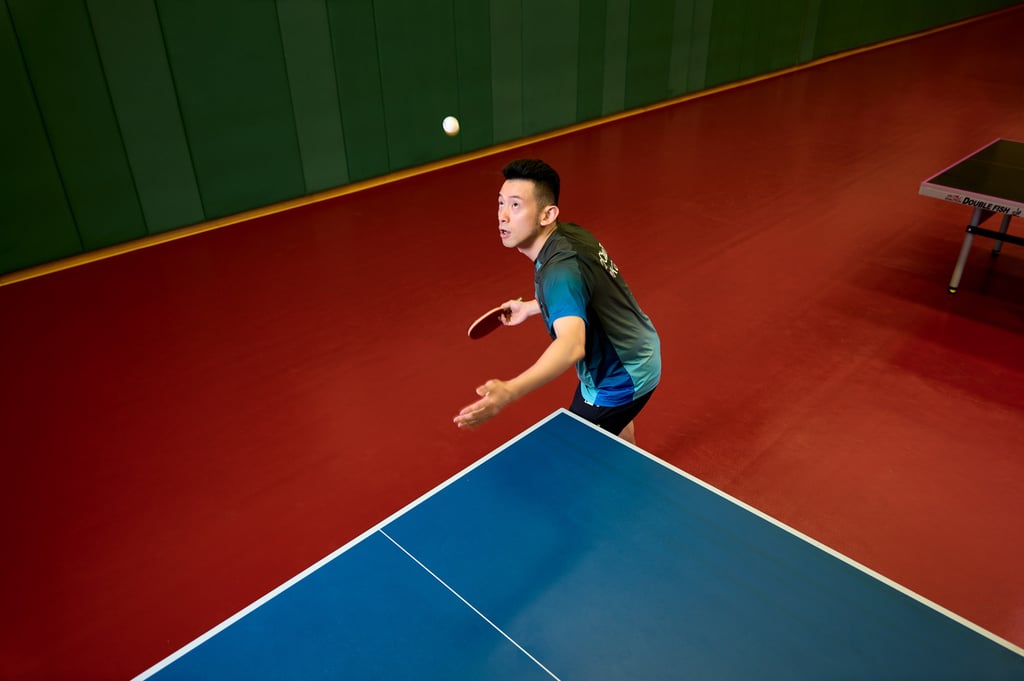
“For over 10 years, the government has invested substantial resources to improve our training facilities and strengthen our support network,” he says.
“We have a strong team that takes care of our physical fitness, mental well-being, nutrition and even psychological consulting. These efforts, which are often overlooked, all play a crucial role. Thanks to this consistent support, we’re cultivating a crop of flourishing young players.”
The Hong Kong government, which has long recognised the importance of sports in the community, has been devoting additional resources to nurture the city’s sporting talent. Since 2017, more than HK$60 billion (US$7.7 billion) has been allotted to sports development.
In 2019, an additional HK$6 billion was injected into the government’s Elite Athletes Development Fund to provide comprehensive support through the Hong Kong Sports Institute.
Growing awareness in city of sport’s importance
Yeung Nga-ting and Yeung Pui-lam, two rising badminton stars in women’s doubles who qualified for the Paris Olympics, but did not advance to the knockout stage, are part of the institute’s Elite Athlete programme.
Since teaming up in 2021, the Yeungs, who are unrelated, have gained consistent success, winning a series of international tournaments, including the 2022 Denmark Masters, and are currently ranked 17th in the world.
The programme provides grants for full-time elite athletes so they can concentrate on training while also preparing for a second career.
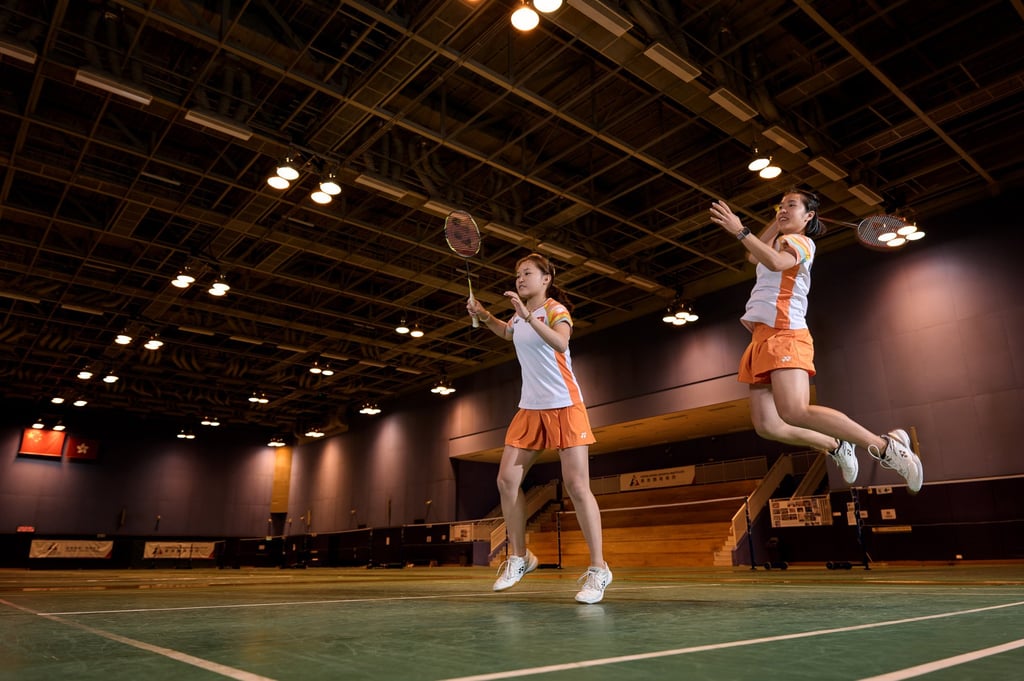
At 25, Nga-ting is using the Elite Athlete fund to further her academic studies in the evening, after a full day of training. She is one of many Hong Kong athletes who are pursuing dual career pathways, continuing their studies at schools and universities while training full-time at the Hong Kong Sports Institute.
Pui-lam, 22, has hired an English tutor with the grant. “I want to improve my English speaking so I can communicate better with others when we compete abroad,” she says.
The three athletes agree that funding from the government and the institute not only enhances their training regimes, but also, more importantly, changes public perception of the city’s sportsmen and women.
“I think Hong Kong society has become more supportive and understanding of athletes, which eases a lot of our worries,” Nga-ting says.
“Our coaches offer career advice about life after sports, encouraging us to go back to our studies when we retire from competition. Parents are more relaxed about letting their children pursue sports professionally. Instead of getting a job after studying, we’re just shuffling the timeline a bit.”
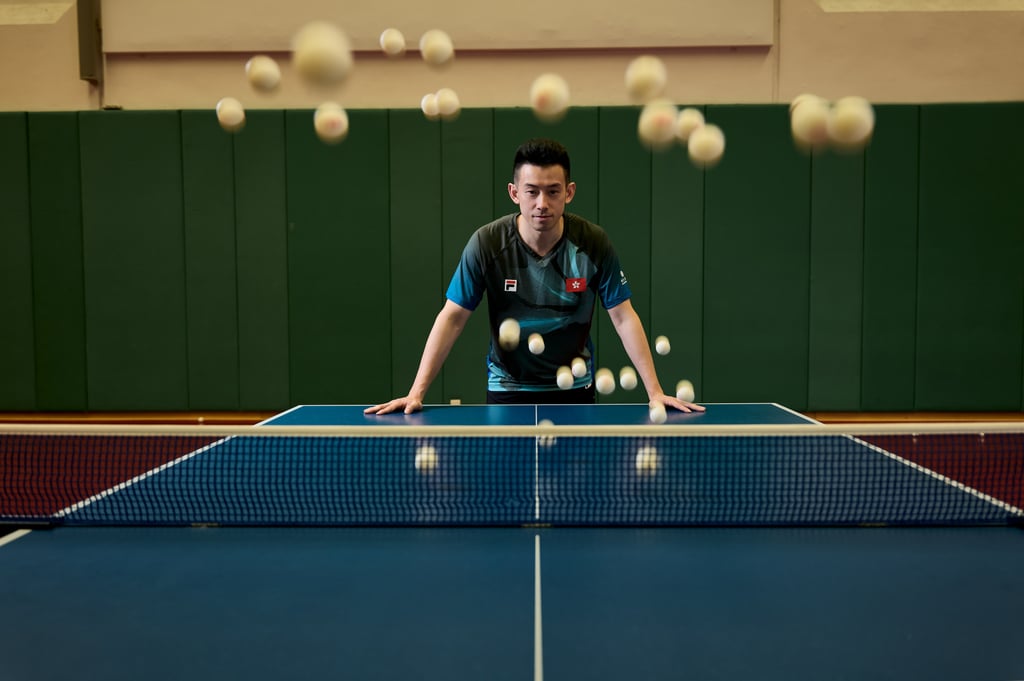
Wong says: “As Hongkongers, we often pride ourselves on having a can-do spirit and resilience – but it’s also essential to feel that our hard work is being recognised by others. Being an athlete can be lonely, but seeing words of encouragement from friends and locals online can lift our spirits.”
By investing in and sharing the rights to broadcast sports events such as the Paris Olympics, as well as hosting major competitions, including co-hosting next year’s 15th National Games of China with Guangdong province and Macau, the government is increasing public awareness and interest in sports.
Preparing for new challenges on and off the court
As Hong Kong prepares to co-host the National Games, anticipation among potential competitors is already mounting.
Nga-ting, who is aiming for her third appearance at the Games, says she is looking forward to members of the Hong Kong team organising regular training sessions with their mainland counterparts.
“One of the perks of being a Hong Kong athlete is the opportunity to train with national teams,” she says. “I always look forward to these training sessions as they show us where we stand compared with other Chinese players.”
She is also keen to improve on her previous appearances at the Games, when she felt inexperienced while making her debut in 2017 and then struggled to play at her best amid the Covid-19 restrictions in 2021.
Pui-lam says: “It’ll be my first National Games. I am excited about competing as I hear the crowds and the atmosphere could be even more fervent than at the Olympics.”
Despite playing in many tough competitions during recent years, she says she and Nga-ting are still constantly learning and improving as teammates.
“As sportswomen, we are still learning how to cope with stress – both on and off the court,” Pui-lam says. “I’m lucky that we’re facing stress at the same time as teammates. So, when I’m nervous, I can look over at Nga-ting for her support and reassurance.”
Nga-ting adds: “We always step up to support each other.”
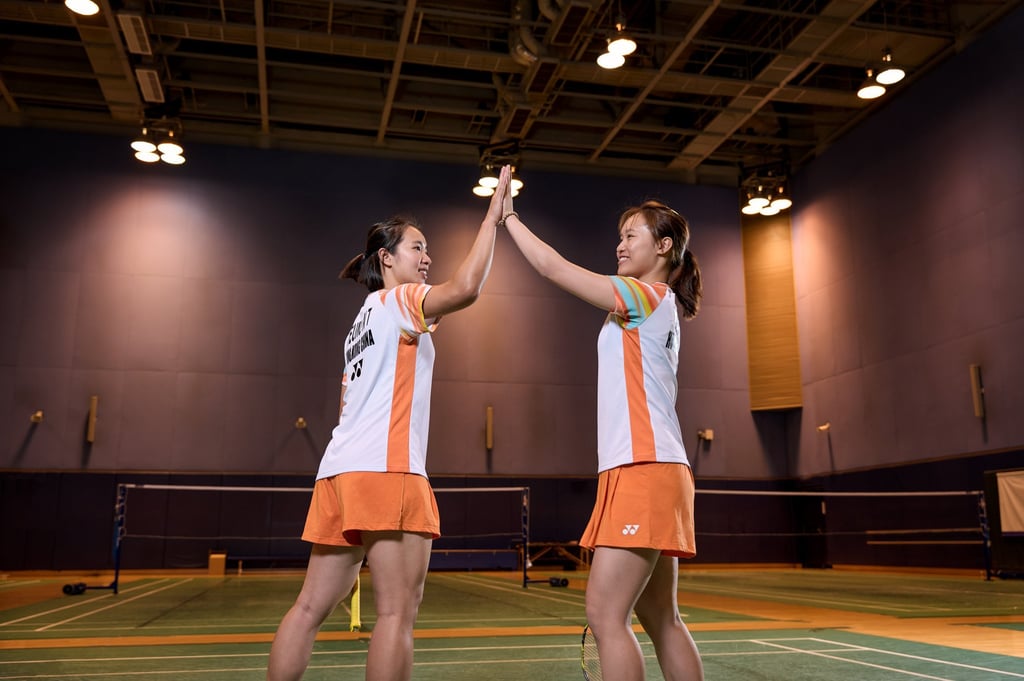
Wong admits that, despite his years of experience as a senior player, he has still had to cope with stress, such as battling back to claim the bronze medal in the men’s singles at the 2016 World Cup in Germany.
“Pressure stems from the desire to win,” he says. “You have to forget about winning and losing when you’re stressed. Instead, view it as an opportunity to play in a new environment and to play against a new opponent.
“Competing against world champions is a great and rare chance to train yourself, so you should enjoy it.”
These days, Wong enjoys sharing his experiences of playing table tennis professionally at the highest level by visiting local schools whenever he can.
“I enjoy sharing my experiences about how we cope with pressure and difficulties as athletes,” he says. “I believe these insights are relevant not only to those people who want to be full-time athletes but also others who have ambitions of succeeding in society. I hope my way of thinking may inspire young people in Hong Kong to have a positive mindset.”
Wong is also no stranger to playing at the National Games, and is looking forward to taking part again next year. “The competing teams are all of international standard, so it is going to be an experience worth treasuring,” he says.
During next year’s 15th National Games, which runs from November 9 to 21, Hong Kong will stage eight competition events – basketball (under-22 men), track cycling, fencing, golf, handball (men), rugby sevens, triathlon and beach volleyball – as well as one mass participation event, bowling.
A relatively new addition to the National Games, mass participation events – which were first introduced in 2017 at the 13th National Games – aim to promote physical exercise and build a healthy society.
There will be 23 competitions or demonstration events for public participation. The forthcoming bowling competitions will be held in Hong Kong’s new sports and entertainment landmark, Kai Tak Sports Park, which will open in the first half of 2025.