Europe’s first smart railway logistics terminal, located in Hungary, uses Huawei’s technology to remotely control cranes and boost efficiency by 20%
- The East-West Gate intermodal terminal facilitates rail freight and road transport between western and eastern Europe, and also between Europe and Asia
- Workers control the terminal’s massive cranes remotely from a digitally equipped control room, using images transmitted from 20 high-resolution cameras

When we receive our Christmas presents or cards, or browse through aisles of merchandise from around the world, we rarely think about the journey that those items took to get into our hands. Technology is playing an increasingly vital role in ensuring the timely delivery of goods, and high-speed, low-latency 5G is transforming the transport of goods by rail, speeding up east-west trade in Europe, and drawing people back to what used to be the unloved work of a crane operator.
In 2019, János Tálosi, CEO of Hungary’s East-West Gate (EWG) intermodal terminal, had a vision for creating a logistics terminal “with technologies that never existed before”. He pictured cranes being operated remotely with the help of 5G technology, without the need for a worker sitting in a cabin on top of each crane.
To realise his vision, he turned to telecommunications giant Huawei, which has supplied private 5G networks to some of the world’s largest seaports, including Ningbo, Shanghai, Shenzhen and Tianjin. Using the wide-bandwidth 5G network along with artificial intelligence (AI), one worker is able to control four cranes at the same time from the comfort of their office.
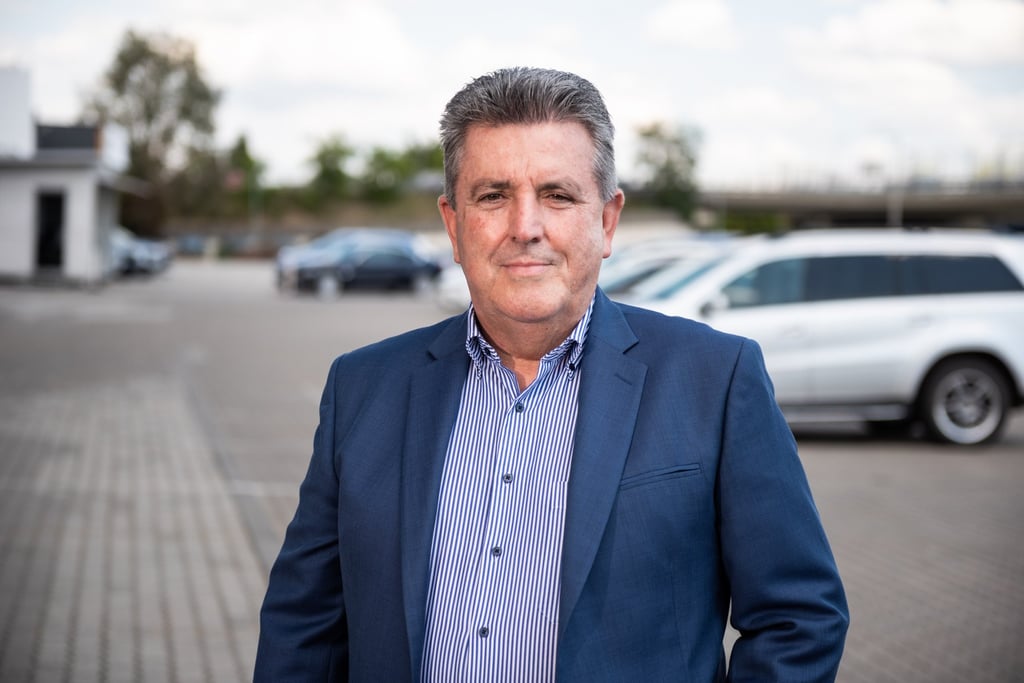
The vision has become reality, and since October 2022, EWG, based in the small Hungarian village of Fényeslitke, has seen its operations and the lives of its workers transformed.
Also serving as a hub for regional road and railway networks, EWG is unique in that it connects the standard-gauge tracks of western Europe with the wide-gauge tracks of eastern Europe and beyond. All rail freight travelling between the two areas needs to be transloaded to another train to continue its journey.
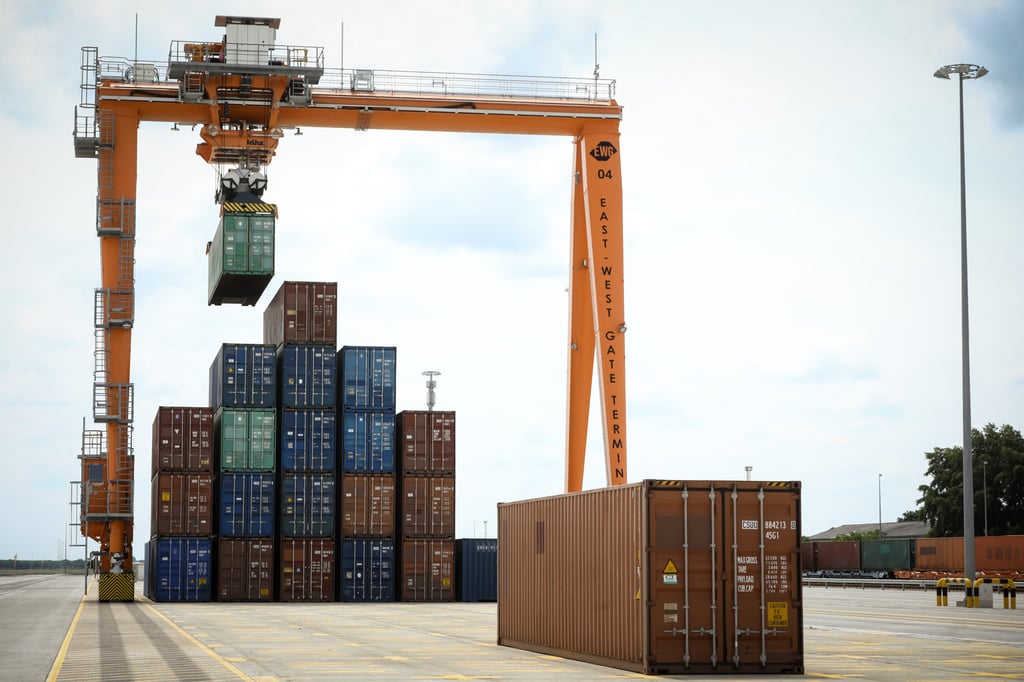
The terminal has the capacity to load and unload 1 million TEUs (20-foot equivalent units – a measure of containerisation) between five wide-gauge and five standard-gauge railway tracks in a year. EWG covers an area of more than 85 hectares (210 acres) and has a 10km (6.2-mile) railway track as well as a 15,000-square-metre (161,500-square-foot) warehouse.
EWG is also now the first logistics terminal in Europe to use remote-controlled overhead cranes to move containers, making it the continent’s first smart railway logistics terminal. Gone are the workers perched in small cabins, manually operating the 25-metre-high (82-foot) cranes in three shifts over a 24-hour period.
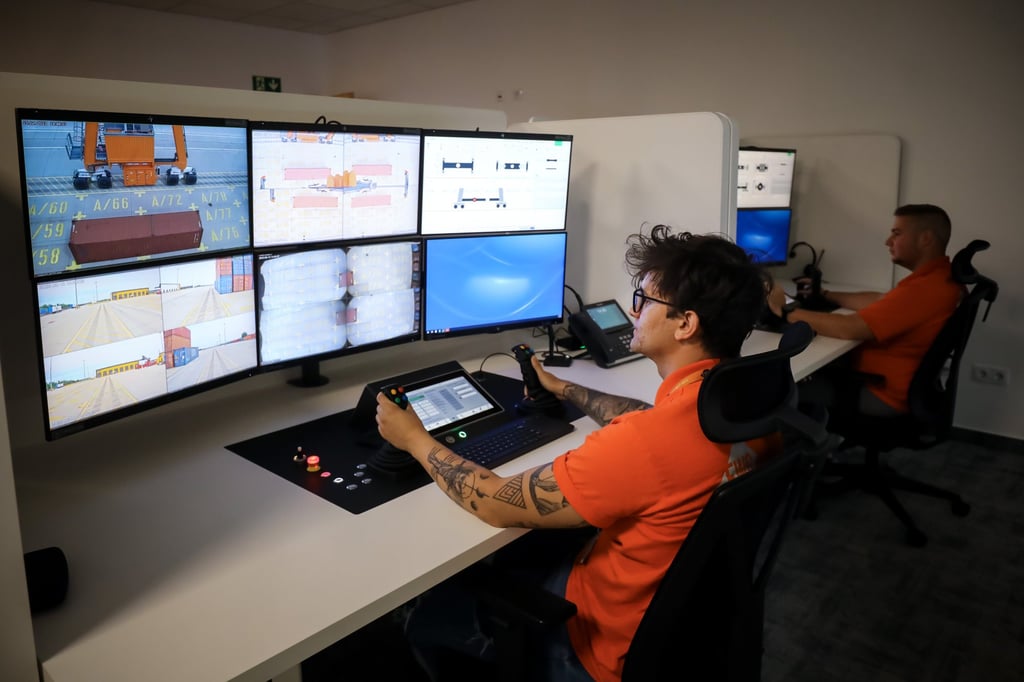
Instead, employees sitting at desks in an air-conditioned control room with an array of monitor screens control the cranes using joysticks and computer mice, as they view the site through images transmitted from 20 high-resolution cameras. Tálosi was intent on finding a 5G private network with a latency lower than 30 milliseconds. Huawei delivered better than that, at 20 milliseconds. This performance standard is essential for remotely operated cranes.
The cranes are also equipped with advanced sensors and AI algorithms, allowing them to operate with a high degree of accuracy and speed. Large bandwidths are required to upload the images from the cranes and view them in real time, while low latency is also essential. Huawei’s customised, high-security, private 5G network enables wireless, real-time remote control over the entire container terminal area.
With the new tech in place, transport efficiency has improved by over 20 per cent, while operating expenses have declined 40 per cent. EWG is also a green, zero-carbon-emissions terminal powered by renewable energy sources such as solar panels.
The workforce has also seen dramatic changes: EWG can run with 30 per cent of its headcount, and the ability to work with cutting-edge tech in a comfortable office environment has attracted new people to the job of crane operator. That includes younger workers and women, who have traditionally shunned the industry because of the harsh, repetitive and sometimes dangerous conditions.
The remote-controlled cranes significantly reduce the need for workers to be on the ground as containers are transloaded, thereby increasing safety at the terminal. EWG also deploys a digital twin application that monitors terminal operations in 3D, with the movement of trains, trucks, cranes, transport vehicles and goods followed virtually in real time. The digital twin, which is used for supporting preventative maintenance, simulation and increasing terminal security, has also improved working conditions and operational efficiency.
“Here, the transport of rail freight is much easier thanks to modern safety equipment,” says Gréta Gulyás, an EWG train dispatcher who is one of several women working at the terminal. “For example, a switch is set by a click of the mouse instead of someone going to the railroad switch and changing it manually.”
The digitisation of a legacy industry has given hope to the economy of EWG’s hometown. “The facility’s digitalised, hi-tech solutions attract many young locals to stay in the area. The average age of the employees is between 23 and 25,” says Radoslaw Kedzia, vice-president of Huawei’s CEE (central and eastern Europe) and Nordic region.
“We can’t deny the fact that this is the poorest region in Hungary,” Tálosi adds. “But the terminal is a driving force for young people to come back home, because there is a vision of the future here.”
He is proud that his vision has come to life. “With the construction of the East-West Gate, Hungary is back on the map of international rail logistics,” Tálosi says.
With EWG already achieving its ambitions, Tálosi has turned his gaze to the surrounding region. He predicts that the next decade will see several industrial investments, drawn by EWG’s top-shelf logistics. “It will be full of factories and workshops operating at similar technological standards and environmentally conscious major land developments,” he says. “It will be exemplary for Europe.”