Bird’s-eye view: Huawei’s role in supporting global biodiversity
- Chinese tech giant has bolstered wildlife protection in China’s Yellow River Delta region with advances in 5G, cloud computing and artificial intelligence
- Photography and videography have borne witness to the conservation efforts of Europe’s ‘Birdman’

As a leading provider of consumer electronics and telecommunications products, Huawei has taken an unconventional step in its corporate agenda: to help enhance biodiversity in China and beyond.
The global technology company has been assisting with wildlife conservation in eastern China’s Yellow River Delta National Nature Reserve, a crucial habitat for wetland species and migratory birds.
The area is home to some 6 million birds across 373 species, including 26 that are listed as “wildlife under first-class protection” in China. In addition, the Yellow River Delta region is included in two out of the nine major global avian migratory routes, namely the East Asian-Australasian Flyway and the West Pacific Flyway. But increased human activity in the area is posing unique challenges.
The Oriental stork is a case in point. This species is a national-level protected animal in China and is also classified as endangered on the Red List of Threatened Species compiled by the International Union for Conservation of Nature. The storks had been nesting on electricity towers due to a lack of tall trees in the region, which posed safety hazards to the birds as well as potential power disruptions for local residents.

02:17
Artificial nests in China aim to save Oriental white stork from extinction
As a solution to both concerns, staff at the nature reserve constructed several artificial nests that help the birds avoid the risk of electrocution during their migratory journeys.
In 2022, Huawei launched a pilot programme in the area as part of its Tech4All digital inclusion initiative. Leveraging 5G, cloud computing and artificial intelligence (AI) technologies, the programme aims to improve biodiversity research and monitoring in a fragile ecosystem. Since its inception, the AI component of the pilot programme has been trained to recognise more than 47 different bird species, providing data on their migration patterns and other activities.
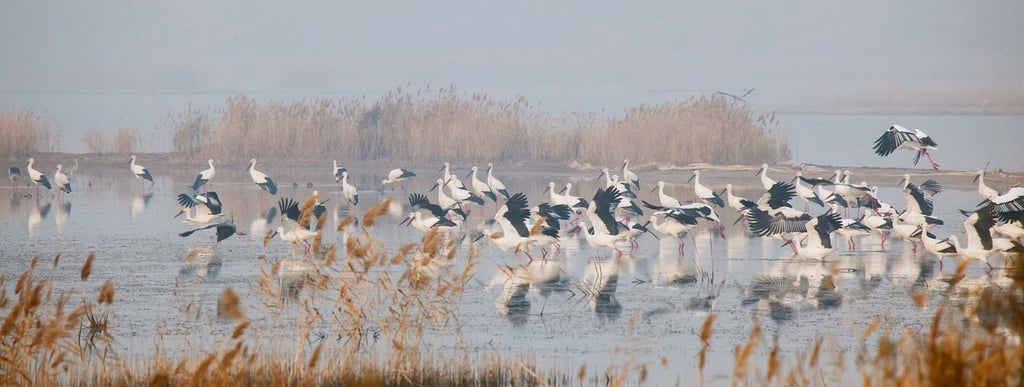
For the biodiversity researchers working at the nature reserve, this technological integration has significantly boosted efficiency. Before the 5G, cloud computing and AI technologies were implemented, the researchers had to physically venture into the wetland in order to observe birds’ behaviour. Now, they can observe wildlife in real time from the comfort of their offices.
“The use of science and technology not only mitigates the impact of human activities on the natural environment, but also opens up more possibilities for biodiversity conservation. Seeing without disturbing, guarding without interfering – that is the greatest respect humankind can show nature,” says Shan Kai, senior engineer of the Ecological Monitoring Center for Shandong Yellow River Delta National Nature Reserve Management Committee.
As the AI-powered platform expands its training to recognise a broader range of species, its precision continues to increase, with the accuracy rate surpassing 90 per cent for well-known species and larger birds that the AI system has learned to identify.

The tech company’s commitment to promoting biodiversity echoes the theme of the 28th Conference of the Parties to the UN Framework Convention on Climate Change, or Cop28. The annual summit – which this year was held in Dubai from November 30 to December 12 – is regarded as one of the most important of its kind, hosting discussions about biodiversity, climate change, renewable energy solutions and other related topics.
Elizabeth Gray, CEO of the National Audubon Society, said ahead of Cop28: “This year’s conference will play a critical role in coordinating climate policy that affects us at every level. We must fight for outcomes that can ensure birds – and our own communities – thrive.” The society is a New York-based non-profit organisation dedicated to the conservation of birds and their habitats.
Around the world, photography and cinematography have played a vital role in spreading the conservation message.
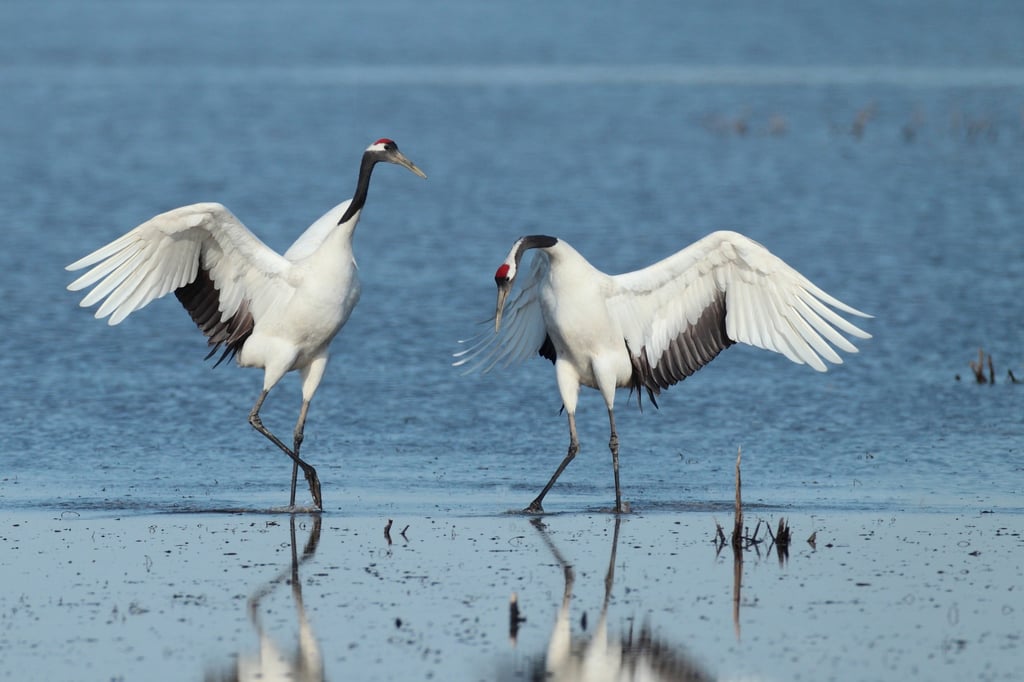
In Europe, former French meteorologist and active conservationist Christian Moullec has also employed technology to record his journey in helping wildlife. In 1995, he noticed that lesser white-fronted geese followed a migratory path from Germany to Sweden that was becoming increasingly dangerous due to human activity. That sent him on a lifelong mission to create a safer migration route for the geese.
His process starts with raising the birds from eggs and teaching them essential life skills. Once the birds reach adulthood, Moullec takes to the skies in his ultralight aircraft to lead them along the new migration route, ultimately taking them from France to their new habitat in Lapland.
Moullec has not only established safer migration routes, but he has also raised awareness about the importance of habitat conservation by sharing photos and videos of his journeys with his followers. His images – which show the birds in flight or wading through lakes while probing into the mud in search of food – have highlighted both the beauty and significance of avian migration.
“In the past 30 years, one-third of bird species in Europe have vanished due to human activities,” Moullec says. “I sincerely hope more people will protect these creatures. When you fly with them and see the world from above, you’ll realise how important nature is to us.”