Why hi-tech, interactive fitness workouts in the home and office are next big trend
- Cycles, treadmills, rowing machines, smart mirrors and apps can connect to real-time and on-demand exercise classes
- Studies show 80 per cent of people who set new year’s fitness goals fail, so choose achievable goals and enjoyable exercises

It’s already March and, if you’ve stuck to your new year’s fitness resolutions, you’re doing better than most.
Various studies suggest that about 80 per cent of people fail to keep to their stated goals, with many falling off the wagon by mid-February.
Instead of saying I’m going to lose 30 pounds this year, set the goal to exercise for 15 minutes every day. Each time you do, you win and succeed at that goal
If you’re one of them, then Hong Kong personal trainer Alex McMillan believes it’s the goal – and not you – that’s at fault.
Setting too-lofty a benchmark will rarely be achievable, McMillan, the founder of Mid Age Man, says.
Focus on a “process” goal, not the result, the independent trainer, who is also a fitness coach at Hong Lok Yuen Country Club, in Tai Po, says.
“So, instead of saying, ‘I’m going to lose 30 pounds [13.5kg] this year’, set the goal to exercise for 15 minutes every day.
“Each time you do, you win and succeed at that goal”
Mentally, that’s so much more encouraging than watching stubborn numbers on a scale.
Psychologists and fitness professionals call this a “smart” goal: one that is specific, measurable, achievable, relevant – and has a time element.
Another reason fitness goals fail is the lack of enjoyment – so McMillan’s advice is to pick an exercise you love.
“Studies show that enjoyment matters,” he says. “If you enjoy it, you will continue.”
For fitness newbies (or, prodigals) McMillan says they should start with what he calls a “no excuses”, seven-minute workout.
Originally created by the American College of Sports Medicine in Indianapolis – although various versions now abound – the “Scientific 7-Minute Workout” consists of 12 exercises done for 30 seconds each, with a few seconds’ rest in between.
“The exercises are all body-weight related, and you can do them at home, in the office, or in a hotel room while travelling,” he says.
No special equipment is required – just a chair and a wall. These exercises are: jumping jacks, wall sits, push ups, abdominal crunches, step ups onto a chair, squats, tricep dips (on a chair), planks, high knees, push up rotations, and side planks.
Studies show that enjoyment matters. If you enjoy [your fitness exercises], you will continue
It’s a shorthand version of high-intensity circuit training (HICT), so seven minutes feels like a much longer workout.
Of course, while effective, McMillan recommends his clients also commit to 40-minute workouts two to three days a week, incorporating resistance training which, he says, is “far more effective than running on a treadmill”.
Find a trainer to help you, he advises, or at least team up with a training buddy, to help maintain the motivation.
He believes having a few pieces of light gym equipment at home, such as a TRX suspension trainer, stability ball, kettlebell, resistance tubes (Power Tubes), or bands – will make regular practice more convenient.
Online tools such as activity trackers, mobile apps and websites may help, too.
McMillan says he finds Bodybuilding.com, which has a free library of workout plans, useful. He also likes that the TRX Force suspension trainer comes with an app programme directing the kind of tactical conditioning programme used by the US military.
Working out at home, or in the office, is one of the big fitness trends of 2019.
Tali Weiss, director of FitnessU Hong Kong, says people enjoy the convenience, especially in a city where “everyone works crazy hours”.
She says: “Personal training doesn’t require a big space and you can have a hard workout with minimal equipment.
Personal training doesn’t require a big space and you can have a hard workout with minimal equipment. Clients gain comfort and avoid ‘rush hour’ at the gym
“Clients gain comfort, privacy, and avoid the rush hour at the gym.”
With companies wanting to keep their staff healthy, workplace training is a growing sector of Weiss’ business. Online training is also offered, consisting of a Skype session to begin, and weekly programme updates via email.
She says online-only clients will miss the personal connection and guidance of a trainer, so it’s not something she recommends. Mobile apps “may be helpful”, Weiss says, but “you’d need a lot of discipline to rely on these alone”.
However, fitness equipment designed for home use is becoming ever-more sophisticated.
Celebrities ‘join’ the Peloton
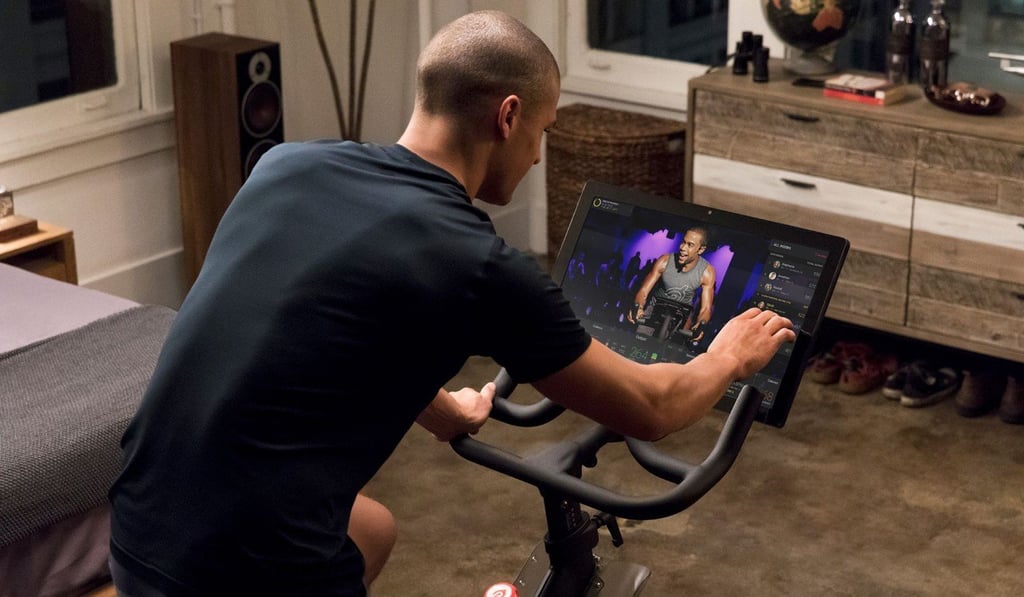
Take Peloton, a New York fitness start-up, which produces hi-tech cycles and treadmills that have an almost cultlike following – with actor Hugh Jackman, Olympian Usain Bolt and Virgin Group founder Richard Branson among them.
For a monthly subscription, users can access live and on-demand classes given by professional instructors. Options for various skill levels range from “couch potatoes” building up to their first 5km (3-mile) fun run, to hard-core marathoners.
The screen also displays stats such as incline, pace, speed, calories burned, and distance.
An eye on your progress
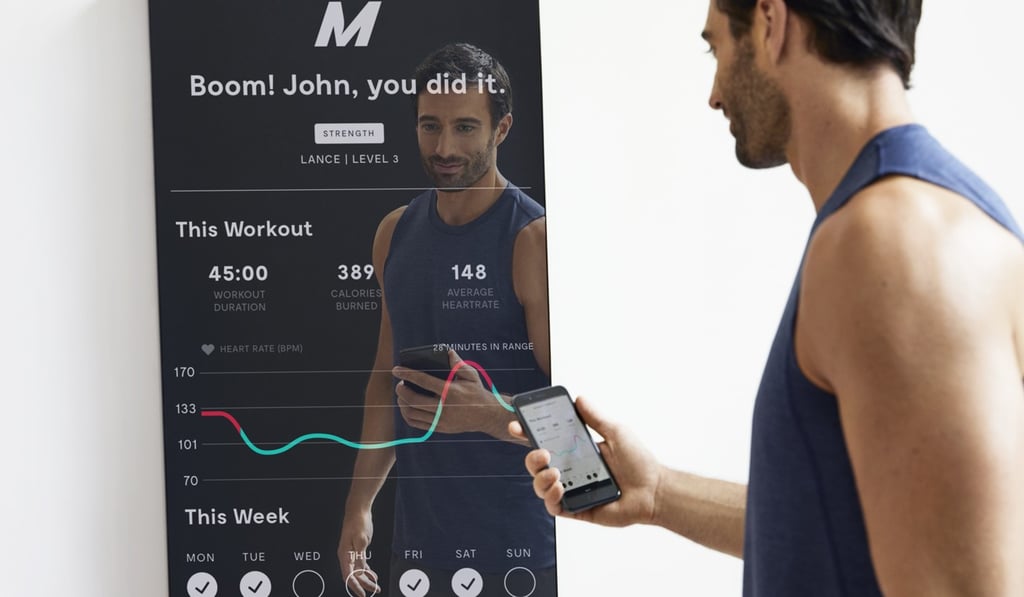
Another New York start-up has launched the Mirror, an interactive home gym in the form of a mirror that simply hangs on the wall and streams live and on-demand classes into your home.
It comprises a liquid-crystal display panel, stereo speakers, camera (with lens cap for privacy), microphone and one-way mirror to create a fully immersive fitness experience.
During a workout, instructors provide real-time instruction and even personal shout-outs.
Mirror then optimises a user’s preferences and biometric data in real-time, based on their goals.
It also syncs with a Bluetooth heart-rate monitor or Apple Watch to enable competition mode.
Digital rowers get competitive
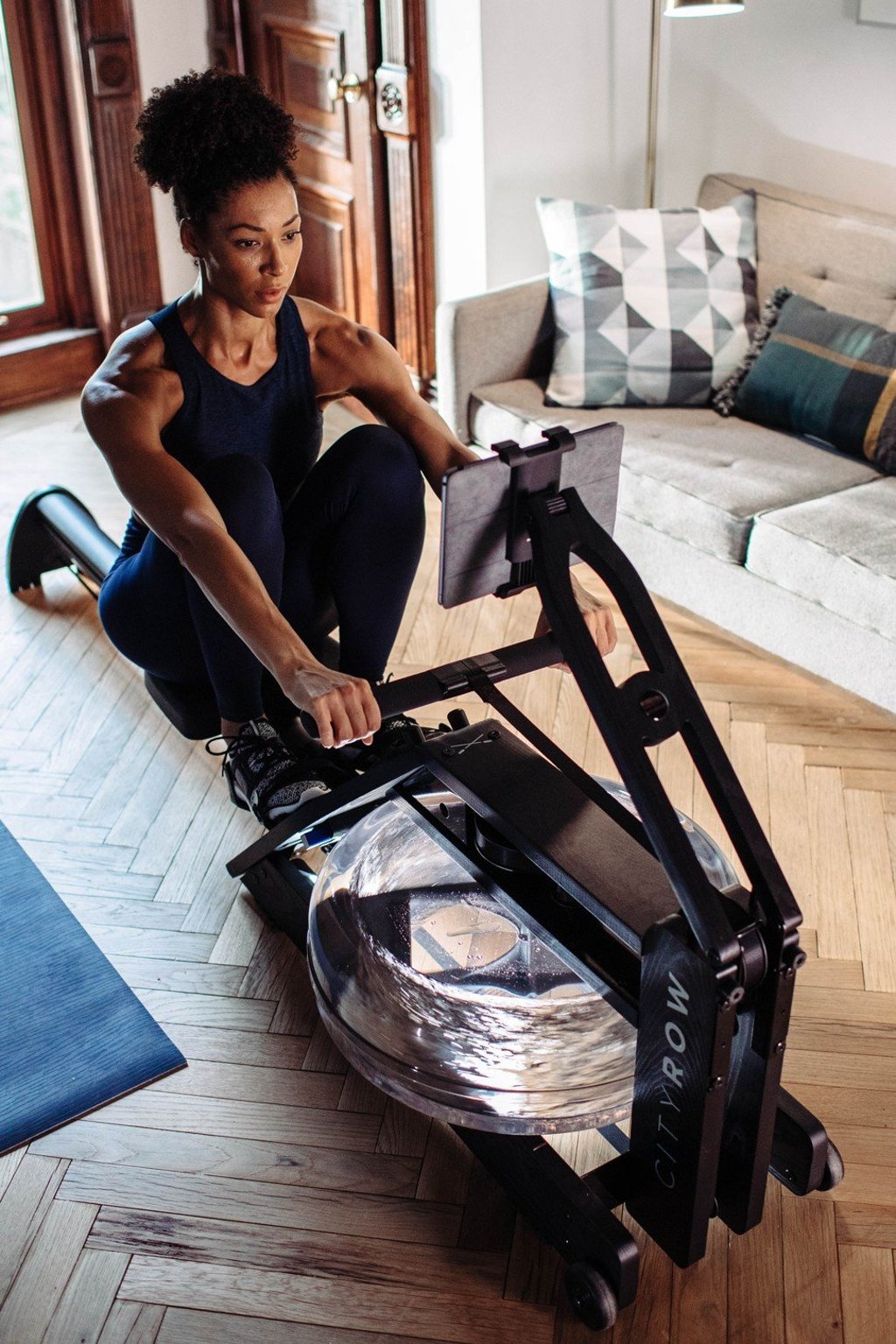
CityRow – again, from New York – has launched the “ultimate digital rowing experience” that pairs rower and app to stream video content, overlaid with live workout data (viewed on an iOS device or cast to a screen).
Data is stored within the app, allowing consumers to set weekly goals, compete against personal records and track progress with each class they take.
If you just have a regular stationary bike or treadmill, the online training game, Zwift, can take you virtually running in New York, or pick any hill, anywhere in the world, to challenge yourself with an exhilarating road climb.
Within the Zwift experience, users can choose the appearance, kit and bike of their avatar. The subscription-based service also allows users to ride in virtual bunches and participate in challenges with others from around the world.
Go-it-alone yoga workouts
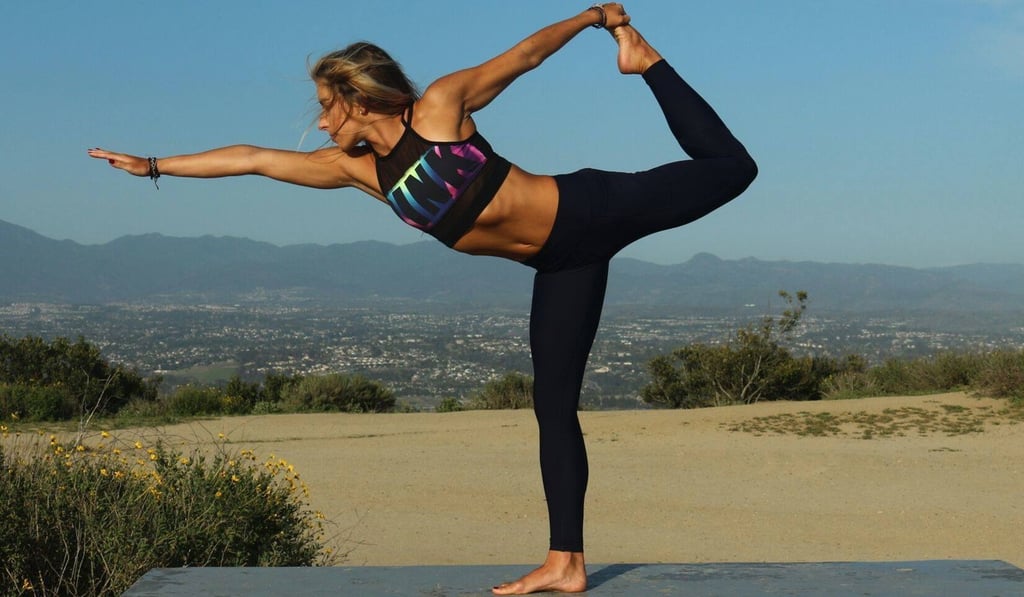
Berlin-based start-up Asana Rebel aims to bring yoga to the mainstream with its subscription-based app.
With “no yoga style, no spirituality, no gurus”, according to the founders, the app is attractive from a modern fitness point of view.
It offers hundreds of modern yoga workouts from fatburn to strength, as well as mini-sessions that may be doable in your lunch break.
Pick a workout ... and download it
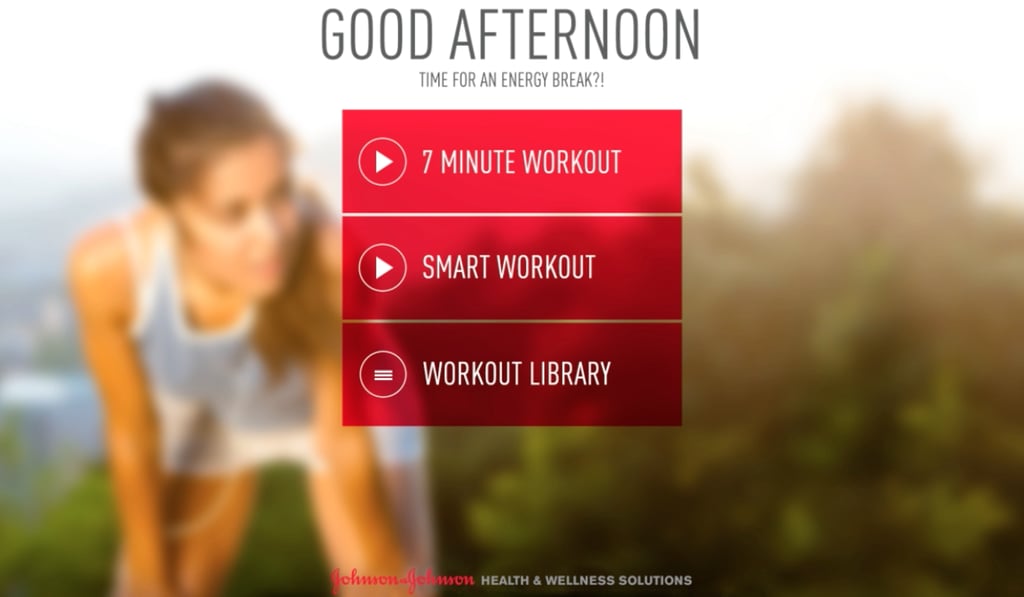
To reignite your fitness goals for the year ahead, there are countless seven-minute workout apps on the Apple Store and on Google Play.
One of the best appears to be the J&J Official 7 Minute Workout, which happens to be free.
Designed by the director of exercise physiology at Johnson & Johnson, the programme consists of 72 exercises of high intensity interval training, like jumping jacks, sit-ups, and push-ups.
Most require nothing but your body; for some you need a chair.
This app has been around for a few years now, but the latest version allows uses to do each exercise along with its creator.