AI transforms global mining, power generation and chemicals industries
Huawei Technologies’ smart tools help firms boost efficiency and cut carbon emissions as they embrace decarbonisation and sustainability

The rapid and enthusiastic adoption of artificial intelligence (AI) is already having a seismic effect on industries around the world, enabling new efficiencies and bringing fundamental change to the way organisations plan and operate.
Importantly, but perhaps not yet widely recognised, the impact of this tech revolution is also being seen in many areas of the natural resources sector – including mining, oil and gas, chemicals and building materials – where the latest advances are reshaping core production systems and reinventing the management of risk, safety, strategy and exploration.
“Through customer interactions and field research undertaken in the past year, I have realised that this sector, which forms the lifeblood of national economies, is undergoing a quiet but profound transformation,” says Linda Han, vice-president of Huawei Technologies and CEO of the company’s oil, gas and mining business unit at the global company specialising in information and communication technology infrastructure and smart devices.

“To deal with challenges such as decarbonisation, high energy consumption and sustainability, we must make AI a central part of the production process, not just a supporting tool, and use it to create value, develop information infrastructure, and establish an intelligent, digital foundation for long-term business growth.”
This broad assessment was confirmed in last February’s report by S&P Global Market Intelligence, which focused on change happening in the mining sector. The acceptance of AI there promises cost savings, enhanced safety and a reduced carbon footprint.
The deployment of autonomous haulage systems showed the way. It has made use of a variety of sensors, real-time kinematic technology – which enhances the accuracy of satellite navigation systems, including both China’s BeiDou system and the global positioning system (GPS), by using a base station to provide instant correction data to a mobile receiver – machine learning and control algorithms to optimise routes and prevent accidents.
Now, the next phase will see smart mining systems using AI to analyse huge amounts of geological data, for example from wireless photogrammetry and dynamic data transmission from sensors on vehicles. That helps to identify mineral deposits plus improve drilling and excavation rates, all of which contributes to lower exploration budgets and greater all-round efficiency.
Other research conducted by Monash University and the University of Tasmania, in Australia, and published last year in Nature Communications, emphasised how such steps are set to revolutionise Australia’s search for copper, lithium, cobalt and rare earth minerals used to produce clean energy technologies.
Guided by AI, the reports said it will be possible to improve on-site productivity, blasting performance and the process of mineral mapping by using images from drone-based photogrammetry and remote sensing.
In the future that will not only help in achieving broad targets for net-zero carbon emissions, but also in forecasting risk in daily operations and planning for equipment maintenance and repairs.
“Though the road ahead may still be bumpy, the direction for the resources sector is clear,” Han says. “AI is now making inroads in the high-value, complex parts of the industry, tackling challenges once heavily reliant on human expertise, and advancing from the edge to the centre of industrial operations.”

She says AI applications in recent years have been focused mainly on peripheral, single-point scenarios such as visual monitoring and automated inspections. That might involve identifying conveyor misalignment in coal mines or analysing tunnelling machine operation sequences, factors which matter in a local context, but do not influence the core decision-making processes.
Now, though, the resources sector is pioneering a “value-driven construction” model, where AI captures and amplifies human expertise, which is still essential, by merging data with mechanistic understanding.
Han says the aim is to ensure technology is aligned with business needs and that mature digital infrastructure puts information systems at the heart of each business, driving a virtuous cycle of development and deployment.
In the oil and gas sector, for instance, that goal has seen Huawei team up with China National Petroleum Corporation to train an AI model which uses massive data sets to interpret geophysical findings. This will shorten project times for exploration.
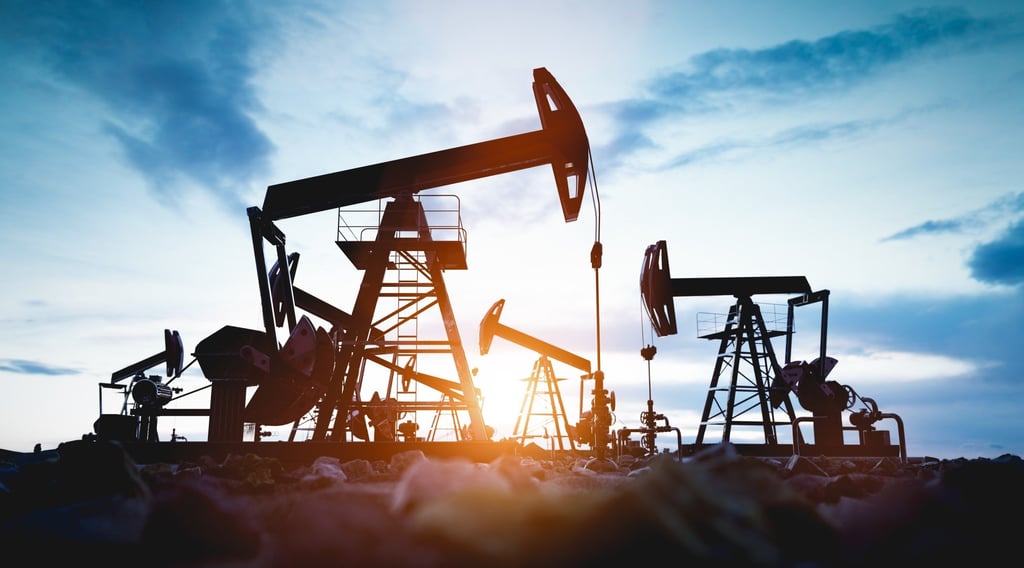
The two companies have also co-developed an intelligent drilling system which uses deep-learning algorithms to identify the properties of rock formations in real time. This can increase the “encounter rate” of reservoir drilling to 85 per cent, while significantly reducing related operating costs.
Similarly, in the steel industry, AI is reshaping the century-old craft of blast furnace iron-making. Here, Huawei’s AI-driven Pangu model, enhanced with time-series algorithms, is able to achieve precise temperature control by decoding relationships between the gasifier operating parameters of solid-liquid-gas reactions inside a furnace.
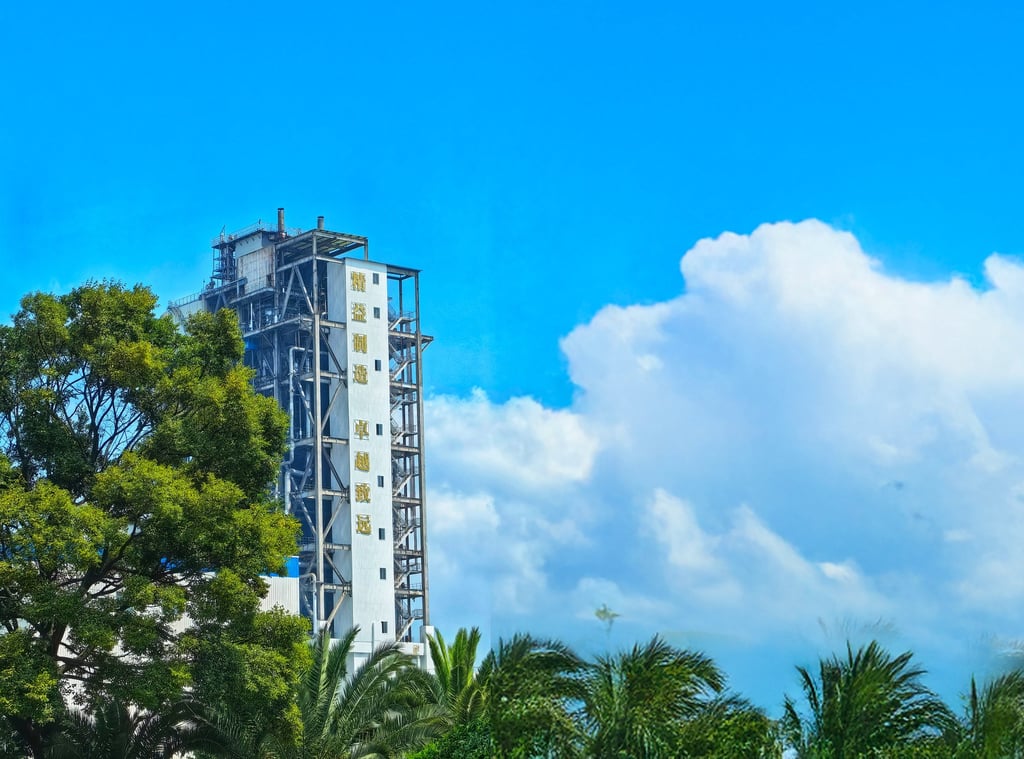
Since December last year, a tie-up in the chemicals sector with fertiliser producer Yuntianhua has led to a real-time optimisation model, which enables precise simulation and prediction of key measures such as temperature and slag viscosity in the processes for manufacturing ammonia. The direct benefits include a significant improvement in operational stability and safety, lower coal consumption, and a projected cut in carbon dioxide emissions of about 20,000 tonnes (22,000 US tons) per year.
“Intelligent transformation in the resources industry is not about tacking on AI apps,” Han says. “It involves redefining the underlying logic of systems through deep-seated integration of value creation and construction.”
To illustrate, she points to the potential of MineHarmony, an Internet of Things operating system – where interconnected devices share data via the internet – which Huawei has introduced to address the challenges of device interoperability. It unifies data formats and protocols to break down barriers, thus allowing the “free flow” of data and supplying high-quality inputs for AI training and corporate decision-making.
In addition, “slicing” network architecture has been developed specifically for use in underground coal mines. It simplifies traditional multi-network set-ups and has already been included in technical guidelines overseen by China’s National Energy Administration.
“When MineHarmony enables equipment to ‘speak’, when network slicing smooths data flow, and when cloud-edge architecture provides flexibility, AI fuelled by sufficiently high-value data can mature into a core productive force, becoming the industry’s brain,” Han says.