How AI technology supports conservation of endangered species
Huawei Technologies’ monitoring systems speed up real-time identification of China’s primates, coastal coral, and Norwegian salmon

Just over 1,400 of one of the world’s rarest primates, the white-headed langur, remain in the wild. The slender, long-tailed animals, which eat leaves, shoots and fruit, and measure about 60cm (2ft) in height, are at risk from hunting, logging and uncontrolled fires caused by land clearance.
Protecting the species – categorised as critically endangered on the International Union for Conservation of Nature’s Red List of Threatened Species – involves tracking where it goes, how it behaves and any changes to its habitat.
Yet this poses a challenge in the karst mountains of Chongzuo in Guangxi autonomous zone, in southern China – the langur’s only natural habitat – because the area’s steep cliffs and dense vegetation, coupled with the animal’s quick movements, make direct observation difficult.
Although cameras deployed across Guangxi Chongzuo White-headed Langur National Nature Reserve capture vast amounts of footage, reviewing the recordings manually requires a huge amount of time and manpower.
Similar problems have slowed down the painstaking weeks-long efforts of conservationists in identifying coral and fish species across reef systems in the coastal waters of eastern China, while in Norway, observers have struggled by themselves to differentiate between native Atlantic salmon and the invasive species threatening their traditional habitats.
However, Huawei Technologies, a global company specialising in information and communication technology infrastructure and smart devices, has been applying its connectivity, cloud computing and AI solutions to a range of social and environmental challenges, including wildlife conservation, through its Tech4Nature initiative.
In 2024, the initiative’s team began working with the Guangxi nature reserve and the China-Asean Artificial Intelligence Computing Center to build a monitoring system that could efficiently process its video footage.
Camera feeds are now transmitted to the reserve’s data centre, where AI models automatically identify and label langurs in real time, with results displayed on a centralised monitoring platform. The impact has been immediate. Up to last month, the system had recorded more than 37,200 langur identifications, giving researchers a far more detailed and continuous view of population size, movement and distribution than manual review allowed.
Blind spots across the reserve have narrowed, and the need for frequent physical patrols – often disruptive in such a sensitive habitat – has been reduced. With more timely and consistent data, managers of the protected areas are now able to react to changes as they occur, rather than providing a delayed response.
Huawei’s technology has helped to speed up the impact of authorities’ policies and legal frameworks to protect the primate. These efforts have led to the project being nationally recognised as part of China’s Mountain-Water initiative.
Other Huawei-backed projects have achieved similar success, with the company developing an AI-powered coral and fish identification and analysis system in partnership with Xiamen University and the Society of Entrepreneurs and Ecology Foundation. The system has identified 60 coral species and 74 fish species with an accuracy of 83 per cent, which has greatly reduced the time required for marine research and monitoring.
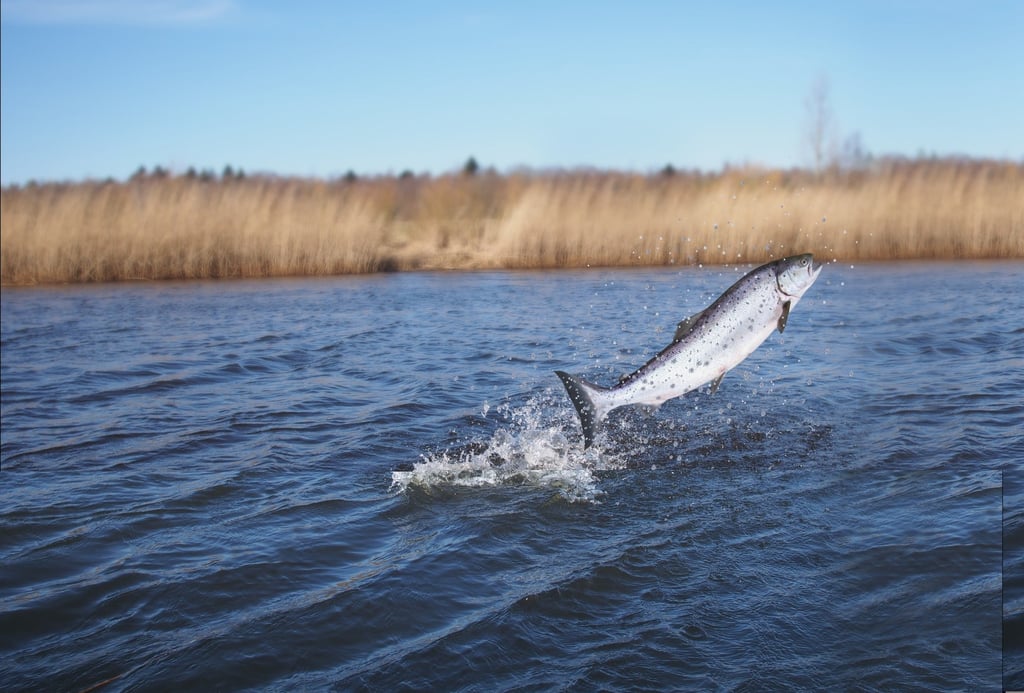
In Norway, the company has helped to power the use of underwater cameras and an AI-enabled filtering system, which can distinguish between native and invasive fish in real time, and have helped identify and capture more than 10,000 invasive salmon to date, across three rivers in the northern part of the country with an accuracy of over 99 per cent.

Its wildlife and habitat conservation projects, dating from 2019, have showcased the use of digital technology for environmental protection. To date, the company has implemented its initiatives across 65 protected areas worldwide, covering forests, wetlands, oceans and deserts. From protecting jaguars in Mexico to Bonelli’s eagles in Spain, its digital tools have enabled efficient monitoring and more precise responses to environmental change.
These projects show how the same technology can be deployed across different environments and repurposed to solve a range of problems. Yet the cloud and AI capabilities of the solutions can also provide the means to accelerate social and economic development in a number of different ways.
The tech solutions which enable data processing for langur conservation also support e-commerce and tourism in Guangxi’s remote villages. Huawei has supported China Mobile Guangxi in expanding digital infrastructure for rural areas and helping local communities build new economic activity around existing cultural assets.
Residents in the village of Buhua, for example, now collectively own e-commerce stores that make it easier to sell the specialty brown sugar that they produce. Online platforms help the village sell to consumers in Chinese cities, including Beijing and Shanghai, and overseas markets such as Japan and South Korea.
New digital tools are also supporting the village’s tourism operations, with an intelligent ticketing system cutting the time for booking rafting activities from 20 minutes to three minutes, and helping to increase local homestay booking rates by 30 per cent.
By shifting focus to environmental management, AI systems are now keeping track of key water quality indicators – such as temperature, acidity and alkalinity, and dissolved oxygen – along the Heishui River, a key tourist attraction where Buhua’s rafting activities take place. This replaces slower, manual inspection methods with continuous monitoring, allowing local authorities to detect anomalies earlier and respond more quickly to potential risks, which supports both the river’s ecological health and the long-term sustainability of the tourism and agricultural activities that depend on it.
Huawei’s projects across Guangxi and beyond China illustrate the powerful role that AI, connectivity and cloud technology can play in supporting policies and initiatives that benefit society.