How AI integration into real-world tasks enhances healthcare and education
Huawei Technologies’ initiatives with universities and hospitals embed technology into everyday academic, clinical and administrative tasks

The growing use of artificial intelligence (AI) in our daily lives has become a constant topic of worldwide conversation. Its most proclaimed everyday benefits of the technology include boosting efficiency, productivity and decision-making, but developing and deploying it is a much more complicated matter.
The next phase of its adoption will be defined not by access to the technology, but by the ability to translate AI capabilities into real-world outcomes. In education and healthcare, institutions are looking at ways to embed AI into their core academic, clinical and administrative functions.
Early on, many organisations typically focused on introducing AI through pilot projects or siloed applications – stand-alone software programs that operate independently. These initiatives showed what AI could do, but also exposed a broader industry issue: technical capability does not automatically become an institutional capability. Real transformation depends on it being embedded into everyday workflows, decision-making processes and broader operational systems.
For Huawei Technologies, a global provider of information and communication technology and smart devices, the next step in its development demands translating raw AI technologies into institutional capabilities that support long-term, sustainable transformation. Two of its recent initiatives – the AI Practice Lab (AIPL) in higher education and the Hospital AI Platform (HAIP) in healthcare – have shown how this systematic approach is being applied to help solve real-world challenges.
Moving from ‘learning AI’ to ‘Discipline + AI’
AI’s impact on higher education extends far beyond computer science and technology-related disciplines. As industries are increasingly embracing its use, universities are having to respond by preparing students who can understand and apply AI within their own professional fields – including engineering, business, law, education or manufacturing.
Traditionally, universities have provided valuable exposure to AI technologies through dedicated courses or stand-alone laboratory environments, but these initiatives are often disconnected from the needs of different disciplines. Now, some universities are looking to integrate AI into their core teaching, practical training, scientific research and innovation activities.
AIPL, which was developed to support this transition, reflects the company’s commitment to systematic innovation in the education industry. Its value lies not only in the construction of an AI laboratory, but in helping universities integrate the new technology’s capabilities into core teaching and learning processes through a “Discipline + AI” educational model.
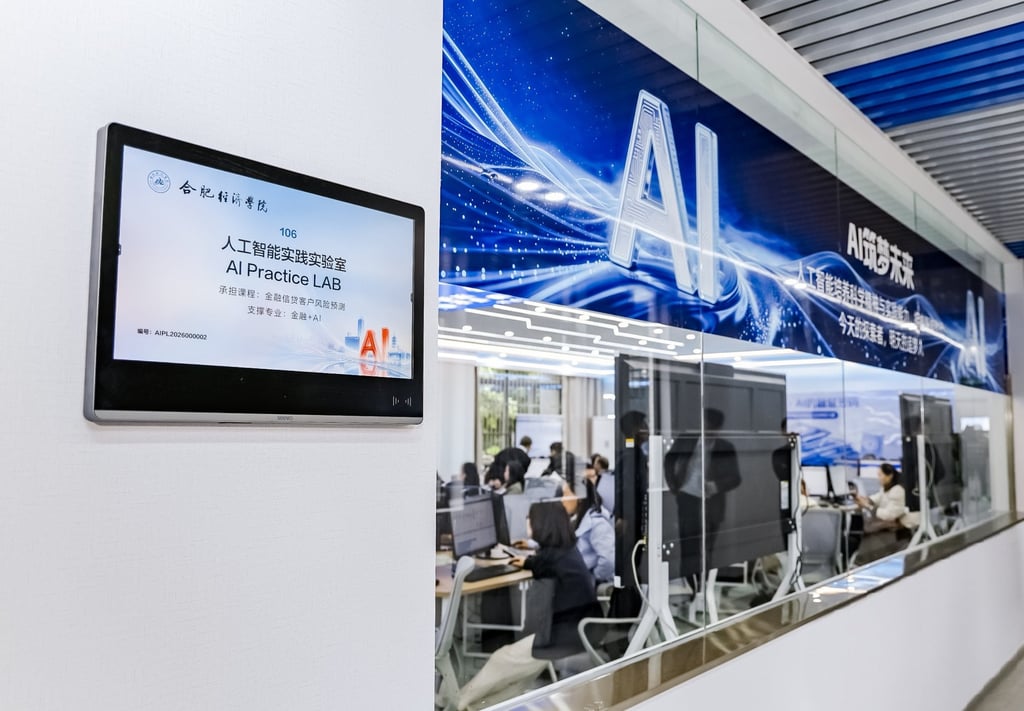
It offers a framework that ensures students acquire foundational AI skills while learning to be applied within discipline-specific teaching, research and practical scenarios, so they are able to learn, use and innovate with AI in the context of their own professional fields.
Rather than simply introducing AI tools to campuses, AIPL enables universities to embed AI into their academic workflows by integrating technology, teaching scenarios and disciplinary needs to transform technical potential into practical educational capability, while supporting the transition from “learning AI” to a “Discipline + AI” educational model.
AIPL was implemented at China’s Beijing Institute of Technology last March, for example, when the university and Huawei jointly launched the world’s first AI Practice Lab showcase. It provides a framework that seamlessly integrates theory, practice and application innovation and has already begun supporting diverse disciplines, including chemistry and chemical engineering, law, economics and management, and education.
The project shows how AI can be integrated into teaching, practical training and research across multiple disciplines, so students can work on real-world problems using data and tools directly relevant to their fields of study.
Similarly, Hefei College of Economics and Applied Sciences, in China’s Anhui province, has also adopted the AIPL model, combining the platform with the university’s academic strengths and real, local-based industry needs, with focal points such as “audit + AI” and “manufacturing + AI” used to create practical, industry-oriented training courses.
Beijing Institute of Technology’s use of AIPL shows its implementation capability across multiple disciplines, while Hefei College of Economics and Applied Sciences highlights the model’s ability to be replicated and adapted to different universities, disciplines and regional industry needs.
Shift towards smart, hospital-wide integration
Healthcare organisations have been experiencing a different, but equally significant stage of AI transformation in recent years, with hospitals adopting AI into areas such as medical imaging, pathology, medical record quality control, scientific research and patient services. These applications have shown clear value in specific scenarios, but also created new challenges as AI expands across departments and workflows.
Many hospitals now face issues such as data fragmentation, independent computing power silos, repeated model development and difficulties in integrating AI processes into clinical and operational workflows. While individual AI applications can address specific problems, they often operate independently, making it difficult to manage and scale capabilities using the new technology across the entire organisation.
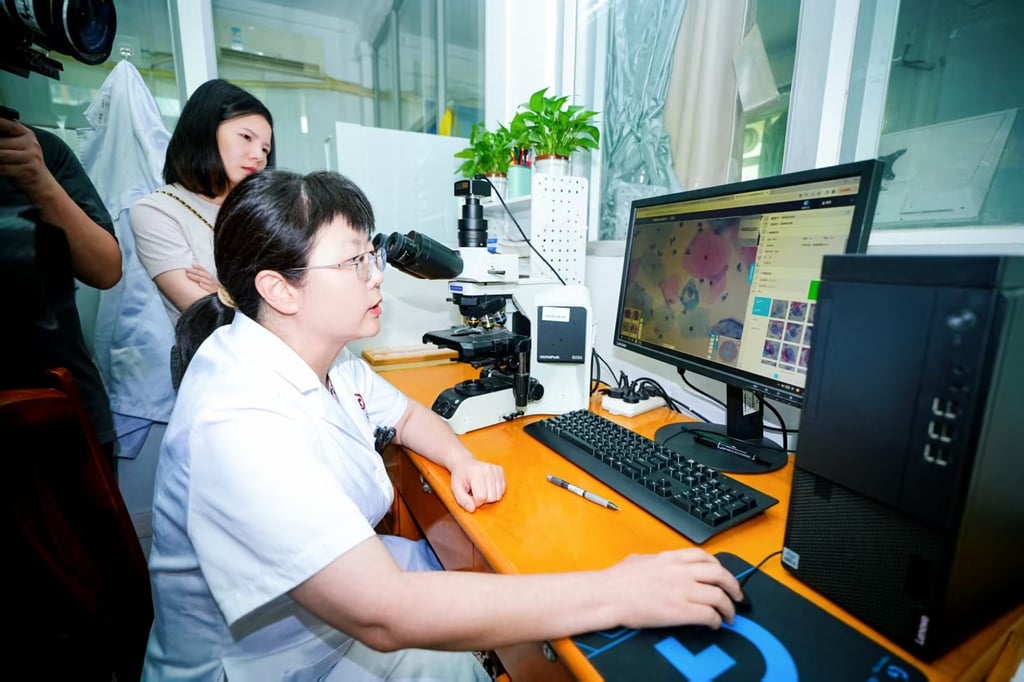
As a result, the focus of hospital AI development is shifting from individual applications to platform-based construction, with the challenge of building a unified foundation that supports the planning, management and operation of the technology across the hospital.
HAIP was developed as an innovative solution for hospital-wide AI. By integrating data, computing power, models and applications, the platform supports the transition from fragmented AI pilots to hospital-wide collaboration and continuous operation. More broadly, HAIP combines information and communication technology infrastructure, AI engineering capabilities and ecosystem collaboration to address real-world implementation challenges.
This approach aims to support four areas: centralised computing resources; reusable data assets; shared model capabilities; and applications integrated into diagnosis, treatment, research, teaching and patient services.
HAIP’s implementation at Nanfang Hospital of Southern Medical University, in Guangdong province, shows how this approach can be applied in practice.
Working with Huawei and its ecosystem partners, the hospital has explored or deployed AI-enabled applications across scenarios, including chronic kidney disease management, perioperative anaesthesia management, pathology-assisted diagnosis, medical record quality control and electronic medical record support. It has also established a smart AI centre to support intelligent agent development.
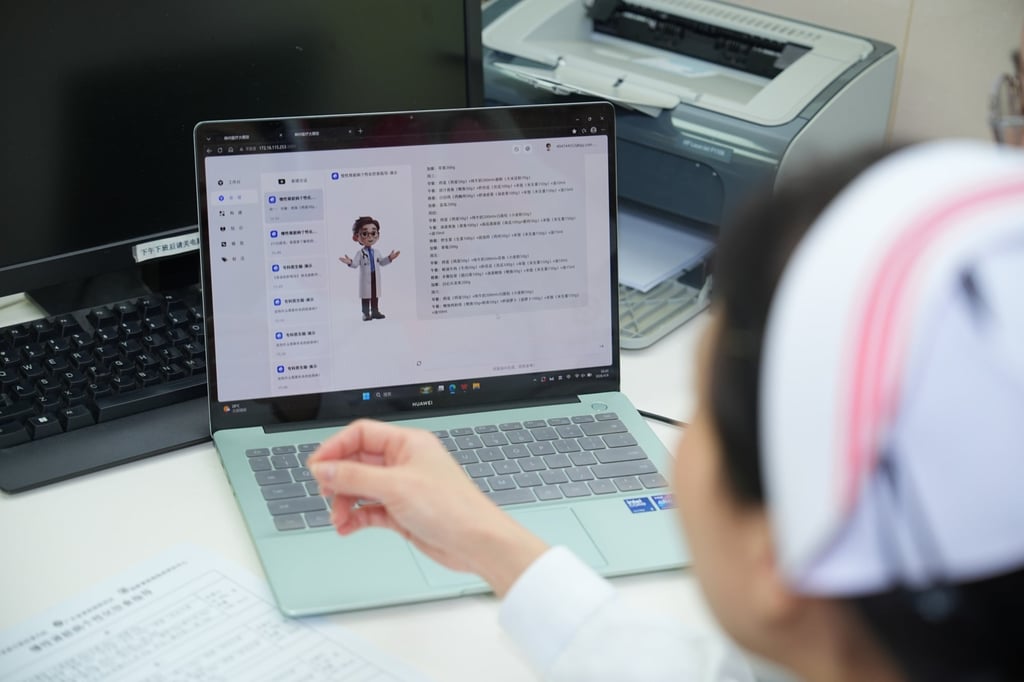
These initiatives, which span clinical diagnosis and treatment, patient services, scientific research and hospital management, show how a unified AI foundation can support multiple operational functions.
The West China Hospital of Sichuan University is also working with Huawei to adopt the platform, highlighting its potential for replication across leading healthcare institutions.
Through AIPL and HAIP, Huawei is showing a consistent vision: AI creates greater value when it is embedded into institutional systems, professional workflows and real-world decision-making processes. By combining ICT infrastructure, AI engineering capabilities, ecosystem collaboration and real-world industry scenarios, the company is helping institutions transform technical potential into practical educational and healthcare capacities.
In doing so, the company is supporting a vital transition by moving organisations away from isolated AI experiments towards the implementation of the technology involving a systematic, organisation-wide capability, where it is integrated across core institutional functions.