Creatives show how smartphones can tell our life story – in one photo
Judges pick final 100 images for Huawei Xmage Awards 2025 Ceremony and Annual Exhibition in Paris from more than 743,000 international entries

On a cold November evening in Paris, a steady flow of visitors entered the historic iron-and-glass dome of the Grand Palais, happy to swap the autumn chill outdoors for the enticing warm glow inside of 100 illuminated photographs – all taken by smartphone users.
They were attending the opening of the Huawei Xmage Awards 2025 Ceremony and Annual Exhibition, featuring the best photos chosen from more than 743,000 entries in this year’s competition as “Xmage 100”, which was focused on visual immersion under the theme, “The World, You and Me”.
The event, organised by Huawei Technologies, the global company specialising in information and communication technology infrastructure and smart devices, was co-presented this year with Paris Photo, one of the world’s most influential platforms for contemporary photography founded in 1997. Up to 100,000 people are expected to visit the annual exhibition.
Three Grand Prize winners were selected this year from among the many submissions made by people from 78 different countries and regions. All of the works on display saw creatives reimagine the relationship between individuals through the use of a single photograph to show how they perceive, interpret and retell the story of their surroundings. The images were grouped, not into traditional categories, but three distinct areas.
One theme, “I Capture, Therefore I Am”, showcased the shortlisted images and videos to form a visual portrait of the year 2025. A second, “The Constructed, The Perceived”, revealed images showing each photographer’s nuanced bias, which challenged visitors to discover the truth, while the last, “In Their Own Words”, saw creators’ offer their own perspectives, emotional connections and experiences to ordinary everyday moments.
The exhibition’s themes created the layered experience that Huawei set out to build – a progression from observation to interpretation to storytelling – showing how images taken by smartphones can gain nuance and meaning within an international cultural setting.
“We can use the power of technology and images to better perceive the world, and more gently, to see one another,” Kevin Ho, CEO of Huawei Consumer Business Group, said.
The Beaux-Arts-style Grand Palais, built for the 1900 Universal Exhibition, has become one of the French capital’s major venues for hosting art exhibitions and cultural events.
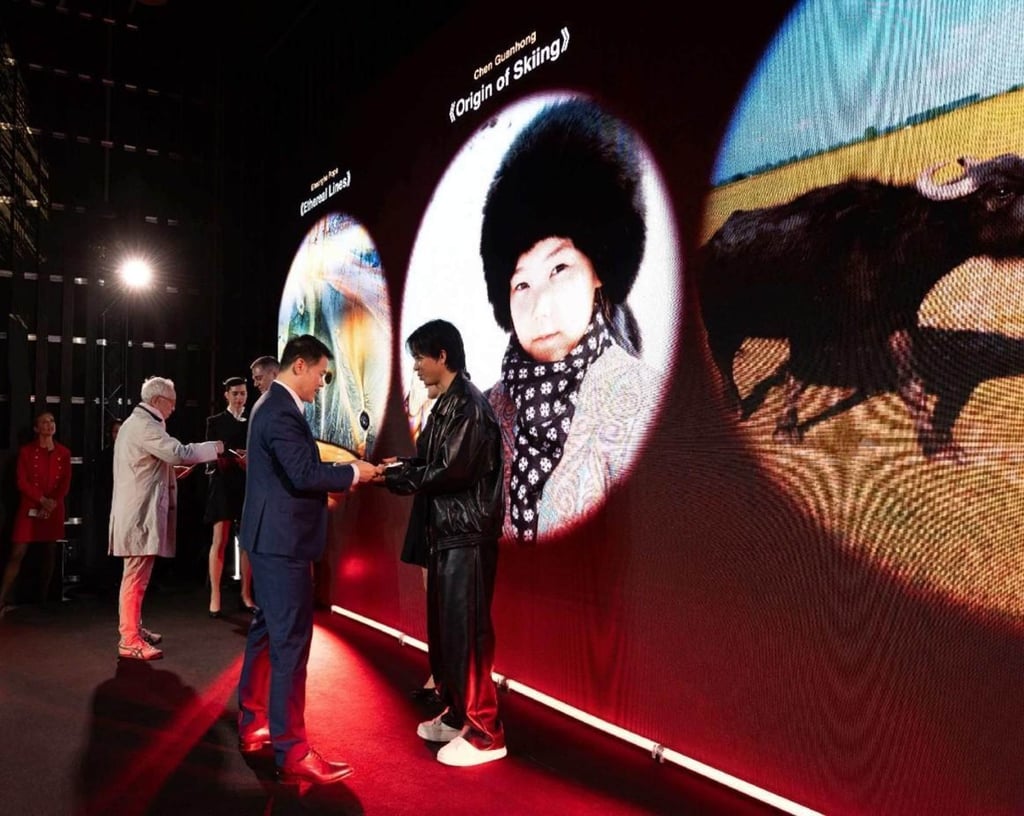
This year was the third time Huawei’s competition has been staged there – following on from 2018 and 2019 – as part of Paris Photo.
The works on show at the two earlier events reflected the company’s global imaging contests to reinvent itself from an engineering-led telecoms company into a tech and lifestyle brand. It marked an early attempt to bring smartphone photography into an international art context and into conversations traditionally shaped by professional practices.
The awards’ return this year under a new brand, Xmage, which was launched in 2022, represents the company’s focus towards advanced mobile imaging technology, which combines refined lenses, powerful sensors and state-of-the-art processing features, including AI scene recognition.
The huge number of entries submitted this year reflects just how widely smartphones are being used to create images in different communities.
A judging panel, comprising photographers, critics and curators, assessed the strengths of the entrants’ works, not only on their technical execution but also the interpretive strength they carried – whether they conveyed atmosphere, human connection, environmental awareness or cultural context.
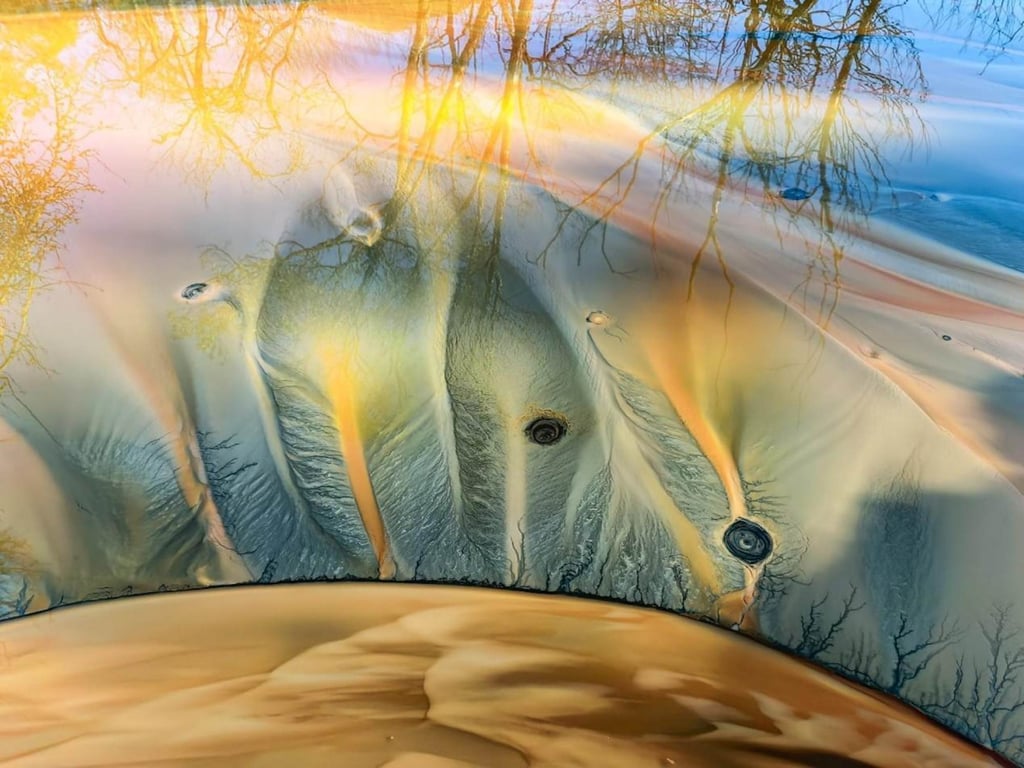
Among the Grand Prize winners was “Ethereal Lines”, by Romanian entrant Gheorghe Popa, which reflects the story of Geamana village in his home country. The village was once situated in a valley, but gradually became submerged 90 metres below the surface of a toxic lake created by slurry dumped during decades of copper mining and processing.
The surreal shapes and textures formed on the surface of the water look almost beautiful, while hiding the chemicals that lurk beneath. “At first glance, the photograph seduces the viewer with its beauty, only to reveal its unsettling truth upon reading the description, implicating us in that moment of aesthetic pleasure,” Nichole Fernandez, one of the judges who is a visual sociologist at the University of Edinburgh, said.
Another Grand Prize winner, titled “New Life”, by Mehmet Emin Corus from Turkey, shows a farmer carrying a newborn calf at dusk, with the mother following closely behind. The simple yet striking image captures an ordinary moment which shows the beginning of life, maternal instincts and interdependence in farmland.
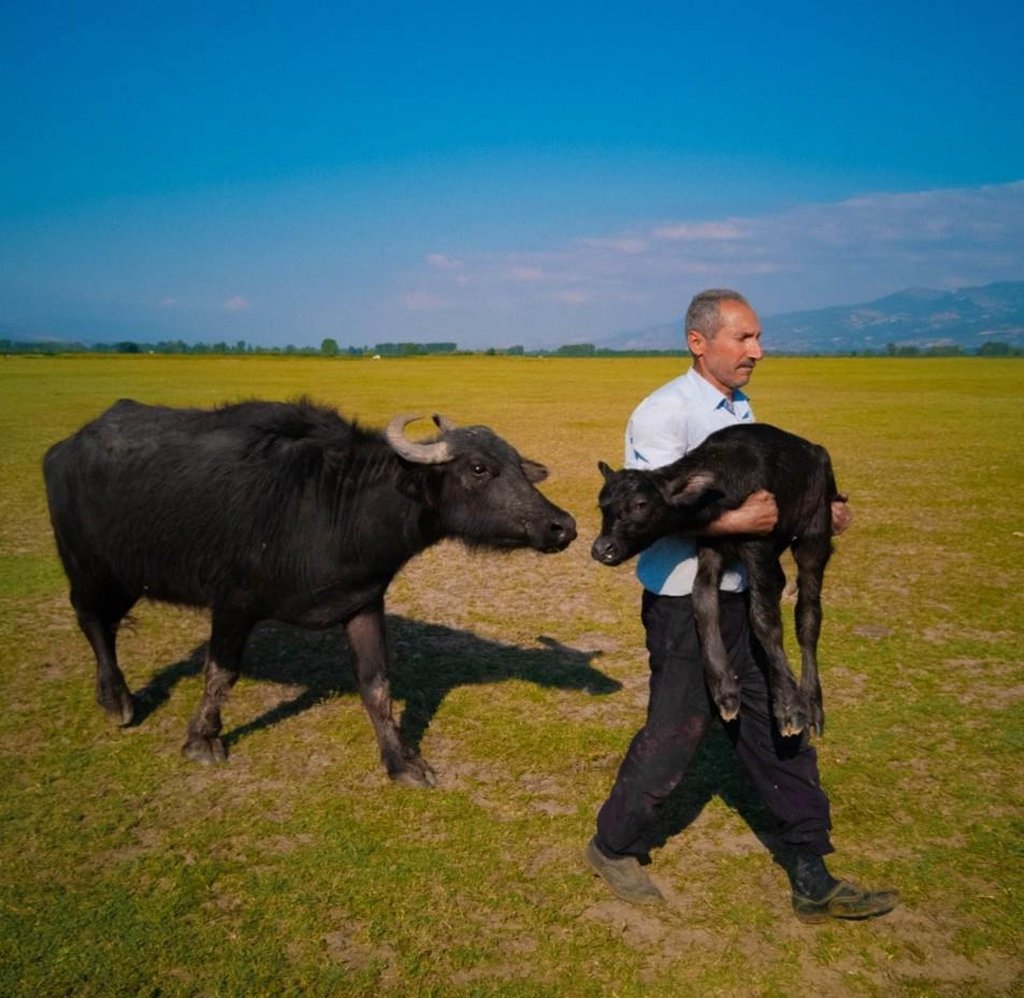
“Sometimes, the simplest photographic language can convey the most vivid emotions,” Chen Jie, another of the judges who is a documentary photographer, said.
The third Grand Prize winner, titled “Origin of Skiing”, was taken in China’s Xinjiang Uygur autonomous region by AC Chen Guanhong. He took the photo of a young girl, wearing traditional clothing, as part of a series of images while travelling in the area’s Altay prefecture. She is shown in a confident and graceful posture, holding a traditional wood ski pole – part of the region’s intangible heritage, which also includes wooden skis (called chana) that have been passed down for generations.
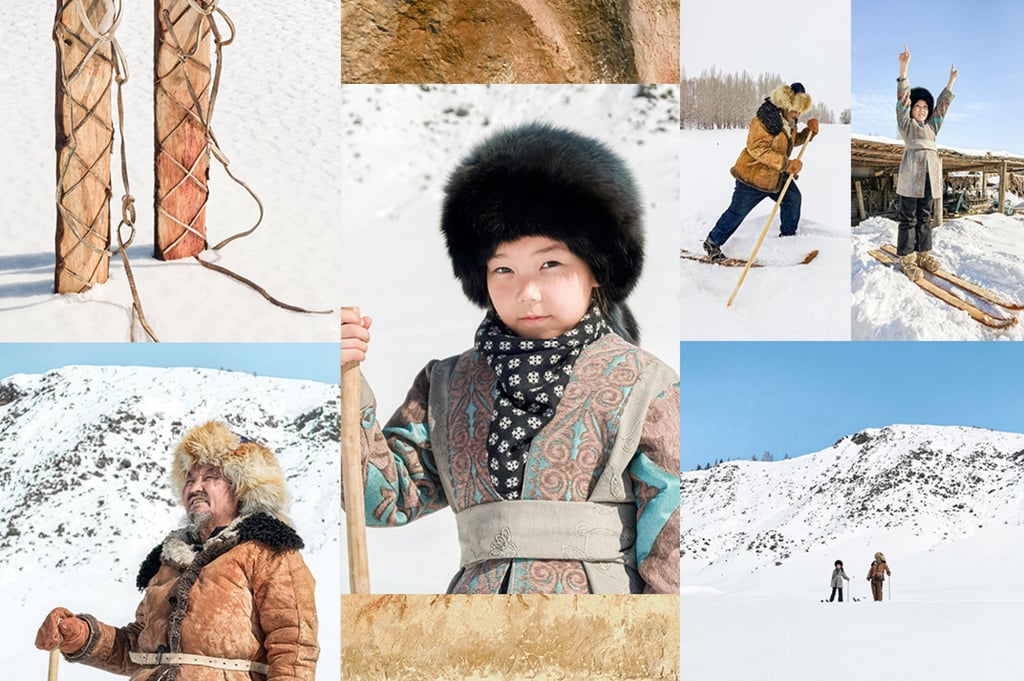
“The photographer has successfully exercised restraint, not imposing too much of his own feelings onto the subject, but instead accurately and appropriately capturing her inner essence and grace with precision,” another judge, Wang Chuan, a professor and doctoral supervisor at Beijing’s Central Academy of Fine Arts, said.