The future of medical education: How CU medicine is rewiring training for the 21st century
CU Medicine is now preparing the next generation of health professionals to use AI responsibly and work in teams

Becoming a doctor has always been one of the most demanding paths in higher education. Traditionally, the focus was singular: mastering the vast volumes of scientific and clinical knowledge required to treat the human body.
However, as healthcare undergoes a seismic shift - driven by rapid technological advances and the rising complexity of chronic diseases - memorisation is no longer sufficient. Today’s physicians must be adaptable, digitally fluent, and skilled at navigating complex team dynamics.
In response to this changing landscape, the Faculty of Medicine at the Chinese University of Hong Kong (CU Medicine) is fundamentally rethinking its training model. By advancing medical education through the integration of artificial intelligence (AI) literacy and Interprofessional Education (IPE), the university aims to prepare a new generation of physicians to work safely and ethically in an AI-enabled environment while delivering coordinated care alongside other professionals.
To understand how CU Medicine is building this new educational model in Asia, Young Post spoke with three key architects of this curriculum transformation.
A vision for modern practice
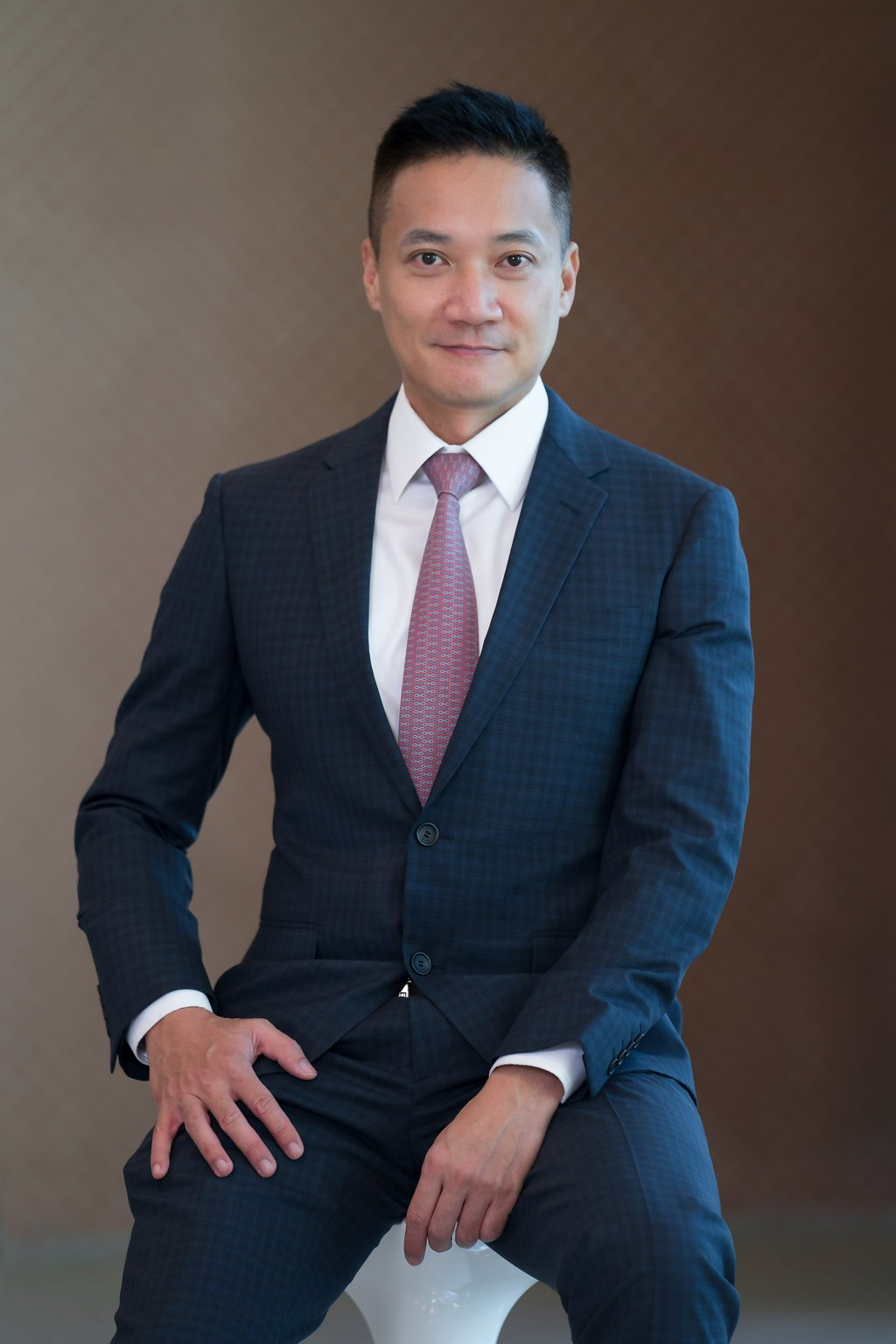
While the tools of the trade are changing, the core mission remains steadfast. Professor Samuel Wong Yeung-shan, Associate Dean (Education), explained that the university is evolving to meet global standards.
“Our fundamental philosophy remains unchanged: to cultivate compassionate, ethical, and competent doctors,” Wong said. “However, the tools and environments our students will work in are evolving. If you look at major medical schools around the world, the consensus is clear: we must build upon our strong scientific foundations by bringing the realities of modern practice into the classroom.”
Wong clarified that the school is not starting from scratch but rather evolving its history. “At CU Medicine, we are purposefully advancing medical education by integrating two key elements. First, we are embedding AI literacy into the existing curriculum. Second, we are strengthening interprofessional collaboration. Our goal is to cultivate medical leaders who are not only competent in the AI era but also skilled at working seamlessly with the entire healthcare team to deliver the best possible care.”
Breaking the “silos” through IPE
Historically, medical, nursing, and pharmacy students were trained in separate spheres. Today, that “lone wolf” model is being replaced by Interprofessional Education (IPE). Professor Chow Ka-ming, Assistant Dean of IPE, noted that the World Health Organization views IPE as a necessary step to achieve collaborative practice and improve patient safety.
“Modern patient care is highly complex,” Chow explained. “At CU Medicine, our medical students learn alongside peers from nursing, pharmacy, Chinese medicine, public health, and biomedical sciences. When our students understand the roles, languages, and perspectives of other healthcare professionals early in their training, it eliminates hierarchical friction and enhances collaborations in future clinical settings.”
This collaborative practice is essential for handling modern healthcare problems. Chow noted that IPE is integrated as early as the Year 1 curriculum. “Introducing IPE early helps students build relationships and a shared understanding of roles and responsibilities from the start. It improves communication and teamwork habits early on, reduces professional ‘silos,’ and prepares students to collaborate more effectively in clinical settings later.”
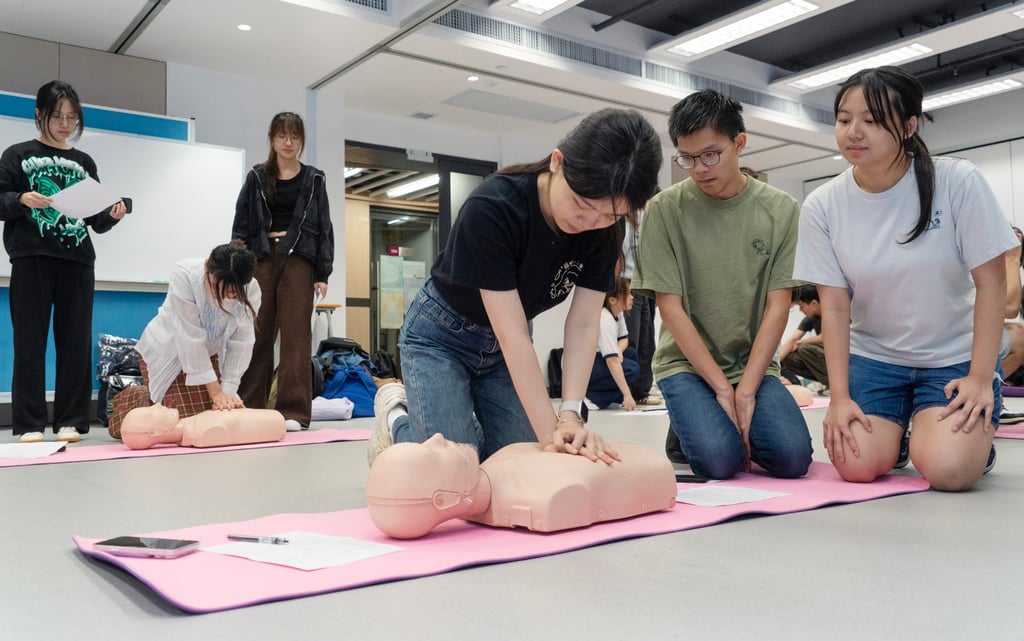
The long-term vision is to sustain this teamwork throughout the entire degree. “The long-term plan for IPE is integration across all study years to reinforce teamwork skills and allow students to build on growing clinical knowledge,” Chow added.
AI: Demystifying the defining technology
If IPE is about working with people, the AI literacy initiative is about mastering the defining technology of our time. Dr Wong Wai-tat, Co-Chair of the Task Force on AI in the Medical Curriculum, believes AI is fundamentally changing the nature of clinical work.
CU Medicine uses a dual approach: using AI to learn and learning AI directly. For the former, students engage with “teacher-guided” AI platforms in which virtual teachers ask “why” or “what if” to challenge reasoning. They also use “student self-determined” commercial platforms, chosen with the CUHK Medical Library, for trustworthy content and self-testing.
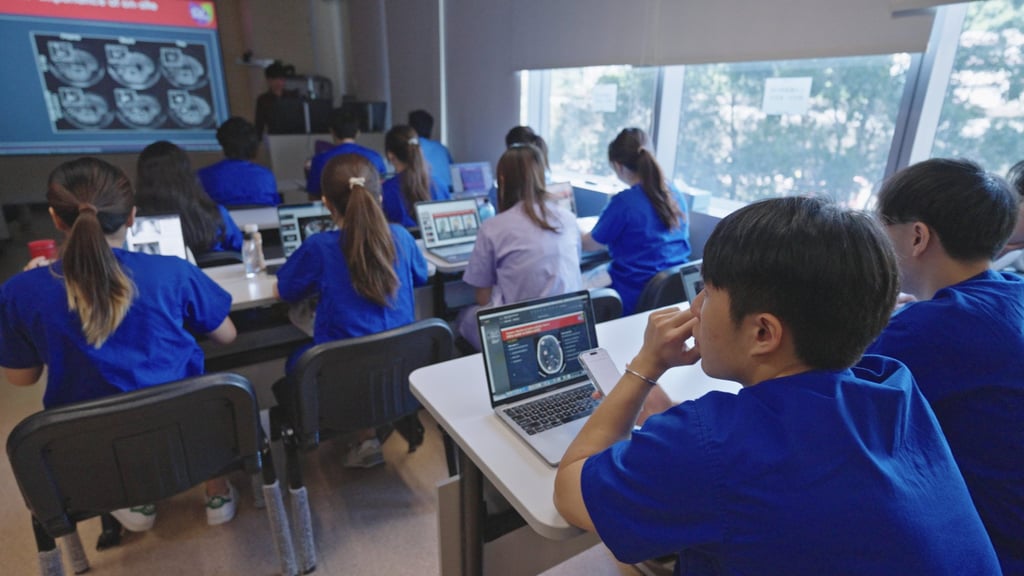
Crucially, Dr Wong stressed that students must treat AI as a collaborative partner, not an authority. “Critical thinking thrives when students actively interrogate AI’s reasoning,” he said. “By alternating between teacher-guided case discussions and self-directed inquiries, they preserve intellectual autonomy.”
To navigate challenges such as bias and privacy concerns, CU Medicine is introducing a scaffolded curriculum called AI Professionalism in Medicine. Students begin by demystifying how generative AI works - and fails - before building prompt engineering skills. “Subsequent stages focus on co-constructing critical judgment and holding difficult ethical discussions on accountability,” Dr Wong explained. “By the end, we expect students can confidently answer questions from patients about AI’s role in care, while preserving their own clinical judgment.”
The new standard
For students aspiring to enter medicine, the message is clear: the 21st century doctor must be as comfortable with a data set as they are with a stethoscope.
The “rewired” curriculum means that while a rigorous scientific foundation remains essential, students must now also master mandatory collaboration and ethical AI practice. By combining timeless values of compassion with the cutting-edge demands of technology, CU Medicine is ensuring its graduates are ready for a future of healthcare that has already arrived.