Stop admiring, start speaking: Turn stage fright into stage presence
Playful performance and fast-thinking drills help S1 to S5 students build fluency, confidence and real-world speaking skills through immersive group activities

Do you admire your classmates who speak English with clarity, confidence and ease and wish you could be one of them? “Reader’s Theatre” and “Impromptu Speaking” turn that wish into action. Through playful performance, targeted speaking drills, and structured, supportive after-school practice, you’ll build fluency, quick thinking, and the real-world confidence to become a compelling communicator in English.
Beyond the fun, these immersive programmes, designed for S1 to S5 students, equip students with practical, lifelong skills.
“We aim to build students’ oral proficiency and help them speak with confidence, and that confidence translates into real-life benefits – from university interviews to workplace presentations – because students learn to respond on the spot with logic, structure, and substance,” said Margaret Leung, chairman of the English-Speaking Union Hong Kong (ESUHK), which organised and delivered these programmes, supported by the Standing Committee on Language Education and Research (SCOLAR) and funded by the Language Fund.
ESUHK has run a variety of programmes supported by SCOLAR under the “English-in-Action” banner of the “English Alliance” initiative at local schools for nearly two decades, benefiting thousands of students. “There have been over a hundred schools on the waiting list,” she added.
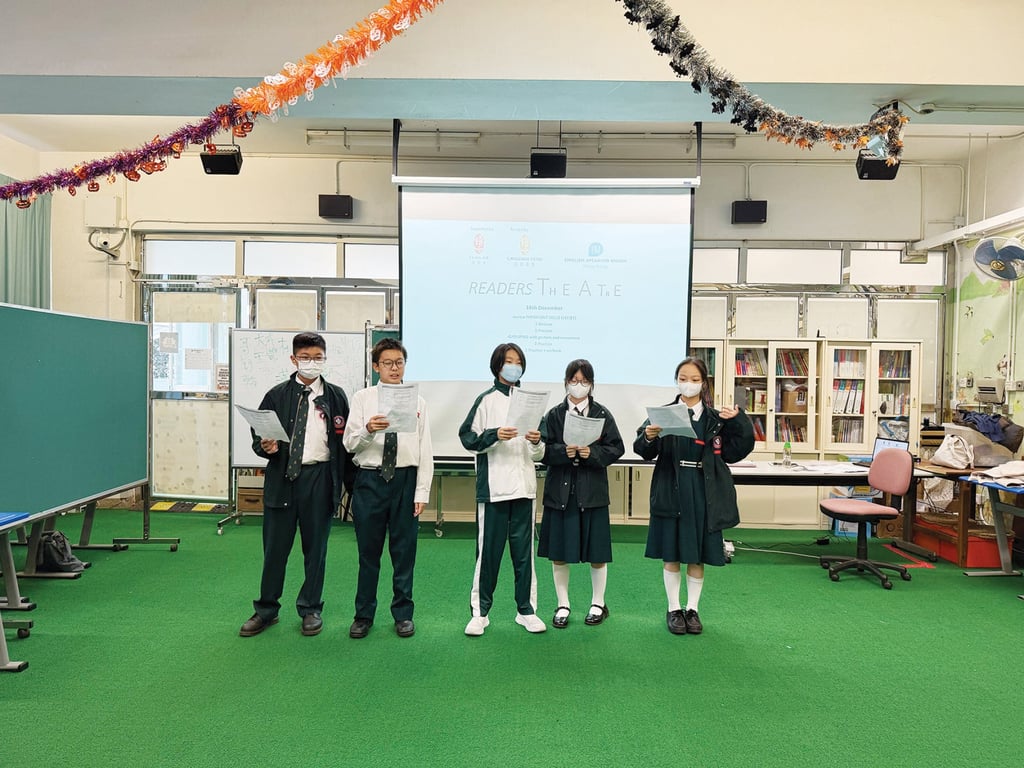
Lively, joyful learning
Held by ESUHK since 2019, “Reader’s Theatre” is a four-hour, student-centred interactive workshop delivered in two sessions, designed to help students build a solid foundation in speaking clearly and confidently. “Students learn voice, pacing, and character work so they can deliver text with clarity and feeling,” Leung said.
What sets “Reader’s Theatre” apart is its lively, energetic, and supportive classroom atmosphere. “We teach them practical oral skills, and we do it by turning language learning into performance. By reframing lessons as playful, low-pressure activities, the course removes the fear of speaking and sparks genuine interest in using English,” she added. Lessons are often full of laughter, and many students leave with long-lasting, fond memories.
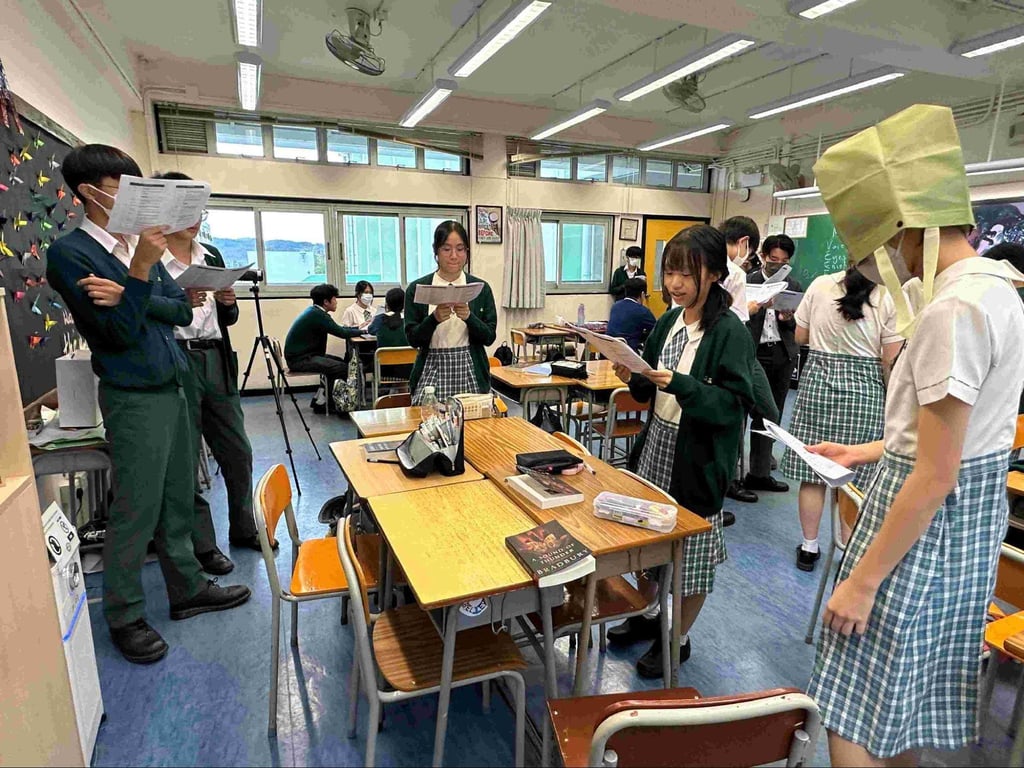
At the heart of the course is a creative process: “We take storybooks or fiction, particularly contemporary detective novels, and rewrite them into scripts,” Leung said.
The class splits into small groups; each student takes a part and practises their voice, body language, eye contact and gestures. “It truly feels like putting on a play: students use props, act out scenes, and learn English through performance, so language becomes living, contextualised, and memorable,” Leung explained.
“Reader’s Theatre” builds durable, practical skills. ESUHK aims for lasting takeaways – breathing, pausing, projection, eye contact and how to express feeling and meaning – alongside core language work in pronunciation, intonation and vocabulary. Students practise shaping lively dialogues, delivering lines with clarity, and using gestures and facial expressions to convey nuance. The course also strengthens teamwork, rehearsal discipline, and the ability to interpret text for an audience, turning reading into confident spoken communication.
“Upon completion, every student receives a copy of the original book so they can read the whole story at home,” said Leung, explaining that this extends learning beyond the classroom.
Speak confidently without a script
“Impromptu Speaking”, which debuted in 2023, meets a clear and urgent need: many of life’s speaking moments are sudden, so students must learn to respond quickly and coherently. The course trains students to think on their feet and communicate with clarity and purpose, bridging classroom practice and real-world demands.
“In ‘Impromptu Speaking’, students practise quick organisation, example-driven development, and concise wrap-ups so they can produce meaningful, structured responses under pressure,” Leung said.
It combines technical instruction on structure and content with repeated, low-stakes practice to develop both substance and spontaneity. “Students also need to read extensively on a broad range of topics so that they can draw on their general knowledge anytime,” she emphasised.
This training differs from scripted public speaking classes: it emphasises speed, structure and adaptability. Lessons focus on short, focused tasks – organising ideas around a theme, giving concrete examples and wrapping up within tight time limits. Teachers deliberately simulate unexpected speaking moments so learners practise under realistic constraints and build reliable habits.
Leung described a deliberately supportive and energetic classroom vibe: “At first students are nervous and shy, so we start with warm-up exercises and icebreakers – tongue twisters and pronunciation drills – to help them loosen up and stop worrying about looking silly.” As students practise together, fluency and self-assurance grow through repeated exposure and feedback.
Students leave “Impromptu Speaking” with a practical toolkit: rapid idea mapping, a thesis and a supporting structure, concise conclusions, and core performance skills – breathing, pausing, projection, and eye contact – combined with pronunciation, intonation, and precise vocabulary. “They learn to structure ideas so that within three minutes they can form a coherent speech and say what they want to say,” Leung noted. The result is quick thinking with substance, structure, and logical flow.
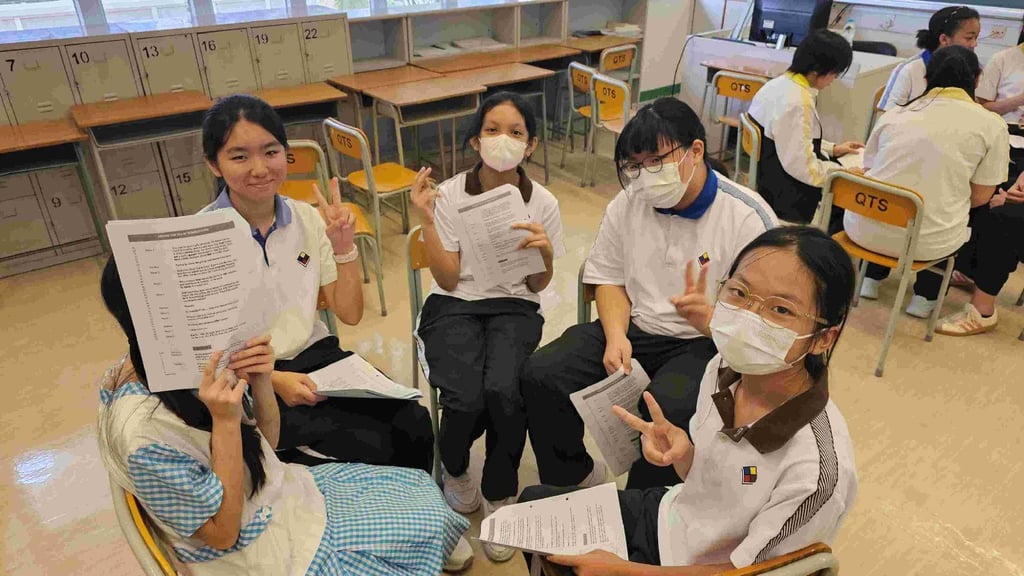
By the end of either programme, learners report feeling less afraid and more ready to speak up – not just in class, but in life. These abilities matter long after school: on unexpected occasions, we all need public speaking skills.
“You must think quickly and be well organised. Whether in university admissions interviews, job interviews, or workplace meetings, graduates will face moments when there’s no time to Google an answer – they must respond on the spot,” Leung said.
Both “Reader’s Theatre” and “Impromptu Speaking” train students to do exactly that, boosting employability, leadership potential, and everyday confidence. If you want to stop admiring confident speakers and start becoming one, these programmes are designed to get you there.
Outstanding efforts are recognised: “At year’s end we invite external adjudicators to select the best speakers and the best team, and we present awards at our annual dinner with a distinguished speaker – a lively celebration that reinforces achievement and motivates continued growth,” Leung said.
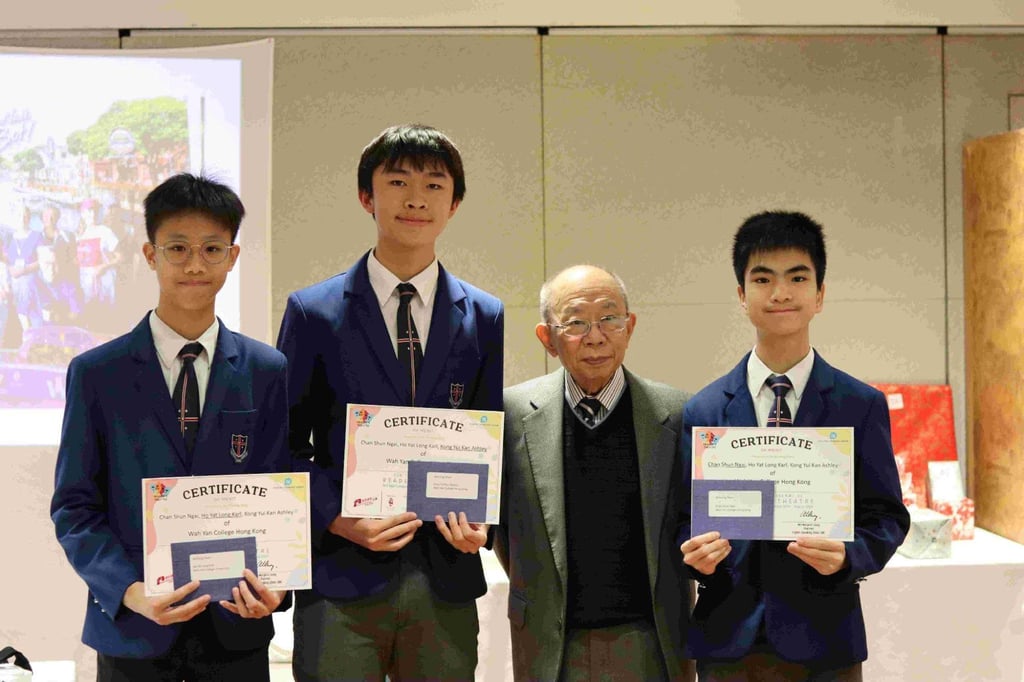
ESUHK’s 20 years’ collaboration with SCOLAR
The English-Speaking Union (Hong Kong) was established in 2001 as an independent, non-profit organisation with the mission to promote local and international understanding and friendship through the wider use of the English language.
For twenty years, ESUHK has delivered a range of programmes for Hong Kong students, supported by SCOLAR and funded by the Language Fund. These have included the “English-In-Action” initiative, such as debate training led by the ESU UK Debate Squad, whose visiting debaters ran workshops in local schools. “They talked the local students through how to structure and organise their arguments,” Leung said.

The English-Speaking Union (HK) can be contacted at:
Email: [email protected]
Website: www.esuhk.org
Facebook: @English-Speaking Union Hong Kong | @esu.hk.1
Instagram: @esu.hk.1