Hong Kong Science Fair partners with Hong Kong Council for Testing and Certification to offer special award at 2024-25 event
Winning projects stood out for applying relevant tests to validate specific functions and performance, the judges said

As global demand rises for high-quality, safe products and services, testing and certification (T&C) have become indispensable tools for ensuring compliance with international standards. More than that, testing fuels innovation – providing a structured way for inventors to validate their ideas throughout every stage of research and development. It’s where creativity meets credibility.
To nurture this mindset among secondary school students, the Hong Kong Council for Testing and Certification (HKCTC) acted as the strategic partner and established the “HKCTC Testing and Certification Special Award” for the secondary school section at the Fourth Hong Kong Science Fair, held in late June 2025.
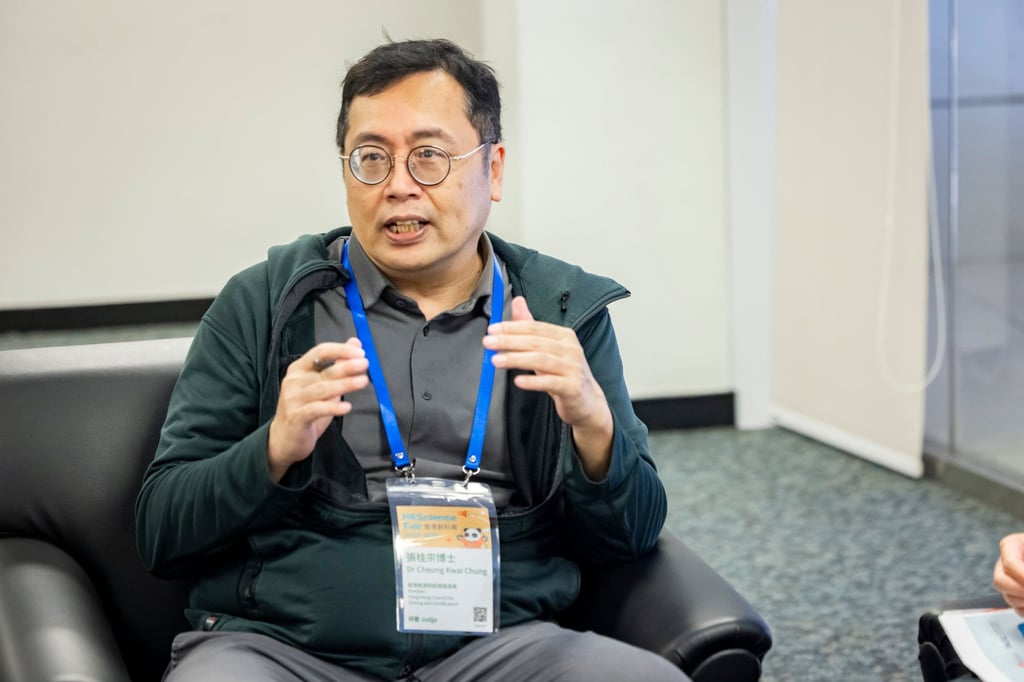
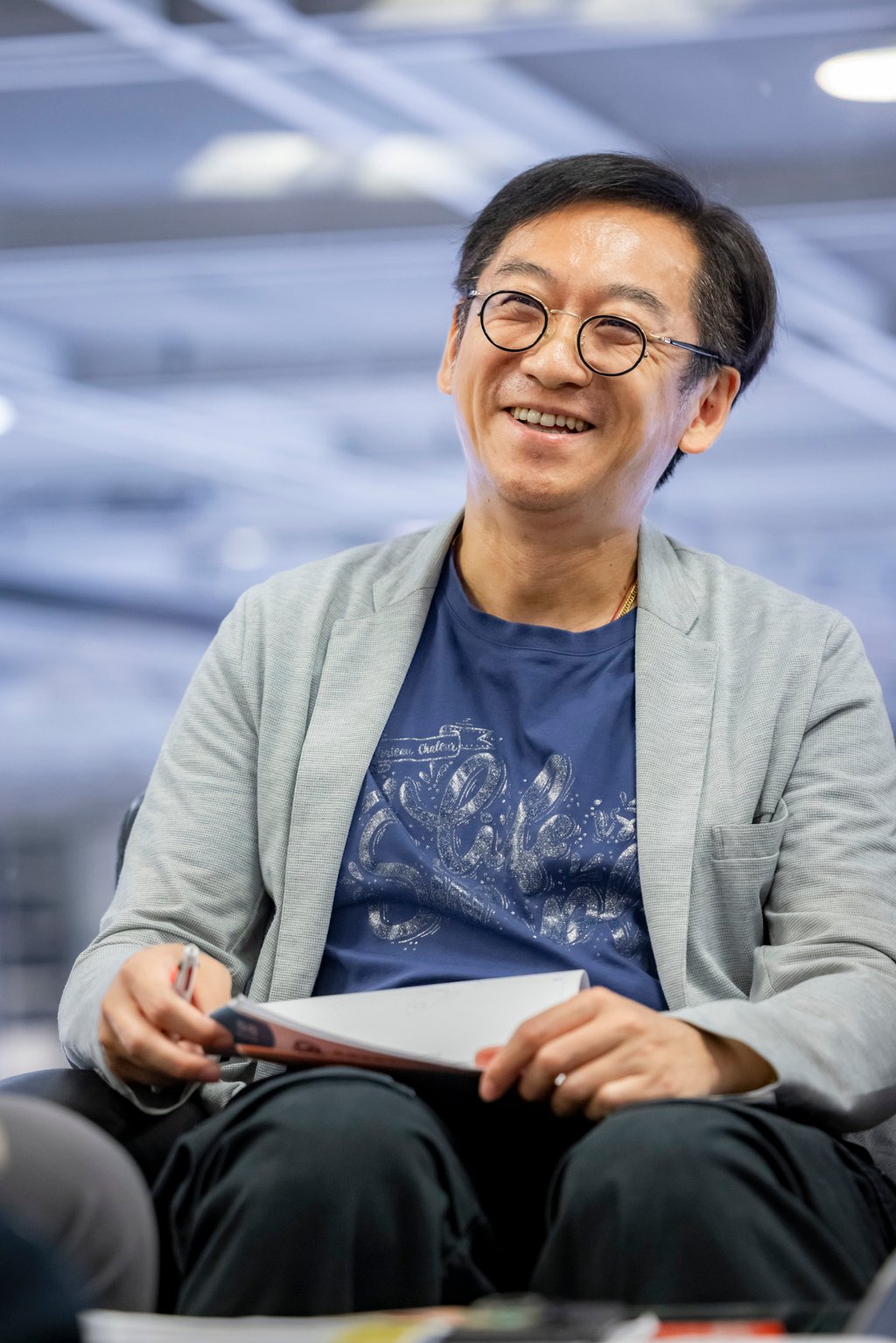
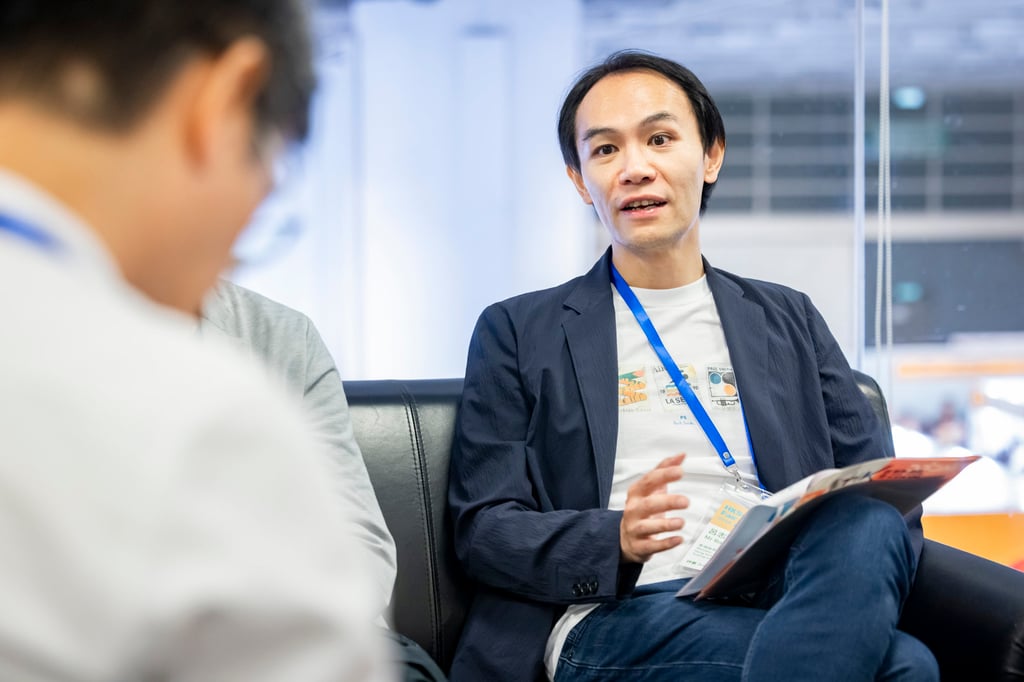
Following a highly competitive initial round of assessments, ten finalist teams were selected to showcase their projects to a judging panel comprising HKCTC members Dr Cheung Kwai-chung, Dr Lesly Lam and Robert Lui. The winning projects stood out for applying relevant tests to validate specific functions and performance.
“Other than applying extensive tests on the product, doing the right tests is far more important, given that time and resources cannot be unlimited in the real world,” the panel said.
Gold Award
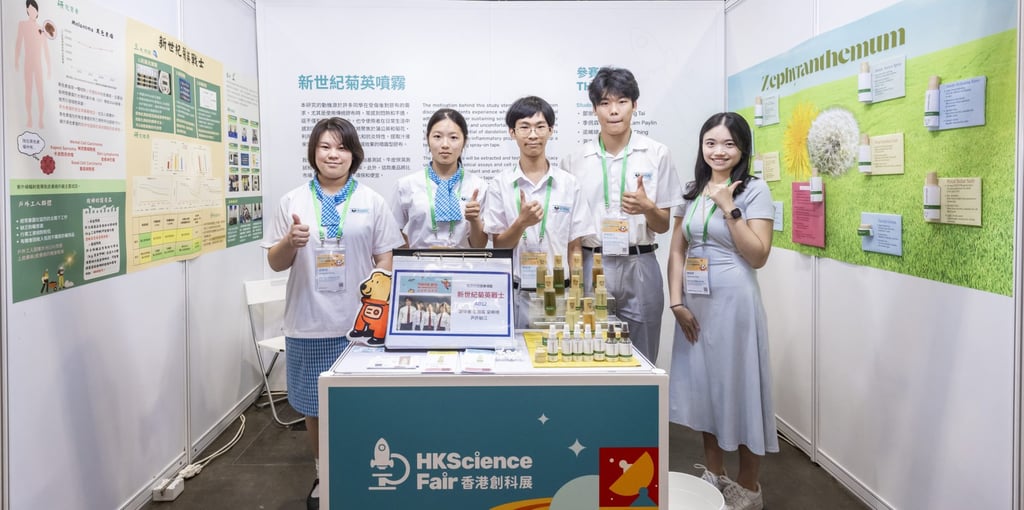
Project: 新世紀菊英噴霧
Queen Elizabeth School Old Students’ Association Secondary School: Cheng Wing-tai, Kwai Pui-lam Paylin, Leung Hei-ching, Yin Xu-yu Jiang
This eco-conscious sun protection product was designed with outdoor workers in mind. Using all-natural and affordable ingredients, including chrysanthemum and dandelion with proven antioxidant and anti-inflammatory properties, the team created the entire skincare product line.
The panel commended the team for their thorough testing, smart packaging design and engaging drama in their presentation. Team member Paylin Kwai shared, “To confirm the antioxidant and anti-inflammatory properties of our ingredients, we performed DPPH and ABTS tests three times, in line with international standards.”
The team cherished the opportunity to develop a comprehensive range of products based on their scientific findings. “We built everything from scratch and encouraged visitors to try the products. By pitching our ideas, we gained valuable feedback and insights into improving the product from a user’s perspective,” she added. “This competition has been an immersive experience, allowing us to explore something new, like the marketing potential of our inventions.”
Silver Award
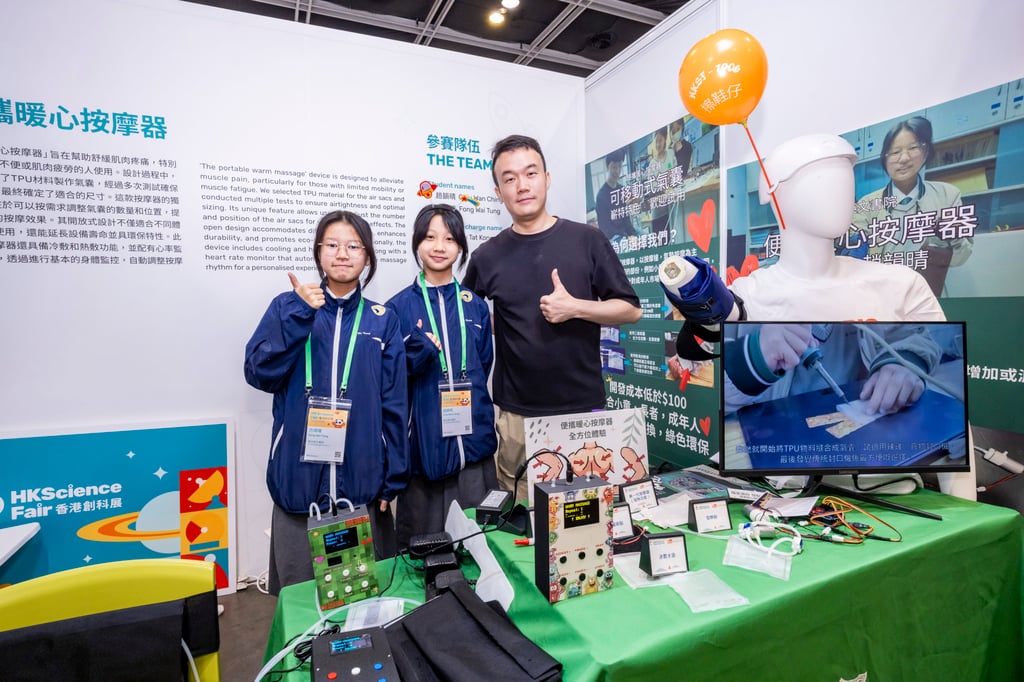
Project: 便攜暖心按摩器
Mu Kuang English School: Chiu Wan-ching, Fong Wai-tung
The team members observed that most massage devices currently available on the market are prohibitively expensive for low-income households. Through in-depth research and creative thinking, they developed a versatile, low-cost portable alternative.
To ensure safety and quality, every component in their massage and temperature-control device underwent meticulous testing multiple times. Their primary focus was on tensile strength, fire resistance and potential allergy concerns on nearly every component of the device. The team’s attention to detail left a strong impression on the judging panel.
“One hurdle was perfecting the temperature for sealing the air sacs,” said Fong Wai-tung. “After many trials, we got it right. Product safety remains our top priority, especially for low-income families. These well-designed and rigorously tested components make the device’s open structure and multi-air-sac design highly adaptable to different body types and massage preferences.”
“Based on the panel’s feedback, we’ll further refine the design by making it smaller and adding a strap so that the users can get a massage while on the go.”
“We were thrilled to receive encouraging comments, especially from senior citizens when we were carrying out trial use in the community,” added teammate Chiu Wan-ching. “They appreciated its performance and portability compared to bulkier, costlier alternatives.”
Bronze Award
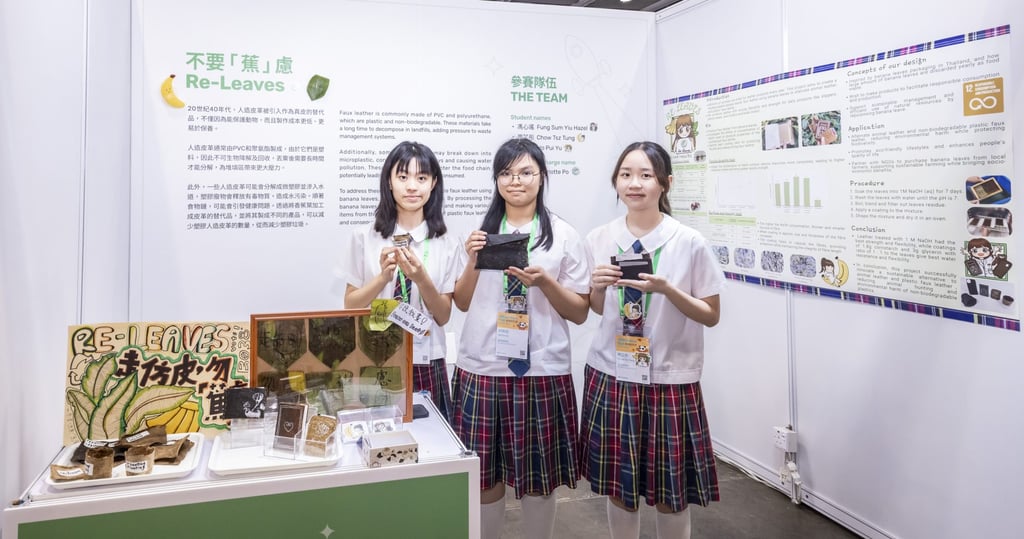
Project: Re-Leaves
St Paul’s Convent School: Chow Tsz-tung, Fung Sum-yiu Hazel, Ho Pui-yu
Concerned about the mounting landfill crisis, this team developed an eco-friendly alternative to plastic-based faux leather using upcycled banana leaves. Their selection followed extensive fibre content testing across multiple materials.
“We ran targeted tests to measure water resistance, tensile strength, folding endurance and surface morphology – just like real product developers,” said Ho Pui-yu. “Setting the right additive-to-leaf ratio was challenging. We discovered that a 1:1 ratio was optimal for suppleness and durability.”
Hazel Fung shared the team’s commitment to methodical testing, explaining that the entire project took nearly a year. “We paced ourselves and presented our data with multiple graphs to support our findings and reasoning. That approach made all the difference,” she said.
The team believed that if their invention went into mass production, the overall cost would be relatively low, with most expenses directed towards logistics and transport.