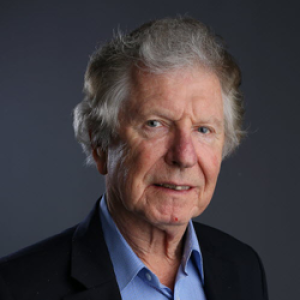
What lessons can Hong Kong really draw from Lee Kuan Yew's Singapore?
Philip Bowring says Hong Kong and Singapore have diverged in significant ways since Lee Kuan Yew rose to power in the latter, and a comparison isn't always useful

The death of Lee Kuan Yew has led to a vast outpouring of views, much of it ill-informed, about his and Singapore's lessons for other places and leaders, not least Hong Kong. That is not to diminish his intelligence, tenacity and many achievements. Few anywhere stay at the top for more than 50 years; just by doing so, they earn the admiration of those - mostly, in liberal democracies - whose tenure is short.
Lee's status was not earned in the latter years when he was seen, in the West in particular, to combine ancient Chinese wisdom with a Cambridge education, or by a China admiring his mix of authoritarian politics and successful economics.
It was earned 60 years ago on the streets of Singapore when he harnessed socialist sentiments to his personal ambitions, and then used his first taste of power to ruthlessly subdue the leftists. He earned it even more in the immediate aftermath of being booted out of the Malaysian federation in 1965. This was just two years after Singapore, at the urging of Lee, had joined the federation, fearing that it could not survive on its own. But now he was forced to face up to that: to make it work as a city state without a hinterland, and the British overlordship that provided its raison d'être.
Lee did not create Singapore but came to define it. More than that, he forged a sense of nationalism, even if at the time it seemed to many Singaporeans that he was more concerned with enforcing his own views and strengthening the power of the state than their sense of Singaporean identity.
Oppression of opponents was one characteristic. Formation of state enterprises was another, not just to promote development but also limit the power of local big business - a contrast to Hong Kong where big business was always overly powerful and has become more so since 1997.
State capitalism was underpinned by public housing, and forced savings through the Central Provident Fund. Foreign private capital in manufacturing and the financial sector was the other leg of economic advance.
All this was very different from Hong Kong, which had once been more similar - a port and free trading centre created by British imperialism but open to all commerce. Hong Kong was transformed by waves of mainlanders, and their capital. Both cities, however, retained their outward orientation. They had no choice. Equally, they benefited from the boom in East Asia and in global trade, which began in the late 1950s and is still - just - continuing.