Tokyo sarin attack widow says she wants cult members executed
Woman whose husband was one of 13 people killed by nerve gas in Tokyo subway says she won't rest until cult members are executed

She has seen Shoko Asahara, the founder of the cult, roll his eyes during hearings. She has seen his senior lieutenants cry and plead for mercy from the court. She has seen others defiant in the face of the law and profess their adulation for a nearly-blind guru who dreamed of overthrowing the Japanese government through an armed uprising.
Incredible as it seems today, it still took the deaths of 13 people in March 1995, when Asahara's followers released sarin nerve gas on the Tokyo subway system, for Japan to wake up to the threat that the cult posed. And as his church collapsed around him, the police quickly learned of the reach of an organisation that killed, abducted and maimed in order to get its own way.
It bought a Russian military helicopter to better release sarin over a wide area and was manufacturing its own assault rifles. Its chemists were concocting "truth serums" and nerve gas. It had even put into motion a plan to develop a nuclear device.
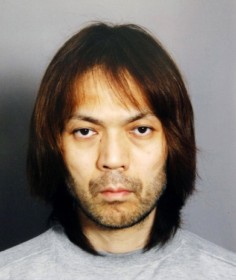
The anger is not only because cult members killed her husband, Kazumasa, when they leaked sarin in five subway cars. It is also on behalf of the 6,000 commuters injured in that attack - many of whom still suffer debilitating illnesses - as well as hundreds of others personally targeted in other attacks by the cult or who lost family members or friends to its violence.
"All I really want to know is why my husband had to die ... and even after all this time, I don't have that answer," she says. "They say Asahara had charisma and people fell for his charm, but I've seen him and I just cannot understand why." Recalling the hearings of other cult members, Takahashi says Yoshihiro Inoue had cried in court but she believes it was a self-serving plea for clemency and certainly not an apology. It did not work in any case, and Inoue is on death row.