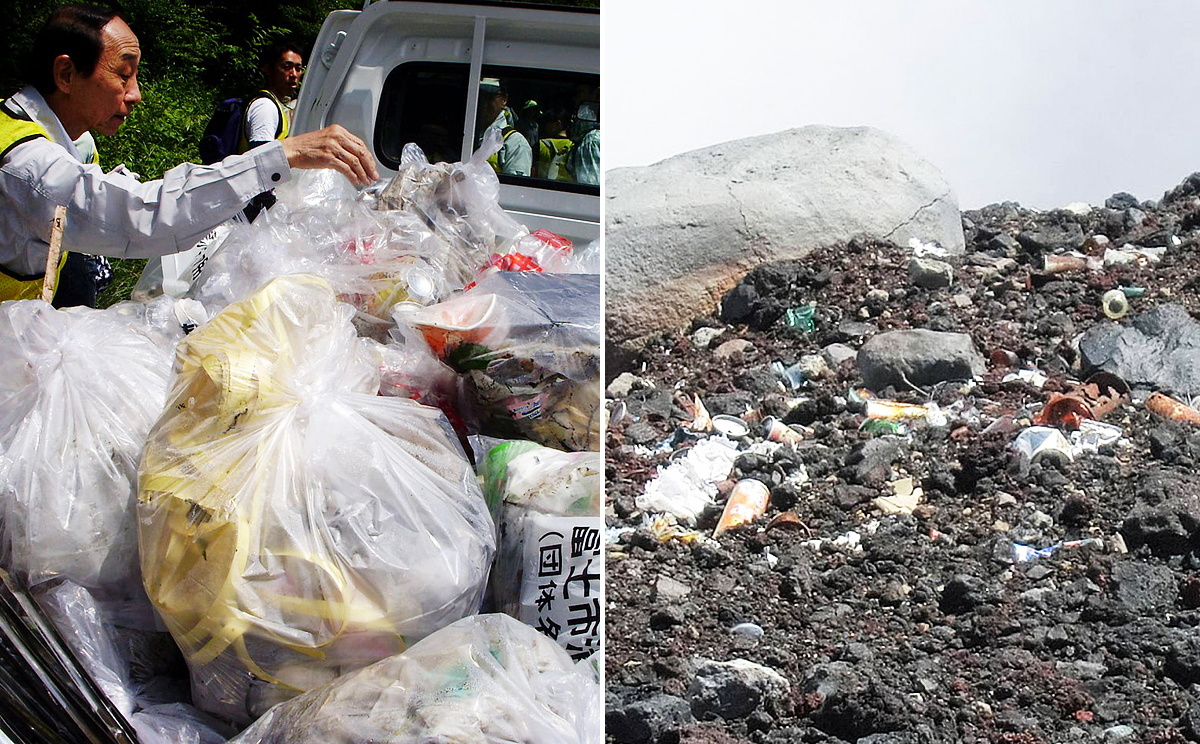
Japan's sacred Mount Fuji risks turning into trash mountain
Famed slopes being defaced by rubbish, graffiti and faeces, putting world heritage status at risk

The slopes of Japan's Mount Fuji are increasingly being defaced by rubbish and graffiti, despite an overall decline in the number of people scaling the peak.
Officials in the prefectures of Shizuoka and Yamanashi, which have jurisdiction over Japan's highest mountain, have reported discovering large heaps of rubbish and human waste on the slopes, a problem that has apparently worsened since Mount Fuji was recognised in June last year as a Unesco World Cultural Heritage site.
Many people have also expressed outrage at the discovery of graffiti on rocks at four locations on the mountain. One word, picked out in red spray paint, read "Indonesia" and prompted the Shizuoka Shimbun newspaper to run a story headlined "Holy Mountain Attacked."
Elsewhere, plastic drinks bottles, plastic bags, cigarette butts and other debris litter pathways.
Prefectural authorities have made efforts to encourage people to not discard their refuse on the mountain and installed rubbish bins at the rest stations that dot the zig-zag paths to the top of the 3,776-metre peak.