Families of 58 killed in 2009 Philippine massacre demand swifter justice
Five years after political killings in southern Philippines, relatives of the 58 dead fear case against clan leaders and others will drag on for years

Five years after 58 people were killed in the Philippines' worst political massacre, anger among victims' relatives is building, with no one yet convicted and the alleged masterminds still enjoying power.
Nine leaders of a clan accused of orchestrating the slaughter are among dozens on trial in Manila, but there are deep concerns the proceedings could take many more years and that witnesses are being killed or intimidated.
"Sometimes we feel hopeless, that this is all going nowhere," said Noemi Parcon, whose husband was among 32 journalists killed in the massacre, as she attended the trial this week. "We'd be happy even if only the principals are convicted."
The leaders of the Ampatuan family, who ruled the impoverished southern province of Maguindanao, are accused of organising the killings on November 23, 2009, in a bid to quash an election challenge from a rival clan.
Andal Ampatuan Snr had ruled Maguindanao as governor for about a decade under the patronage of then-president Gloria Macapagal-Arroyo, who had funded a private army for the clan as a buffer against Muslim separatist rebels.
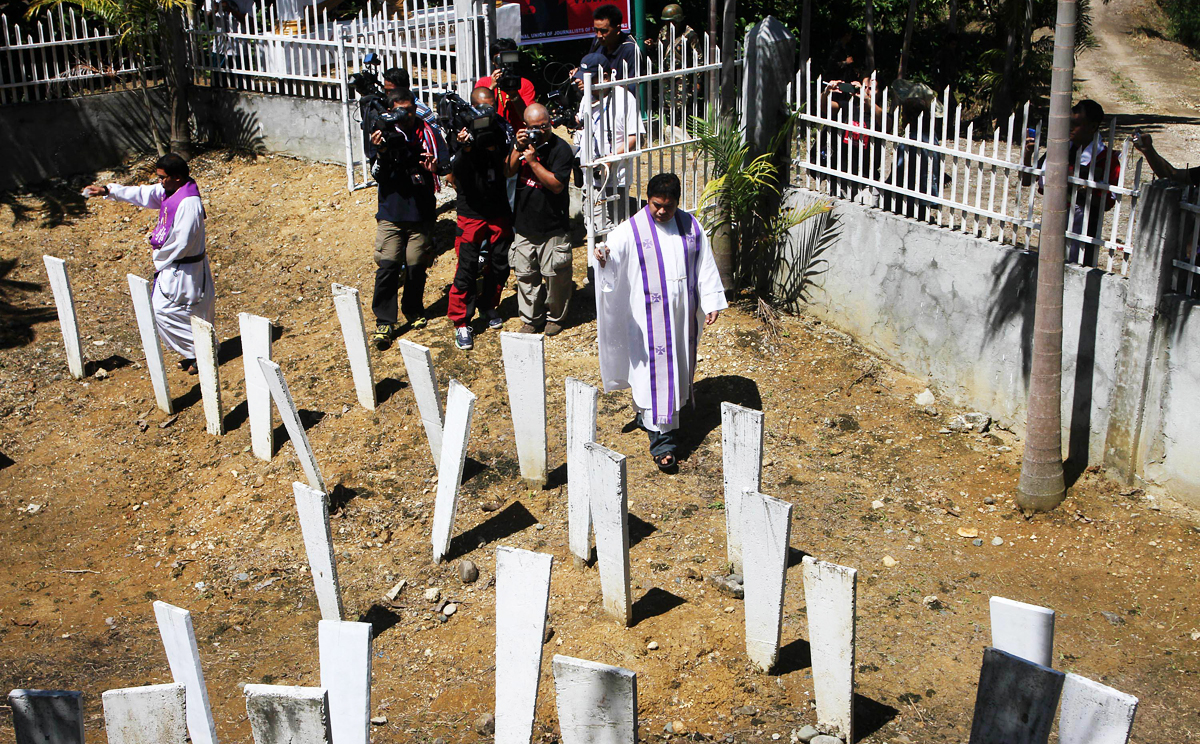
The victims' bodies were found in roadside pits dug using a government-owned excavator. Father and son, plus seven other Ampatuans, are among 111 people detained in Manila while on trial. They deny murder.