How did drug trafficker Schapelle Corby become an Australian obsession?

She has riveted Australia for more than a decade, the everyday Aussie beach girl who somehow sparked diplomatic rows, furious protests and a media bonanza on par with America’s O.J. Simpson trial. She is so notorious Down Under that she needs no last name: She’s just Schapelle.
Next week, after an exhaustively chronicled stint in a Balinese prison for smuggling marijuana to the Indonesian island, Schapelle Corby is expected to return to Australia. Her homecoming marks the climax of a tale that divided and in many ways defined Australia, where the obsession with the woman the nation once protectively dubbed “Our Schapelle” has not faded, even if belief in her innocence has.
Not since the notorious case of Lindy Chamberlain – whose baby daughter was killed by a dingo during an Outback camping trip – has a legal saga so mesmerised the country. But exactly why Corby’s plight achieved such prominence can be, at first glance, a bit puzzling. She wasn’t famous before her arrest and she was hardly the first Aussie to be busted for drugs while travelling abroad. As The Australian newspaper once put it: “Corby is an ordinary suburban Australian woman who worked in a takeaway shop, saved up for a holiday in Bali, and somehow galvanised an entire nation.”
Fueling the fixation was everything from the unprecedented media coverage of her trial, to the made-for-TV courtroom theatrics, to the empathy ordinary Australians felt for a woman they viewed as one of their own. Her case also coincided with an era of cultural upheaval, tapping into a surge of nationalism and fear heightened by bombings in Bali that killed 88 Australians just two years before Corby’s arrest.
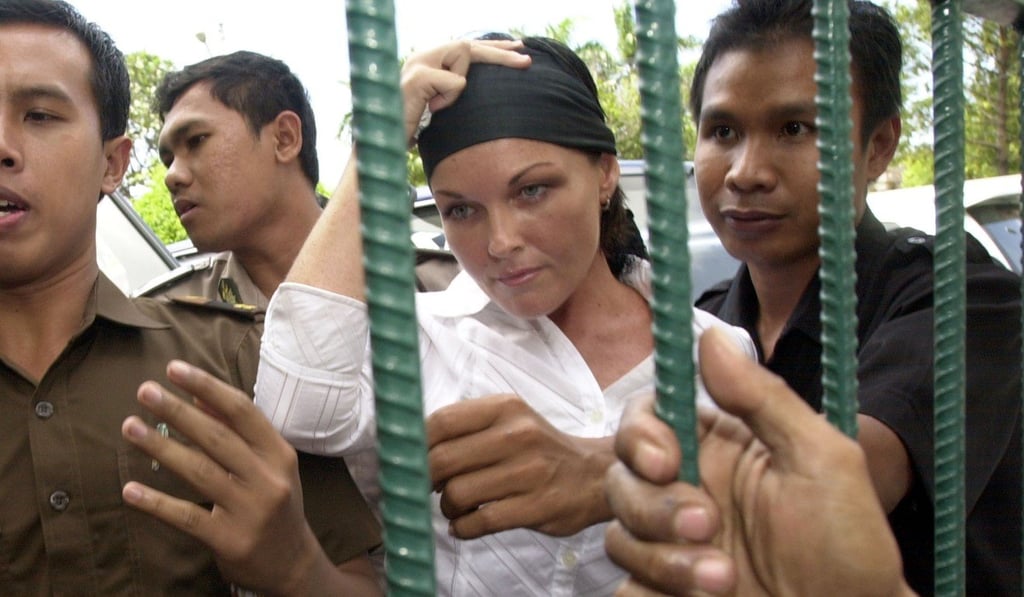
Anthony Lambert, who spent years studying Australia’s response to the case, once described Corby as “the daughter who is Australia”. And in some ways, she still is.
“She functioned as a representation of what being Australian meant,” says Lambert, a senior lecturer in cultural studies at Macquarie University. “In the beginning, [there was] that initial surge of emotion and kind of racist vitriol that was about the nation much more than it was about the actual case ... She still represents a relatively young, feminine version of being Australian and white Australian-ness, caught up in trouble.”