Remains of British explorer Matthew Flinders, hailed for putting Australia on the map, found in London dig
- Archaeologists sifting through a vast burial ground near a London train station found a coffin plate identifying the last resting place of Royal Navy captain Matthew Flinders

The remains of the first British explorer to circumnavigate the Australian continent and popularise the country’s name have been found near a busy London railway station.
Archaeologists sifting through a vast burial ground near Euston station said on Friday that they had found a coffin plate identifying the last resting place of Royal Navy captain Matthew Flinders.
Flinders was buried on July 23, 1814, but not before publishing A Voyage to Terra Australis, which described his circumnavigation of Australia in 1802-1803, in which he proved it was a continent.
“Flinders put Australia on the map due to his tenacity and expertise as a navigator and explorer,” said Helen Wass, an archaeologist overseeing the dig for the HS2 high speed rail project.
With an estimated 40,000 remains at the site, archaeologists were not sure they were going to find Flinders, whose resting place had been subject to much speculation.
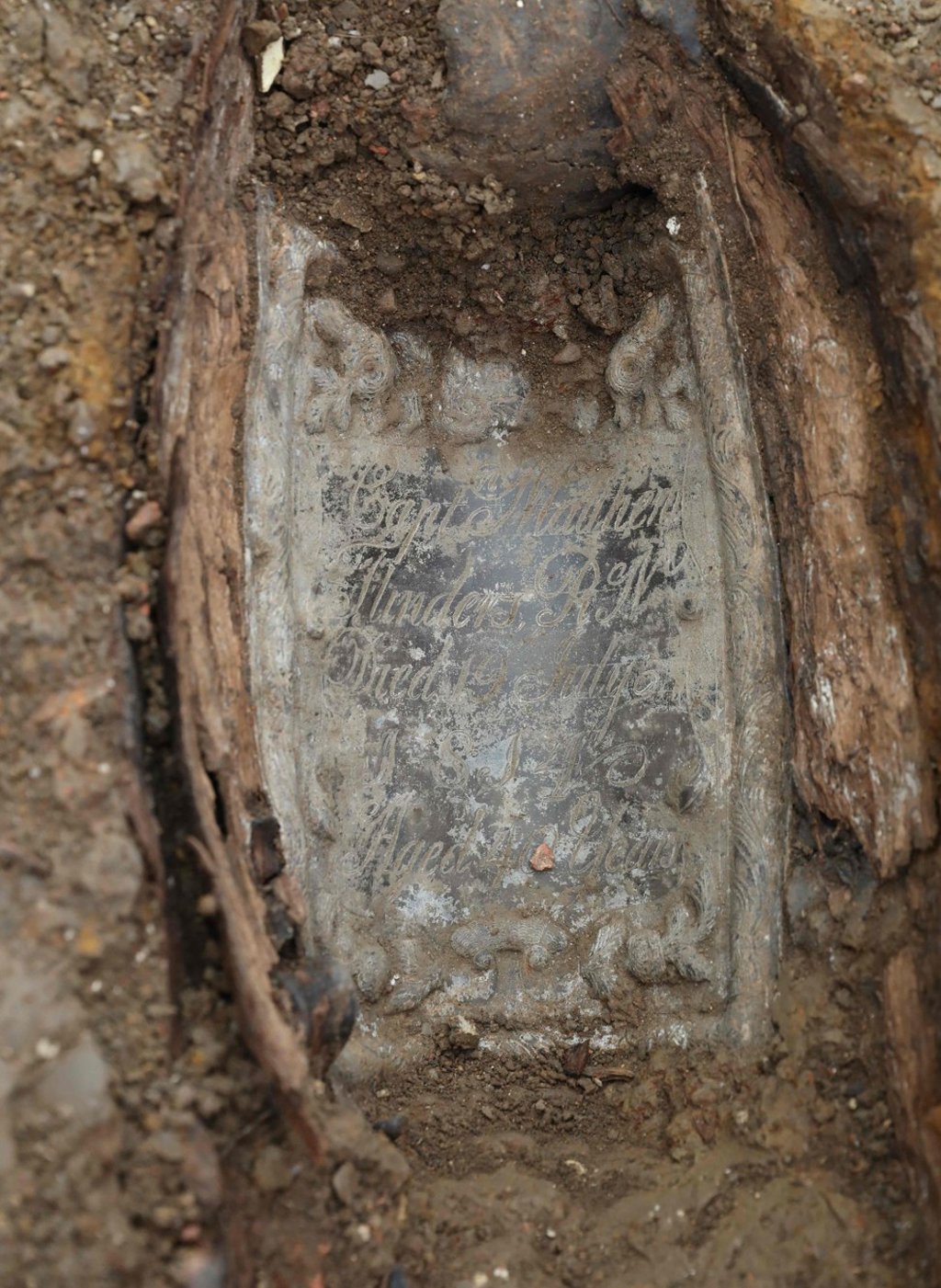
“We were very lucky”, said Wass, that he “had a breastplate made of lead meaning it would not have corroded”.