Foreign ministers of Quad group to hold meeting in Australia next week
- The foreign ministers of the US, Japan, Australia and India are expected to reaffirm the importance of the rules-based order and discuss the challenges posed to it by China
- The meeting will be followed by a gathering of the foreign ministers of the United States, Japan and South Korea on February 12 in Hawaii

The foreign ministers of the United States, Japan, Australia and India will meet next week in Australia to advance the “Quad” group’s cooperation in areas including the economy, security and the coronavirus pandemic, amid China’s growing assertiveness in the region, according to the State Department.
The meeting will be followed by a gathering of the foreign ministers of the United States, Japan and South Korea on February 12 in Hawaii, with talks to focus on ways to address the threat posed by North Korea after its recent barrage of ballistic missile tests.
The events were announced on Friday as part of US Secretary of State Antony Blinken’s itinerary for his week-long trip to Australia, Fiji and Hawaii starting on Monday.
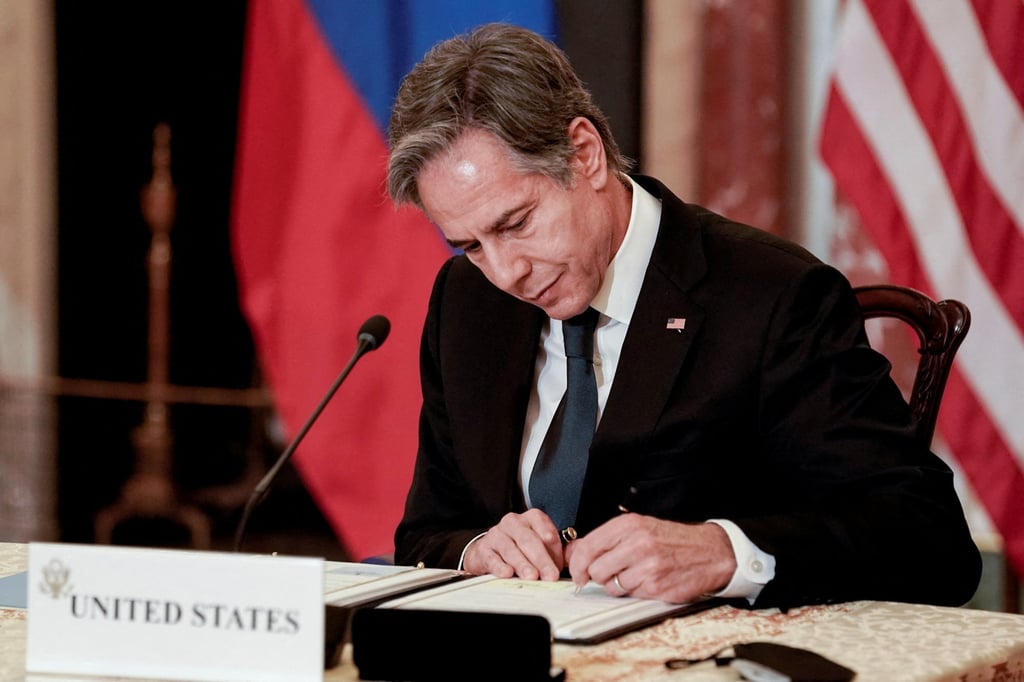
The trip by the top US diplomat, which comes at a time of heightened tension over Russia’s military build-up on the border of Ukraine, is intended to underscore the strength of the US commitment to the Indo-Pacific region, a senior State Department official said.
During his stay in Australia starting on Wednesday, Blinken will attend a meeting in Melbourne with his Quad counterparts – Australia’s Marise Payne, Japan’s Yoshimasa Hayashi and India’s Subrahmanyam Jaishankar.
The four countries are expected to reaffirm the importance of the rules-based order and discuss the challenges posed to it by China, said Daniel Kritenbrink, the assistant secretary of state for East Asian and Pacific affairs, in comments to reporters.
He also said the Ukraine situation, in which it is feared Russia will further invade its neighbouring country, could be a topic to be dealt with in the Quad context, given that the four countries are key democracies in the Indo-Pacific and the issue involves a threat to the rules-based global order.