ExplainerWhat is foot and mouth disease and will it hurt Australian beef supply?
- The highly contagious virus that affects cattle is often spread by humans via their shoes, clothes and luggage – and particles can even live in people’s noses
- A potential outbreak of the disease would taint Australia’s export reputation and have a major impact on key markets like China and Japan

What is foot and mouth?
Foot and mouth disease (FMD) is a highly contagious virus that affects cattle, sheep, goats and pigs. It is characterised by fever and blister-like sores on the tongue and lips, in the mouth, on the teats and between the hooves. The prevalence of the disease has the potential to decimate herds.
The disease is often spread by humans via their shoes, clothes and luggage – and particles can even live in people’s noses, where they may survive for up to 24 hours. The virus can also be transmitted via contaminated meat and other animal products, and survive in the environment for several weeks. It is considered one of the most important livestock diseases in the world, and can potentially cause billions of dollars of losses each year.
Can humans catch it?
Although the virus comes from the same family – Picornaviridae – as those responsible for common colds, hepatitis A and polio, foot and mouth disease crosses the species barrier to infect humans only rarely and with little effect. It shouldn’t be confused with the fever and rash-causing hand, foot, and mouth disease in humans. This is an unrelated and usually mild infection mostly in children caused by different viruses, mainly coxsackie A and enterovirus 71.
Where is it a problem now?
The World Organisation for Animal Health says the disease is endemic across swathes of Asia, and most of Africa and the Middle East. Right now, there’s growing concern over the spread in Indonesia after the country reported the disease in May and the virus swept through the nation’s cattle herds.
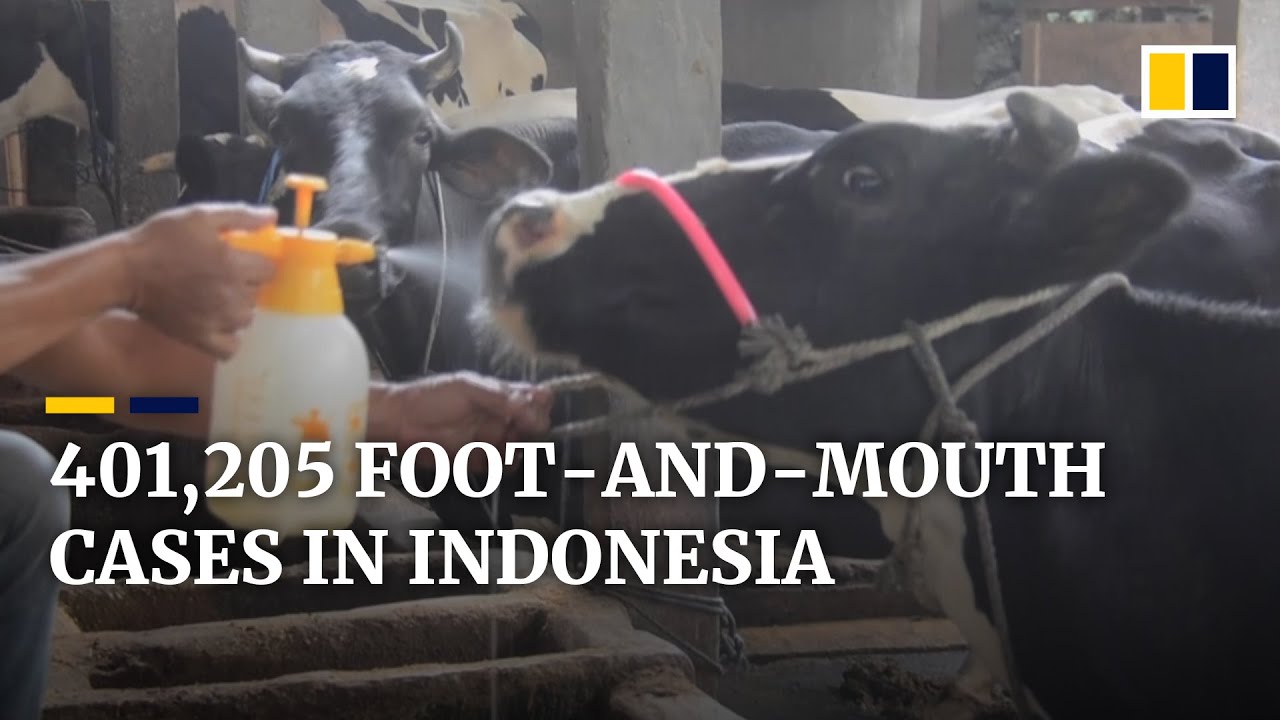
01:45
Indonesia raises alarm over outbreak of foot-and-mouth disease in cattle
What’s being done?
Australia has offered Indonesia funding for one million vaccines to curb the spread there, and within its own borders it has ramped up surveillance and countermeasures – including educational videos and sanitation foot mats at airports. Some politicians have gone even further by calling for a suspension of travel to Indonesia, but that’s been rejected by officials.