Is this the world’s rarest? Scientists puzzle over beached whale in New Zealand
- Scientists say a creature that washed up on a South Island beach this month may be an elusive whale that has never been seen alive

The country’s conservation agency said on Monday a creature that washed up on a South Island beach this month is believed to be a spade-toothed whale. The five-metre-long creature, a type of beaked whale, was identified after it washed ashore on an Otago beach from its colour patterns and the shape of its skull, beak and teeth.
“We know very little, practically nothing” about the creatures, Hannah Hendriks, marine technical adviser for the Department of Conservation, said. “This is going to lead to some amazing science and world-first information.”
If the cetacean is confirmed to be the elusive spade-toothed whale, it would be the first specimen found in a state that would permit scientists to dissect it, allowing them to map the relationship of the whale to the few others of the species found, learn what it eats and perhaps lead to clues about where they live.
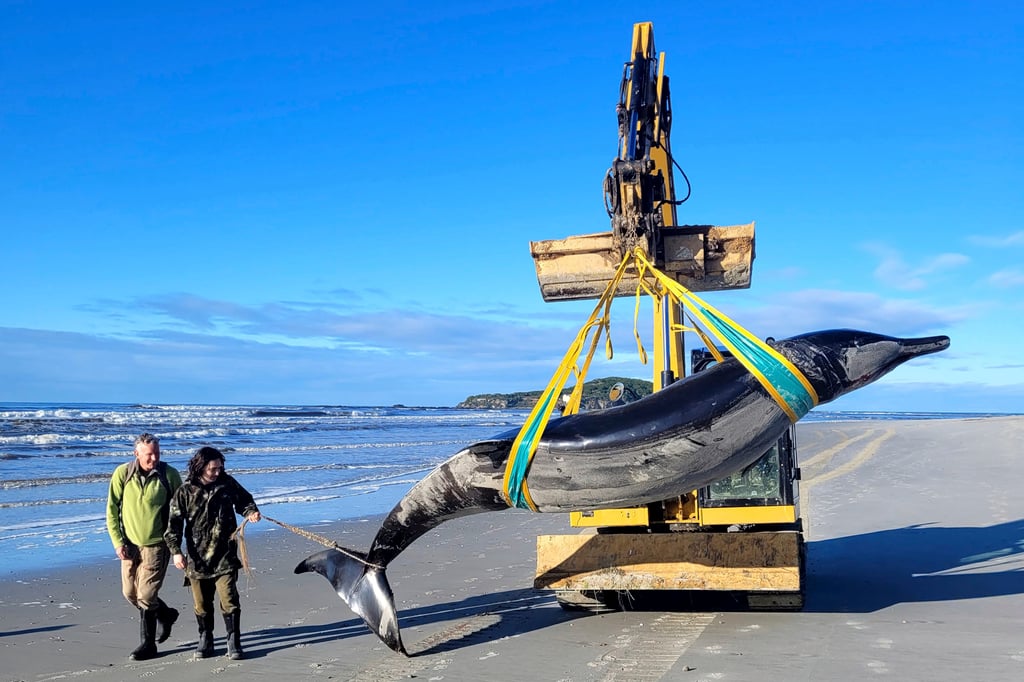
This time, the beached whale was quickly transported to cold storage and researchers will work with local Māori iwi [tribes]to plan how it will be examined, the conservation agency said.