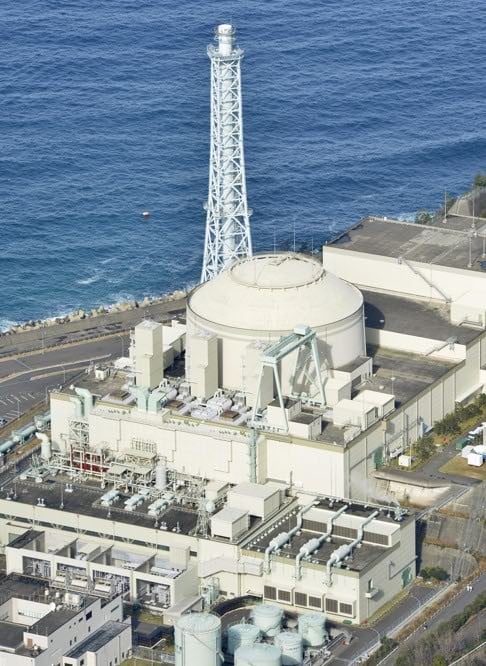
The cost of decommissioning a nuclear reactor that was once seen as the crown jewel in Japan’s atomic energy programme has been put at an eye-watering 300 billion yen (HK$20.5 billion).
That estimate for shutting down the Monju power plant was drawn up by the Japan Atomic Energy Agency in 2012, a year after the accident at the Fukushima Daiichi nuclear plant, but has only now been revealed by the Mainichi newspaper.
The fate of Monju – which means wisdom in Japanese – has been up in the air since long before the Fukushima crisis due to a series of accidents at the plant, with many in the industry and the government tacitly accepting that it will never again be put into operation.
READ MORE: Japan restarts nuclear reactor four years after Fukushima disaster
The expected cost is “an uncertain figure estimated in the past” based on a variety of conditions, Education, Culture, Sports, Science and Technology Minister Hiroshi Hase said at a press conference. There is no plan to ask the reactor operator to provide a new estimate, he added.
The experimental reactor uses plutonium fuel instead of conventional uranium and produces radioactive matter that can be reused as fuel. The multi-billion yen project was first proposed in the late 1960s as an antidote to Japan’s reliance on imported energy to feed its industries.
A key part of Japan’s nuclear energy programme, it was initially started in August 1995, but was shut down only four months later after a serious accident.
More than one tonne of liquid sodium leaked from a cooling system and although there were no injuries and no radioactivity escaped into the atmosphere, the accident was compounded by the operators of the plant attempting to cover up the scale of the damage.