Japan’s emperor expresses war ‘remorse’ as PM Shinzo Abe sends offering to controversial Yasukuni Shrine
Bitter war memories haunt ties with Beijing and Seoul

Emperor Akihito, in his last appearance as reigning monarch at an annual ceremony marking Japan’s second world war surrender, expressed “deep remorse” over the conflict, while Prime Minister Shinzo Abe vowed never to repeat the horrors of war.
Earlier on Wednesday, Abe sent a ritual offering to Tokyo’s controversial Yasukuni Shrine for war dead, but did not visit in person out of apparent consideration for ties with Seoul and Beijing.
Past visits by Japanese leaders to Yasukuni have outraged China and South Korea because the shrine honours 14 Japanese wartime leaders convicted as war criminals by an Allied tribunal, along with war dead.
China’s relations with Japan have long been haunted by what Beijing sees as Tokyo’s failure to atone for its occupation of parts of China before and during the second world war, although ties have thawed recently. Japan occupied Korea from 1910-1945 and bitter memories still rankle.
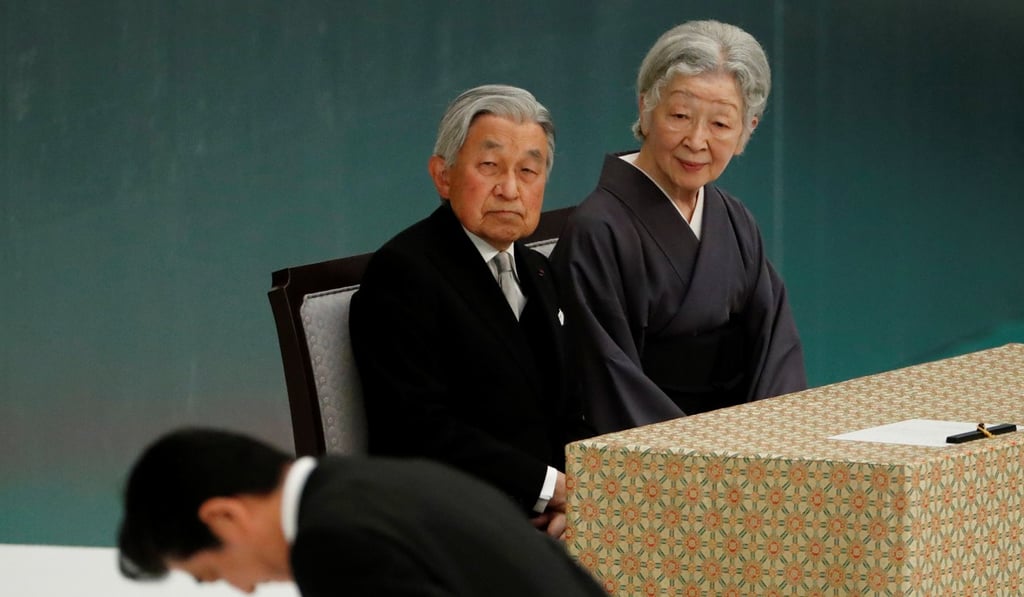
“Thinking of the peaceful times that have extended for many years after the war, reflecting on our past and with a feeling of deep remorse, I earnestly hope that the ravages of war will never be repeated,” Akihito, wearing morning dress and accompanied by a kimono-clad Empress Michiko, said at the ceremony for war dead.