Tattoo taboo: body art still provokes deep suspicion in Japan but will the Olympics change that?
- People with body ink are refused entry to public swimming pools, bathing spots, beaches and often gyms, while visible body art can be harmful to job prospects
- As Japan opened up to the outside world in the 1800s, tattoos were outlawed – along with snake-charming and public nudity – because the Japanese feared outsiders would judge them

When Mana Izumi got her first tattoo at 18, she wasn’t trying to rebel or shatter any taboos – just copy Japanese pop diva Namie Amuro’s beach-bronze “surfer chick” look.
In Japan, where tattoos have for centuries been demonised for their association with criminals, former porn star Izumi turns heads with her copper tan, bleach-blonde bob, and an array of designs inked across half of her body.
“I wasn’t really an Amuro fan but I thought her tattoos were cute,” the 29-year-old said. “When my mum first saw my tattoo she burst into tears and I thought my dad was going to kill me. But I like being a bit different.”
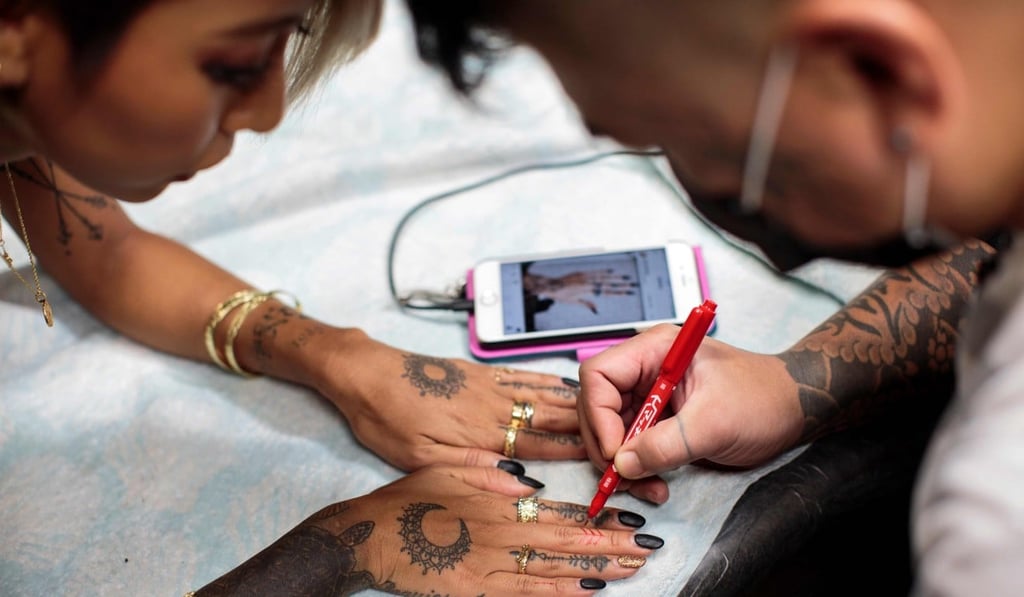
Tattoos still provoke deep-rooted suspicion in Japan as the country prepares to host the 2020 Tokyo Olympics. People with body ink are refused entry to public swimming pools, bathing spots, beaches and often gyms, while visible body art can be harmful to job prospects.
“It’s pathetic the way people discriminate against tattoos,” Izumi said while getting a US$500 Aztec skull inked onto her leg. “People might think I look a little scary. But I don’t regret getting inked.”